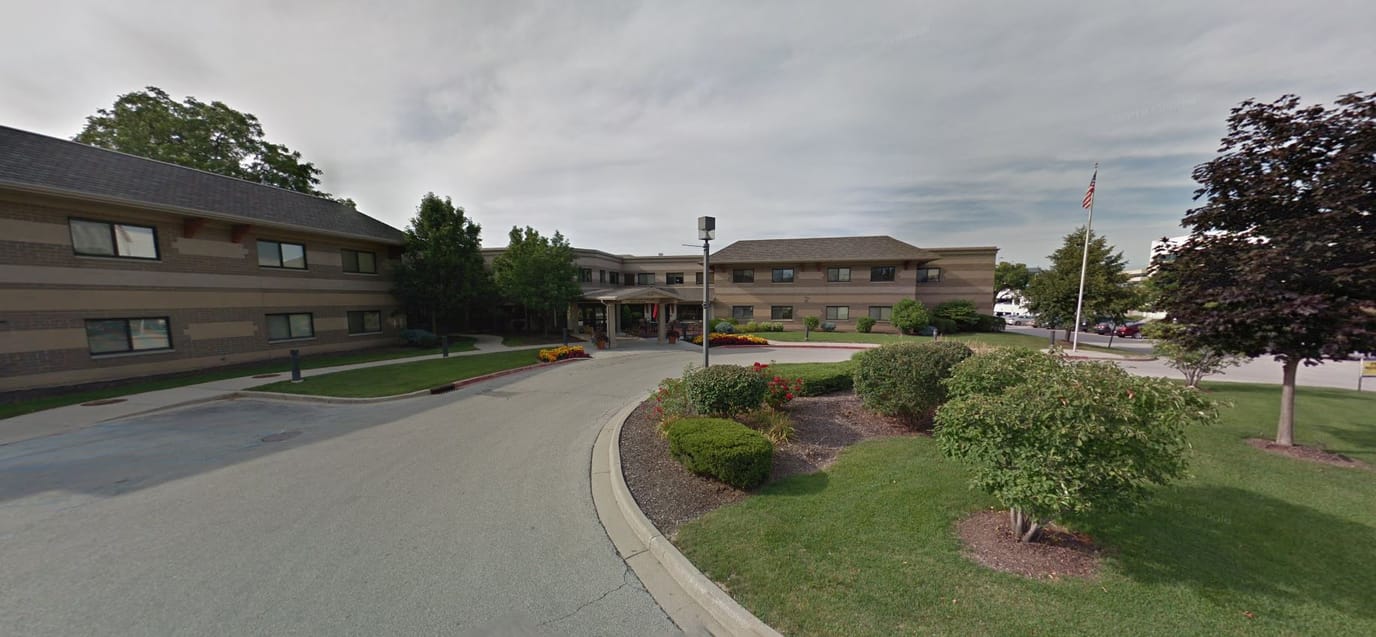
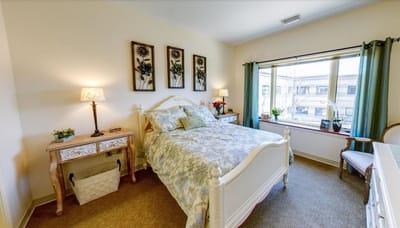
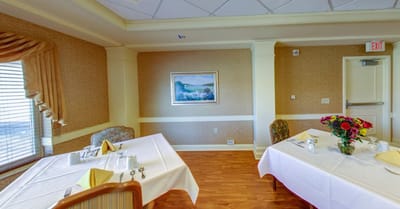
Smaller home · May offer a more intimate, personalized care environment.
St. Camillus – Wauwatosa
St. Camillus, Wauwatosa offers nursing home, assisted living, a continuing care retirement community, hospice care, independent living, memory care, and skilled nursing in Milwaukee, WI. Nursing home and skilled nursing provide licensed nursing care on site around the clock. Assisted living helps with daily tasks such as bathing, dressing, and medication, while independent living provides private living with community services and no daily care.
Memory care is provided in a secured setting with supervision, and hospice care supports residents receiving end of life care. As a continuing care retirement community, St. Camillus, Wauwatosa brings multiple care levels together, so a resident whose needs grow may be able to move between care levels without leaving the community. The community has 50 beds and private rooms, giving each resident a separate room in a high rise building.
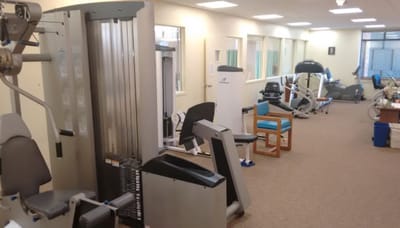
Three chapels and Catholic religious services connected with the Order of St. Camillus, or Camillians, provide on campus worship opportunities. An outpatient therapy clinic and the in house IPW Medical Clinic give residents access to therapy and medical visits on campus, while holiday dinners and special events provide scheduled activities. The community is operated by St Camillus Health Center, and Courtney Wilson serves as administrator.
A Walk Score of 43 places the area in a car dependent setting, meaning most errands require a car or a ride. St. Camillus, Wauwatosa may be a good fit for a resident whose needs may grow over time and who may benefit from several care levels within one community.
Community insights.
About This Community
St. Camillus – Wauwatosa is legally operated by St Camillus Health Center Inc, and administered by Courtney Wilson.
Places of interest near St. Camillus – Wauwatosa
6.5 miles from city center
Estimated distance in miles from Milwaukee's city center to St. Camillus – Wauwatosa's address, calculated via Google Maps.
Calculate Travel Distance to St. Camillus – Wauwatosa
Add your location
Compare Nursing Homes around Milwaukee
Info below is compiled from CMS reports & the WI Dept. of Health Services (DHS), senior community websites & trusted data sources such as Walk Score & BBB.
Communities are listed from highest-ranked to lowest-ranked based on our methodology.
Official facility name used in federal/state reporting (may differ slightly from the marketing name).
|
Care Types in This Table
AL (Assisted Living):
Housing with help for daily activities like bathing, dressing, and medication, without 24-hour skilled nursing.
NH (Nursing Home):
24/7 skilled nursing care for residents with complex, ongoing medical needs.
SNF (Skilled Nursing Facility):
Round-the-clock nursing care, often for recovery after surgery, injury, or illness.
MC (Memory Care):
Secured, specialized care for people living with Alzheimer's or dementia.
RC (Respite Care):
Short-term temporary care that gives family caregivers a break.
IL (Independent Living):
Community living with dining, activities, and transportation for active seniors who need little personal care.
HOS (Hospice Care):
Comfort-focused care for those with a terminal illness, prioritizing quality of life over treatment.
PC (Palliative Care):
Comfort-focused care for serious illness at any stage, including alongside curative treatment.
CCRC (Continuing Care Retirement Community):
A campus with multiple care levels so residents can age in place without moving.
|
City and state of the facility. Used for mapping and state-average comparisons.
|
Estimated monthly cost range for the facility.
|
Licensed bed capacity (maximum allowed). Not the same as how many beds are currently filled.
|
Better Business Bureau grade for the operating company. Reflects complaint handling and business practices, not clinical care quality.
|
Third-party neighborhood walkability score (0–100). Convenience/context metric, not a healthcare quality measure.
|
Housing or bed configuration options (e.g. studio, shared), often from facility-reported amenities and licensing details.
|
|---|---|---|---|---|---|---|---|
| St. Ann Health and Rehabilitation Center | NH HOS MC PC RC SNF | Milwaukee | - | 50
Facility
50
WI AVG
78
Rank
#114 / 198 | A- |
84
Facility
84
WI AVG
48
Rank
#16 / 191 | - |
| Eastcastle Place | NH AL CCRC IL MC SNF | Milwaukee (Murray Hill) | $5,134 - $7,789 | 18
Facility
18
WI AVG
78
Rank
#196 / 198 | - |
92
Facility
92
WI AVG
48
Rank
#3 / 191 | Studio / 1 Bed / 2 Bed |
| Milwaukee Catholic Home | NH AL CCRC IL MC SNF | Milwaukee (Northpoint) | $1,140 - $5,570 | 107
Facility
107
WI AVG
78
Rank
#43 / 198 | A+ |
83
Facility
83
WI AVG
48
Rank
#18 / 191 | 1 Bed / 2 Bed |
| Saint Johns on the Lake Central Tower | NH AL IL MC SNF | Milwaukee | - | 110
Facility
110
WI AVG
78
Rank
#35 / 198 | - |
87
Facility
87
WI AVG
48
Rank
#6 / 191 | - |
Rank badges are statewide and care-type specific: each nursing home is ranked against every other WI nursing home we track that reports that metric, not just the 4 on this page. See how we rank facilities
Programs that may help with care and living costs in Wisconsin
St. Camillus – Wauwatosa is in Milwaukee, Wisconsin. These programs may support different care settings or living expenses. A listing does not confirm this community participates; our concierge team can help confirm.
Family Care Program
WI Medicaid Family Care
Eligibility
- General
- Wisconsin adult age 18 or older who is frail elderly or has a qualifying disability; Medicaid financial eligibility and the applicable functional screen are required.
- WI specifics
- Family Care is managed long-term care; member and care team plan supports based on assessed outcomes and needs.
What it provides
- Authorized long-term care and care management under the individual service plan.
IRIS (Include, Respect, I Self-Direct)
Wisconsin IRIS
- Income limit
- IRIS Medicaid financial eligibility must be determined for the applicant.
Eligibility
- General
- Wisconsin resident age 18 or older with a qualifying disability or frail-elder status; Medicaid financial eligibility and functional screening required; eligible community residence.
- WI specifics
- IRIS participants direct an individual budget and select or manage approved supports and providers within program requirements.
What it provides
- Authorized self-directed long-term supports may include personal assistance transportation home modifications meals and other assessed services.
VA Aid and Attendance (A&A) and Housebound Benefits
Wisconsin VA Aid and Attendance/Housebound
- Who it is for
- Veterans or survivors with VA pension eligibility and an Aid and Attendance or Housebound medical need
- Income limit
- Countable income must be below the applicable Maximum Annual Pension Rate (MAPR); the rate depends on dependents and benefit category; Qualifying unreimbursed medical expenses may reduce countable income.
- Asset limit
- VA pension net-worth limit is $163,699 from December 1 2025 through November 30 2026; net worth includes countable assets and annual income under VA rules.
Eligibility
- General
- Additional pension benefits for qualifying Veterans or survivors who satisfy VA pension eligibility and the medical requirements for Aid and Attendance or Housebound status; being an older veteran or spouse alone does not qualify.
- WI specifics
- This is a federal VA benefit rather than a state-specific grant; Aid and Attendance and Housebound benefits cannot be received together.
What it provides
- Increased monthly VA pension based on the applicable MAPR less countable income.
SSI Exceptional Expense Supplement (SSI-E)
Wisconsin SSI Exceptional Expense Supplement (SSI-E)
Eligibility
- General
- Wisconsin SSI recipients certified by a county agency, either in qualifying residential settings with expenses above the applicable SSI-E payment level or at home with at least 40 hours of primary long-term support services needed each month.
- WI specifics
- Eligible residential settings include licensed or certified adult family homes, qualifying CBRFs of 20 beds or fewer and certified residential care apartment complexes. Home-based recipients must pay their share of household costs. A county assessment and certification are required.
What it provides
- For an eligible individual an additional monthly cash benefit of up to $105.59 may be added to the state SSI payment. Couple amounts differ.
Wisconsin Family Caregiver Support Programs
WI NFCSP Respite
Eligibility
- General
- NFCSP serves eligible caregivers of older adults and specified relative caregivers of children or adults with disabilities; Wisconsin also has a separate Alzheimer Family and Caregiver Support Program.
- WI specifics
- National Family Caregiver Support and Alzheimer Family and Caregiver Support have distinct eligibility rules.
What it provides
- Caregiver counseling training respite and other approved supports.
SeniorCare Prescription Drug Assistance
Wisconsin SeniorCare
- Income limit
- 2026 · Income determines participation level rather than a hard exclusion at 240% FPL; Individual annual thresholds: Level 1 up to $25,536; Level 2A $25,537 to $31,920; Level 2B $31,921 to $38,304; Level 3 $38,305 or more; Couple thresholds differ.
- Asset limit
- Assets are not counted according to the official Kenosha County ADRC program listing; income from assets can count under state income rules.
Eligibility
- General
- Wisconsin resident age 65 or older who is a U.S; citizen or qualifying immigrant; not enrolled in full Medicaid; Other insurance including Medicare may be coordinated.
- WI specifics
- $30 annual enrollment fee per person and annual renewal; deductible and spenddown depend on income level.
What it provides
- Covered prescription assistance; Level 1 has no deductible; Levels 2A and 2B have $500 and $850 deductibles; Level 3 has spenddown then $850 deductible; Applicable covered-drug copays are $5 generic and $15 brand after requirements are met.
Medicare Savings Program (MSP)
Wisconsin Medicare Savings Program
- Who it is for
- Medicare beneficiaries with limited income who need help with premiums or cost sharing
- Income limit
- 2026 · Published monthly countable-income bases: QMB $1,330 single or $1,803.33 couple; SLMB up to $1,596 single or $2,164 couple; SLMB+ up to $1,795.50 single or $2,434.50 couple; Deductions exclusions and tier lower bounds apply.
- Asset limit
- 2026 · QMB SLMB and SLMB+ countable-resource limits $9,950 single or $14,910 couple; QDWI has separate rules.
Eligibility
- General
- Wisconsin Medicare beneficiary meeting the applicable Medicare Savings Program rules; age 65 is not a universal requirement.
- WI specifics
- Wisconsin calls its QI category SLMB+; full Medicaid affects SLMB+ eligibility; Refer to state fact sheet for distinct benefits and counting rules.
What it provides
- QMB pays qualifying Medicare premiums and cost sharing; SLMB and SLMB+ pay the Part B or B-ID premium; QDWI pays qualifying Part A premiums.
Wisconsin Home Energy Assistance Program (WHEAP)
Wisconsin WHEAP
- Income limit
- 2026-2027 · 60% of Wisconsin state median income; One-person gross income limit $3,322 monthly or $39,864 annually; two-person $4,344.08 monthly or $52,129 annually; larger household limits apply.
Eligibility
- General
- Wisconsin households meeting WHEAP eligibility; benefits depend on household circumstances and available funding rather than senior status alone.
- WI specifics
- Current heating season is October 1 2026 through September 30 2027; benefit funding is not guaranteed.
What it provides
- Eligible heating electric crisis and heating-system assistance under WHEAP rules.
Homestead Credit
Wisconsin Homestead Credit
- Income limit
- For a 2025 claim, household income must be below $24,680.
Eligibility
- General
- For tax year 2025: full-year Wisconsin legal residents age 18 or older who own or rent an eligible homestead and satisfy all credit requirements. The claimant or spouse must have earned income, be disabled or be age 62 or older at year-end.
- WI specifics
- The 2025 claim can generally be filed through April 15 2030. Tax-exempt housing and nursing-home residency while receiving Title XIX medical assistance can disqualify a claimant. This offsets eligible property tax or rent costs rather than paying for care.
What it provides
- A state tax credit based on household income and allowable property taxes or rent; meeting basic eligibility does not guarantee a positive credit.