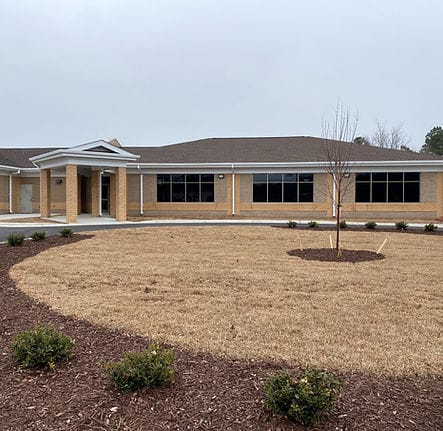



Pitt County Council of Aging
Pitt County Council of Aging offers senior care in Greenville, NC, with practical support that reaches beyond a single service. Its programs include Meals on Wheels, transportation, classes, trips, Medicare counseling, information and referrals, and senior wellness centers, giving older adults help with daily needs, guidance with Medicare and other questions, opportunities to learn, and organized activities.
The wellness program includes Living a Healthy Life with Chronic Conditions, Living a Healthy Life with Chronic Pain, Matter of Balance, and Walk with Ease. These offerings focus on managing chronic health conditions, coping with pain, improving balance, and building confidence with walking. Rehabilitation services provide additional support for older adults working toward physical function.
Pitt County Council of Aging also offers the Brainiac Boot Camp signature program and volunteering opportunities. Respite care gives families a short-term care option when their usual caregiver needs time to travel, recover, or handle other responsibilities. Pitt County Council of Aging may be a good fit for an older adult or family seeking community-based support and short-term relief.
Community insights.
About This Community
Places of interest near Pitt County Council of Aging
4.5 miles from city center
Estimated distance in miles from Greenville's city center to Pitt County Council of Aging's address, calculated via Google Maps.
Calculate Travel Distance to Pitt County Council of Aging
Add your location
Programs that may help with care and living costs in North Carolina
Pitt County Council of Aging is in Greenville, North Carolina. These programs may support different care settings or living expenses. A listing does not confirm this community participates; our concierge team can help confirm.
VA Aid and Attendance (A&A) and Housebound Benefits
- Who it is for
- Veterans or survivors with VA pension eligibility and an Aid and Attendance or Housebound medical need
- Income limit
- 2026 · Countable income is compared with the applicable maximum annual pension rate (MAPR), which varies by dependents and benefit category. For a veteran with one dependent and Aid and Attendance, MAPR is $34,488/year.
- Asset limit
- VA pension net-worth ceiling is $163,699 from December 1, 2025 through November 30, 2026. Net worth includes countable assets plus income for VA purposes; exclusions and transfer rules apply.
Eligibility
- General
- Aid and Attendance or Housebound is an increased VA pension rate for eligible veterans or surviving spouses who meet pension and additional care/disability requirements; it is not a stand-alone state benefit.
- NC specifics
- Federal VA pension rules apply nationwide.
What it provides
- Monthly pension is based on the applicable MAPR less countable annual income; divided by 12. Maximum annual veteran Aid and Attendance rates are $29,093 without dependents and $34,488 with one dependent; actual payments may be lower.
State/County Special Assistance (SA)
Eligibility
- General
- Low-income people who need help with room and board in an eligible residential facility, or who qualify for the separate in-home component because they are at risk of entering a residential facility.
- NC specifics
- Special Assistance has separate adult-care-home and in-home programs. The latter assists eligible people at risk of residential placement; rules and payment standards must be matched to the correct setting.
What it provides
- A cash supplement for eligible low-income residents toward residential-facility room and board; or separate assistance through the in-home program.
Community Alternatives Program for Disabled Adults
Eligibility
- General
- CAP/DA is a Medicaid home/community waiver for adults age 18+ with disabilities at risk of institutionalization who meet applicable Medicaid and care requirements.
What it provides
- Assessed supports may include personal care; adult day health; home accessibility adaptations; meals; respite; emergency-response services and assistive technology.
In-Home Aide Services
Eligibility
- General
- Age 60+, living at home, and unable to complete one or more daily-living or household tasks; a responsible helper is unavailable or the primary caregiver needs relief.
- NC specifics
- Local providers supported by the Home and Community Care Block Grant offer levels of home management, personal care and respite. Service must be appropriate for needs that can be safely met at home.
What it provides
- Assessed home-management help; personal care or caregiver respite.
Medicare Savings Program (MSP)
- Who it is for
- Medicare beneficiaries with limited income who need help with premiums or cost sharing
Eligibility
- General
- Medicare beneficiary; the state determines the applicable Medicare Savings Program. QMB helps with premiums and Medicare cost sharing; SLMB and QI generally help with Part B premiums.
- NC specifics
- QI requires annual application and is funded first-come, first-served with priority for prior recipients. QMB, SLMB and QI confer Part D Extra Help.
What it provides
- QMB pays eligible Part A/Part B premiums and Medicare deductibles and cost sharing; SLMB and QI pay Part B premiums. The exact benefit depends on the approved program.
Low Income Energy Assistance Program (LIEAP)
- Who it is for
- Income-eligible households responsible for home heating costs
- Income limit
- NC DHHS describes an income test based on 130% of the federal poverty guideline. Category-specific rules and current household-size tables should be checked.
- Asset limit
- NC DOA’s LIEAP description lists a household resource ceiling of $2,250.
Eligibility
- General
- Eligible households responsible for heating costs may receive LIEAP assistance; age 60+ households and certain disability households have an early application period.
- NC specifics
- Early applications run December 1–31 for qualifying older/disability households; others January 1–March 31 or until funds are exhausted. Crisis Intervention is a separate component with different rules.
What it provides
- One-time vendor payment toward heating costs; subject to eligibility and funding.