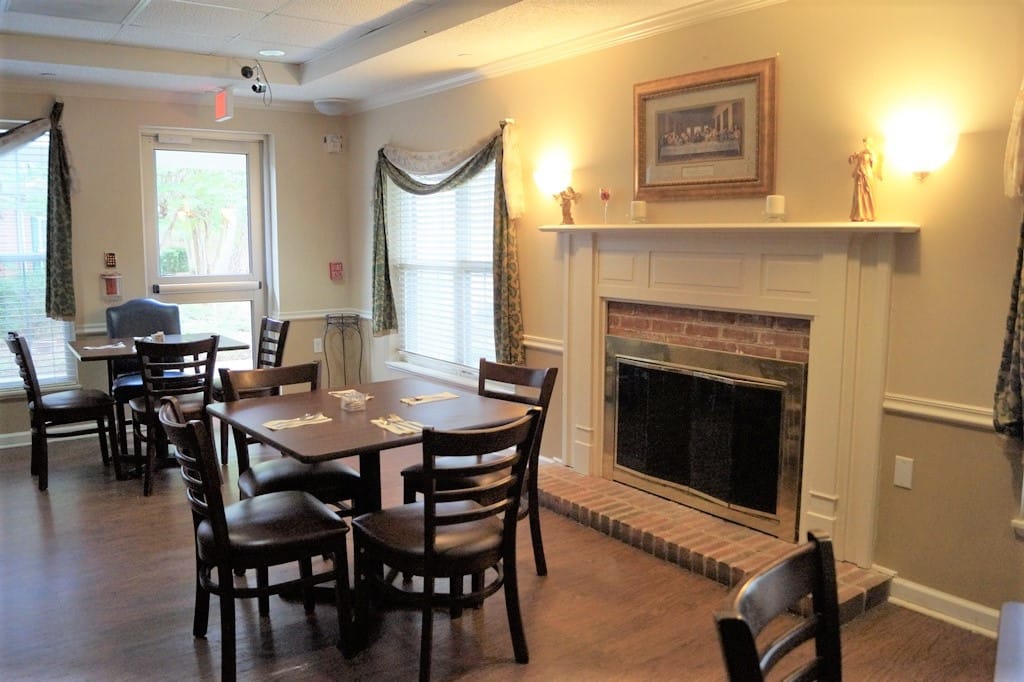
Cleveland House
Cleveland House is a 72-bed home for the aged facility at 950 Hardin Drive, Shelby, Cleveland County, North Carolina. It provides 24-hour staffing and accepts Medicaid, focusing on residential senior care.
Serious resident care failures and systemic fire safety infrastructure deficiencies characterize Cleveland House’s regulatory record. Over six years, the facility averaged 10 deficiencies annually, 92 percent above North Carolina’s 5.2-deficiency benchmark. A substantiated January 2020 complaint investigation documented critical care failures during a norovirus outbreak. The facility failed to maintain temperature at 75°F in resident rooms and dining area during winter.
One of five staff members sampled had substantiated findings on the North Carolina Health Care Personnel Registry upon hire. Personal care failures resulted in untreated genital and buttock rash and dried soiled incontinent brief adhered to skin for two of five residents. Timely referral and follow-up failed for residents with untreated rash and psychotropic medication not administered for up to 28 days. Medications were improperly labeled for two residents; four residents did not receive medications as ordered (9.5 percent medication error rate).
Medication administration records were inaccurate for two residents. The facility failed to notify Cleveland County Department of Social Services of incidents resulting in injury or emergency medical evaluation for six of 26 residents involving falls. Residents were denied showers and personal care during outbreak. Infection control policy was not implemented per CDC guidelines.
A substantiated November 2019 complaint investigation identified four resident care deficiencies. The facility failed to provide adequate supervision for five sampled residents related to falls. Failed to assure timely referral and follow-up for acute health care needs. Failed to treat residents with dignity and respect.
Failed to notify local law enforcement of a resident’s unexpected death.
Physical plant and fire safety failures appear across inspection cycles.
June 2019 construction survey identified 10 deficiencies. Earlier inspections spanning 2015-2017 document persistent fire safety infrastructure failures including unprotected penetrations in smoke barriers, missing or damaged sprinkler heads, non-functioning emergency lighting, improperly stored portable oxygen cylinders, inadequate fire safety rehearsal documentation, electrical hazards, and non-functioning exhaust fans in multiple locations. Follow-up surveys in 2015 and 2017 confirmed some deficiencies remained uncorrected.
Medication administration deficiencies appear across clinical inspections. November 2022 annual survey documented failure to ensure physician contact for unclear medication order for one resident and inaccurate electronic medication administration records for wound care documentation. No fines or license suspensions appear in the record.
The pattern of serious resident care failures during the 2020 norovirus outbreak, combined with persistent fire safety and physical plant deficiencies, warrants careful family inquiry.
Families should ask about corrections following the January 2020 outbreak, fire safety, fall-risk supervision, and medication administration oversight and electronic record accuracy procedures.
About this community
Inspection History
In North Carolina, the Department of Health and Human Services, Division of Health Service Regulation conducts unannounced surveys to ensure nursing and adult care homes meet safety standards.
Inspection Scorecard
This scorecard compares key inspection, deficiency, and complaint metrics at this facility against the North Carolina state average. Metrics rated ≥15% worse than average are highlighted in red; those ≥15% better are highlighted in green.
Since 2015 vs. North Carolina state average
• Total deficiencies (30% above)
• Deficiencies per year (31% above)
• Inspections with deficiencies (26% above) 2 Better Metrics better than North Carolina average:
• Deficiencies per inspection (5% below)
• Inspection deficiency rate (8% below)
Deficiencies
|
This Facility | NC Average | vs. NC Avg |
|---|---|---|---|
|
Total deficiencies
|
60 | 46 | This facility has 30% more total deficiencies than a typical North Carolina assisted living residence (60 vs. NC avg 46).↑ 30% worse |
|
Deficiencies per year
|
5.5 | 4.2 | This facility has 31% more deficiencies per year than a typical North Carolina assisted living residence (5.5 vs. NC avg 4.2).↑ 31% worse |
|
Deficiencies per inspection
|
2.1 | 2.2 | This facility has 5% fewer deficiencies per inspection than a typical North Carolina assisted living residence (2.1 vs. NC avg 2.2).↓ 5% better |
Inspections
|
This Facility | NC Average | vs. NC Avg |
|---|---|---|---|
|
Total inspections
|
29 | 21 | This facility has had 38% more total inspections than the North Carolina average (29 vs. NC avg 21). More inspections can mean more regulatory scrutiny rather than worse care.↑ 38% more |
|
Inspections with deficiencies
|
24 | 19 | This facility has 26% more inspections with deficiencies than a typical North Carolina assisted living residence (24 vs. NC avg 19).↑ 26% worse |
|
Inspection deficiency rate
|
83% | 90% | This facility has 7 percentage points lower inspection deficiency rate than a typical North Carolina assisted living residence (83% vs. NC avg 90%).↓ 7% better |
Inspection Reports Summary
An editor-reviewed summary of the themes and findings across this facility's recent inspection reports.
- The most recent inspection on July 9, 2025, cited four deficiencies related to sanitation and fire safety reports, construction approval, and unsafe electrical and fire safety equipment.
- The January 31, 2020 follow-up survey found 11 deficiencies including medication errors, untreated infections, neglect during a norovirus outbreak, and failure to notify authorities of injuries.
- Inspections from 2017 through 2025 repeatedly cited fire safety and building maintenance issues, showing ongoing problems with fire-rated doors, ventilation, and safety documentation.
Places of interest near Cleveland House
0.0 miles from city center
Estimated distance in miles from Shelby's city center to Cleveland House's address, calculated via Google Maps.
Calculate Travel Distance to Cleveland House
Add your location
Compare Assisted Living around the area
The information below is reported by the North Carolina Department of Health and Human Services, Division of Health Service Regulation.
|
|
|
|
|
|
|
|
|
|---|---|---|---|---|---|---|---|
| St. Joseph of the Pines, a CCRC |
AL
IL
MC
NH
SNF
|
Southern Pines | 176 | Yes | A+ | 2 | Private Rooms |
| Cleveland House |
AL
|
Shelby | 72 | No | - | 73 | - |
| Glenaire |
AL
NH
IL
|
Cary (Glenaire) | 71 | No | A+ | 25 | - |
| Friends Homes |
AL
NH
IL
MC
SNF
|
Greensboro (Guilford College) | 69 | No | - | 35 | Villa Apartments / Townhomes / Apartments / Cottages |
| River Landing At Sandy Ridge |
AL
IL
MC
NH
|
Colfax | 60 | Yes | - | 7 | Apartments / Cottages / Townhomes / Villas |
Frequently Asked Questions about Cleveland House
Is Cleveland House in a walkable area?
Cleveland House has a walk score of 73. Very walkable. Most errands can be accomplished on foot, and many essentials are within a short walk.
What is the license number of Cleveland House?
According to NC state health department records, Cleveland House's license number is HAL-023-045.
Are pets allowed at Cleveland House?
No, Cleveland House has a no-pet policy.
How many beds does Cleveland House have?
Cleveland House has 72 beds.
Are there photos of Cleveland House?
Yes — there is 1 photo of Cleveland House in the photo gallery on this page.
What is the address of Cleveland House?
Cleveland House is located at 950 Hardin Drive Shelby, Nc 28150, Shelby, NC 28150.
What is the phone number of Cleveland House?
(704) 480-9800 will put you in contact with the team at Cleveland House.
Guides for Better Senior Living
Care Cost Calculator: See Prices in Your Area
Assisted Living Explorer
Don’t Wait Too Long: 7 Red Flag Signs Your Parent Needs Assisted Living Now
The True Cost of Assisted Living in 2025 – And How Families Are Paying For It
Understanding Senior Living Costs: Pricing Models, Discounts & Financial Assistance