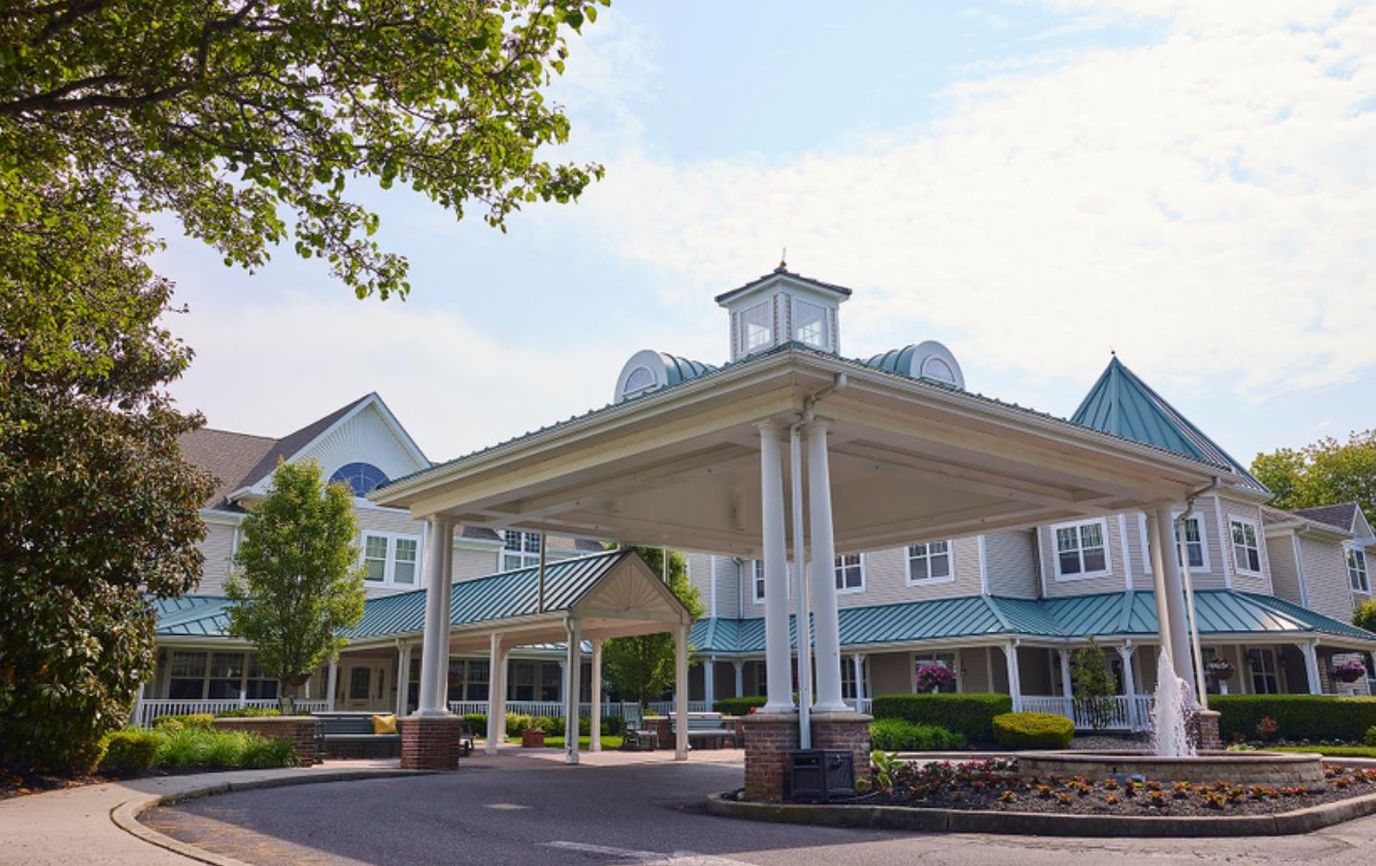
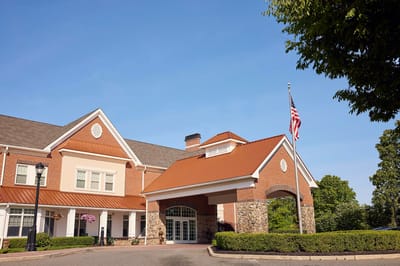
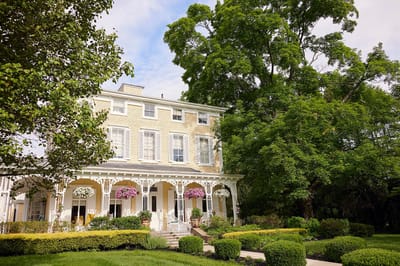
Medium-capacity home · Offers a balance of services and community atmosphere.
Brandywine Brandall Estates
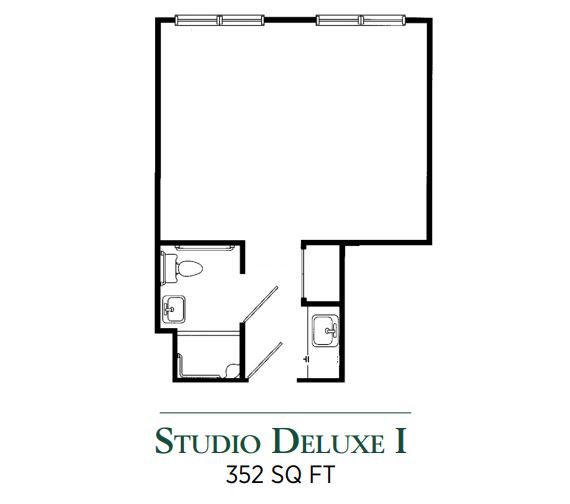
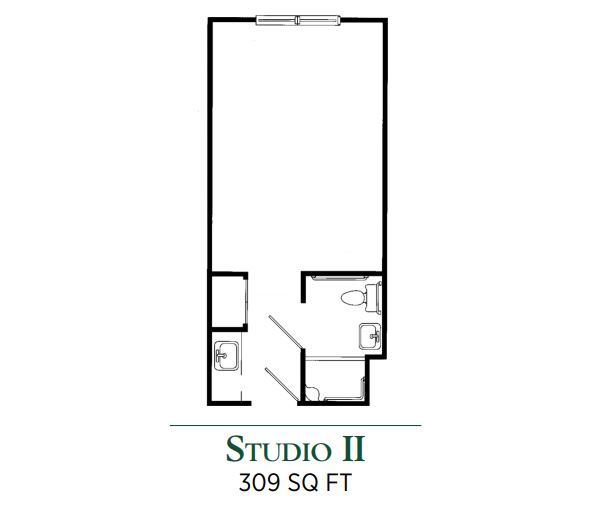
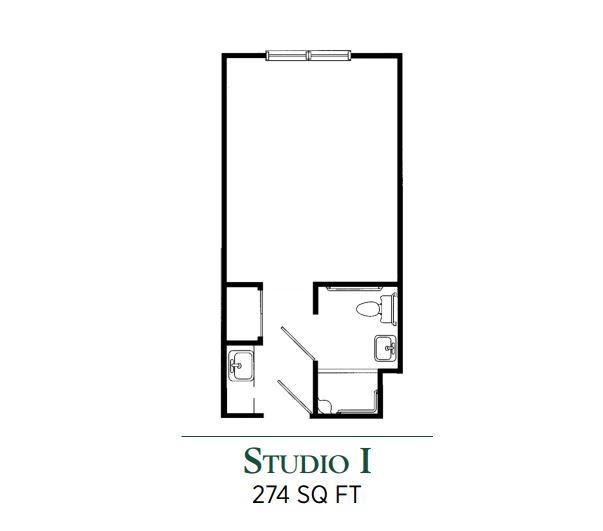
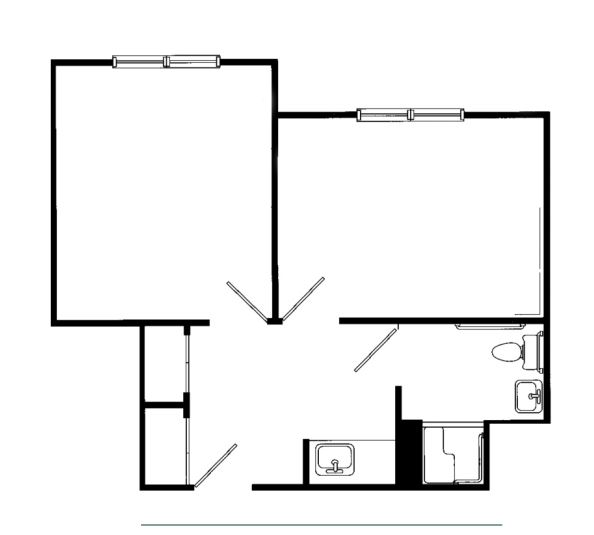
Brandywine Brandall Estates offers assisted living, memory care, and respite care in Linwood, NJ. Assisted living includes help with daily tasks while a resident keeps a private living space, memory care takes place in a secure wing for someone who needs supervision, and respite care provides a short term stay when a family caregiver needs to travel or recover. The community has 100 beds, with studio and one bedroom residences. A studio has one main living space, while a one bedroom layout separates the sleeping area.
Starting monthly prices are $7,650 for assisted living and $8,200 for memory care, giving families a care specific starting point for budgeting. Brandywine Living At Brandall Estates operates the community, and Ms. Katherine Prassas serves as administrator. Restaurant style dining uses fresh, seasonal ingredients and is served in a dining room, bistro, or courtyard, giving residents several confirmed settings for meals. An on site beauty salon provides salon services within the community, while wheelchair accessible transportation supports outings and appointments without requiring separate transportation arrangements.
Pets are allowed, so residents may live with a pet. Activities include casino nights, trivia challenges, art classes, and live performances, giving residents organized options for participation. A Walk Score of 65 out of 100 means the area is somewhat walkable, and some errands can be done on foot, so a resident who no longer drives may be able to complete some errands independently. The combination of assisted living and memory care may be a good fit for a resident whose needs grow over time without requiring a move to another community.
Community insights.
Based on 76 residents and 100 beds. Source: state inspection report (Nov 2020)
About This Community
Pricing & Financial Information
The below pricing was updated on
Brandywine Brandall Estates is legally operated by Well Bl Opco LLC, and administered by Ms. Katherine Prassas.
Inspection History
In New Jersey, the Department of Health, Health Facilities Evaluation and Licensing conducts mandatory unannounced surveys to ensure facilities provide safe and effective resident care.
The figures below cover inspections recorded between August 17, 2021 and August 17, 2026.
ALM Inspection Grade
9 points below the New Jersey average for state-licensed facilities (83/100)
Category breakdown
Routine inspections
Concern
3 deficiencies per routine inspection · 3× more than the typical state-licensed NJ facility (median: 1)
Complaint inspections
Typical
2 deficiencies per complaint inspection · 33% more than the typical state-licensed NJ facility (median: 1.5)
Inspection Scorecard
This scorecard compares key inspection, deficiency, and complaint metrics at this facility against the New Jersey state average. Metrics rated ≥15% worse than average are highlighted in red; those ≥15% better are highlighted in green.
• Total deficiencies (75% below)
• Deficiencies per inspection (11% below)
Deficiencies
| This Facility | NJ Average | vs. NJ Avg |
|---|---|---|---|
|
Total deficiencies
| 5 | 20.0 | This facility has 75% fewer total deficiencies than a typical New Jersey assisted living residence (5 vs. NJ avg 20).↓ 75% better |
|
Deficiencies per inspection
| 2.5 | 2.8 | This facility has 11% fewer deficiencies per inspection than a typical New Jersey assisted living residence (2.5 vs. NJ avg 2.8).↓ 11% better |
Inspections
| This Facility | NJ Average | vs. NJ Avg |
|---|---|---|---|
|
Total inspections
| 2 | 6.0 | This facility has had 67% fewer total inspections than the New Jersey average (2 vs. NJ avg 6). More inspections can mean more regulatory scrutiny rather than worse care.↓ 67% fewer |
|
Routine inspections
| 1 | 4.0 | This facility has had 75% fewer routine inspections than the New Jersey average (1 vs. NJ avg 4). More inspections can mean more regulatory scrutiny rather than worse care.↓ 75% fewer |
|
Complaint inspections
| 1 | 2.0 | This facility has had 50% fewer complaint inspections than the New Jersey average (1 vs. NJ avg 2). More inspections can mean more regulatory scrutiny rather than worse care.↓ 50% fewer |
Living Spaces & Floor Plans for Brandywine Brandall Estates
Places of interest near Brandywine Brandall Estates
0.5 miles from city center
Estimated distance in miles from Linwood's city center to Brandywine Brandall Estates's address, calculated via Google Maps.
Calculate Travel Distance to Brandywine Brandall Estates
Add your location
Programs that may help with care and living costs in New Jersey
Brandywine Brandall Estates is in Linwood, New Jersey. These programs may support different care settings or living expenses. A listing does not confirm this community participates; our concierge team can help confirm.
Managed Long Term Services and Supports
Eligibility
- General
- Adults age 65+ or younger people who are blind or disabled and meet Medicaid financial and clinical eligibility for long-term services and supports.
- NJ specifics
- MLTSS delivers long-term services through NJ FamilyCare managed care.
What it provides
- Coordinated Medicaid long-term care at home or in eligible facilities; covered supports include care management; respite; home-delivered meals and personal emergency response systems.
VA Aid and Attendance (A&A) and Housebound Benefits
- Who it is for
- Veterans or survivors with VA pension eligibility and an Aid and Attendance or Housebound medical need
- Income limit
- 2026 · Countable income is compared with the applicable maximum annual pension rate (MAPR), which varies by dependents and benefit category. For a veteran with one dependent and Aid and Attendance, MAPR is $34,488/year.
- Asset limit
- VA pension net-worth ceiling is $163,699 from December 1, 2025 through November 30, 2026. Net worth includes countable assets plus income for VA purposes; exclusions and transfer rules apply.
Eligibility
- General
- Aid and Attendance or Housebound is an increased VA pension rate for eligible veterans or surviving spouses who meet pension and additional care/disability requirements; it is not a stand-alone state benefit.
- NJ specifics
- Federal VA pension rules apply nationwide.
What it provides
- Monthly pension is based on the applicable MAPR less countable annual income; divided by 12. Maximum annual veteran Aid and Attendance rates are $29,093 without dependents and $34,488 with one dependent; actual payments may be lower.
JACC (Jersey Assistance for Community Caregiving)
- Income limit
- 2026 · No more than 365% of the federal poverty level; official program page lists $4,855/month individual and $6,582/month married couple.
- Asset limit
- Countable resources at or below $40,000 individual or $60,000 couple.
Eligibility
- General
- Age 60+, nursing-home level of care, and desire to remain at home; JACC does not serve people enrolled in Medicaid such as NJ FamilyCare or MLTSS.
What it provides
- Care management and an individualized plan of home/community services.
Statewide Respite Care Program
- Income limit
- 2026 gross monthly maximum: $2,982 single or $5,964 married combined.
- Asset limit
- Liquid-asset maximum: $40,000 single or $60,000 married combined.
Eligibility
- General
- New Jersey adults 18+ living in the community with certified functional impairment and daily unpaid care or supervision. Financial rules apply; participation cannot overlap with MLTSS, JACC, Alzheimer’s Adult Day Services or Congregate Housing Services.
What it provides
- Short-term or intermittent respite for an unpaid caregiver; the care recipient’s income determines a 0%–25% share of service costs.
Pharmaceutical Assistance to the Aged and Disabled (PAAD)
- Income limit
- 2026 · Annual income less than $54,943 single or $62,390 married.
Eligibility
- General
- New Jersey resident age 65+ or age 18–64 receiving Social Security disability benefits; meet the program income and prescription-coverage rules. Medicare-eligible participants must meet Part D enrollment requirements.
What it provides
- Covered prescription copay generally $5 for generic and $7 for brand-name drugs; subject to coordination with Medicare Part D.
Senior Gold Prescription Discount Program
- Income limit
- 2026 · Annual income between $54,943 and $64,943 single, or between $62,390 and $72,390 married.
Eligibility
- General
- New Jersey resident age 65+ or age 18–64 receiving Social Security disability benefits; meet the program income and prescription-coverage rules. Medicare-eligible participants must meet Part D enrollment requirements.
What it provides
- Covered prescriptions generally cost the member $15 plus half the remaining drug cost; with program-specific catastrophic protection.
Medicare Savings Program (MSP)
- Who it is for
- Medicare beneficiaries with limited income who need help with premiums or cost sharing
Eligibility
- General
- Medicare beneficiary; the state determines the applicable Medicare Savings Program. QMB helps with premiums and Medicare cost sharing; SLMB and QI generally help with Part B premiums.
- NJ specifics
- QI requires annual application and is funded first-come, first-served with priority for prior recipients. QMB, SLMB and QI confer Part D Extra Help.
What it provides
- QMB pays eligible Part A/Part B premiums and Medicare deductibles and cost sharing; SLMB and QI pay Part B premiums. The exact benefit depends on the approved program.
Universal Service Fund (USF)
- Income limit
- 2026–2027 program year · Gross household income at or below 60% of New Jersey state median income, using the current household-size table.
Eligibility
- General
- Income-eligible New Jersey households with qualifying natural-gas or electric costs; assistance depends on household income and energy burden.
- NJ specifics
- USF accepts applications year-round and shares an application with LIHEAP.
What it provides
- Monthly credits on qualifying natural-gas and electric bills.
Home Energy Assistance Program (LIHEAP)
- Income limit
- 2026–2027 program year · Gross household income at or below 60% of New Jersey state median income, using the current household-size table.
Eligibility
- General
- Income-eligible households responsible for home-heating costs, including qualifying heating costs included in rent.
- NJ specifics
- The 2026–2027 LIHEAP application period runs October 1, 2026 through June 30, 2027, subject to funding; the combined application also screens for USF.
What it provides
- Assistance with eligible home-heating costs; qualifying households may also receive medically necessary cooling assistance.
Lifeline Utility Assistance
- Income limit
- PAAD-based eligibility in 2026: income below $54,943 single or $62,390 married; age 65+ or age 18–64 receiving Social Security Disability.
Eligibility
- General
- New Jersey residents who meet PAAD criteria or a specified qualifying assistance category; applies to eligible utility customers and tenants whose gas/electric costs are included in rent.
What it provides
- A $225 annual electric/gas bill credit or eligible tenant payment. SSI recipients receive the utility supplement through their SSI payment instead of a second Lifeline award.
Hearing Aid Assistance to the Aged and Disabled (HAAAD)
- Income limit
- 2026 income no greater than $54,943 single or $62,390 married; PAAD/Lifeline verification rules apply.
Eligibility
- General
- New Jersey residents with hearing loss who meet PAAD/Lifeline age-or-disability and financial criteria. Beneficiaries must be enrolled in PAAD or Lifeline; if not already enrolled, complete NJSave before applying for HAAAD. Other hearing-aid coverage is considered.
What it provides
- Reimbursement up to $500 for one hearing aid or $1,000 for two per calendar year; partial insurance coverage may qualify within program rules.