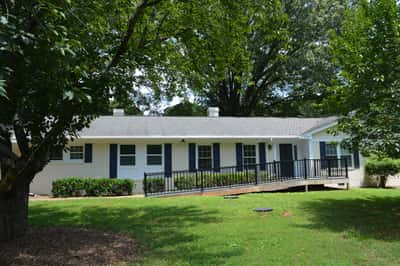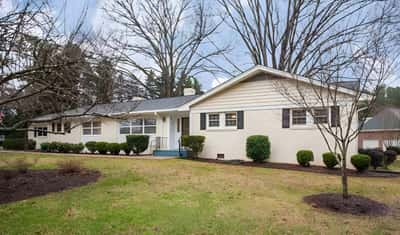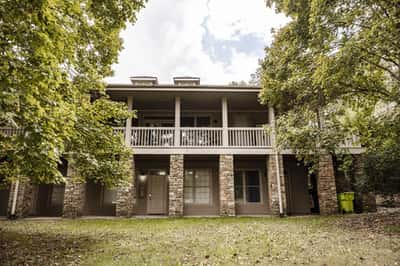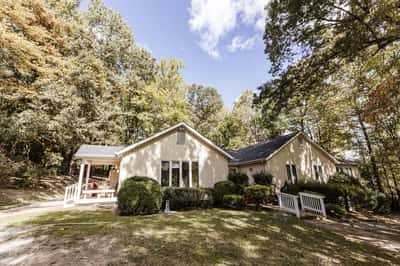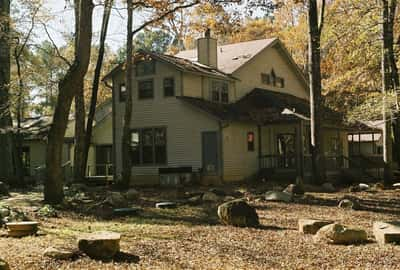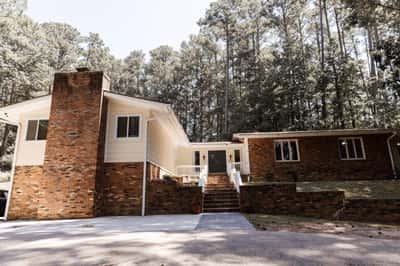
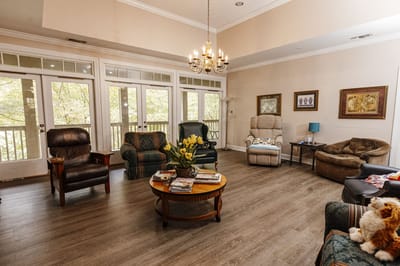
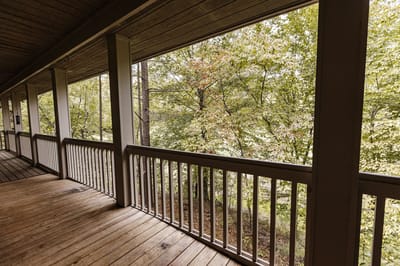
LiveWell @ Governors Club Cottages (1) (Chapel Hill)
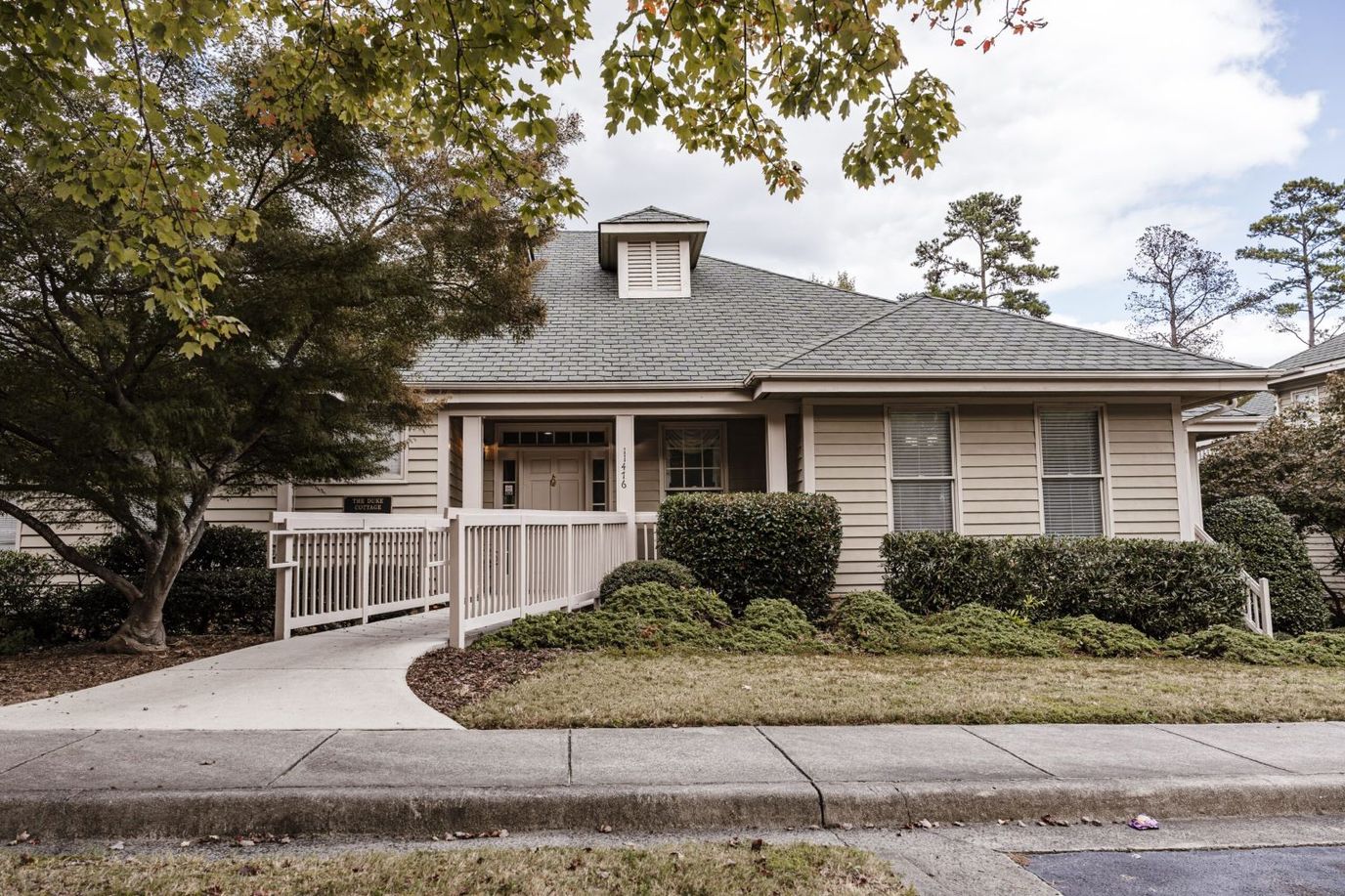
LiveWell @ Governors Club Cottages (1) (Chapel Hill) provides three types of care in Chapel Hill, NC. These include home care, assisted living, and memory care. Within the assisted living units, personnel support residents with daily activities while each individual continues to reside in their own room. Home care is assistance delivered to an individual in their own residence. Memory care supervises individuals at risk of wandering within a secured environment.
An individual with dementia who would gain from supervised memory care might view it as a good fit. With a Walk Score of 63, the neighborhood is fairly walkable, so some errands can be managed by walking, even if a resident does not drive anymore.
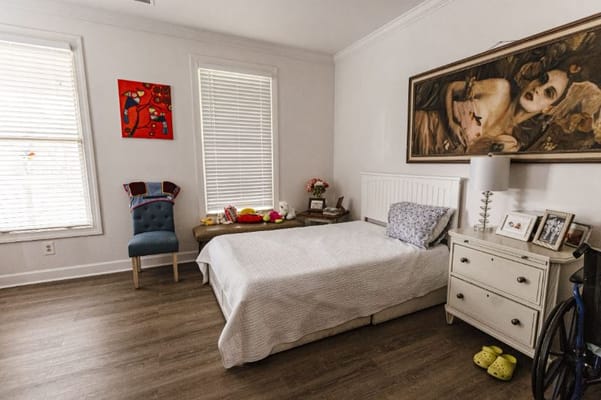
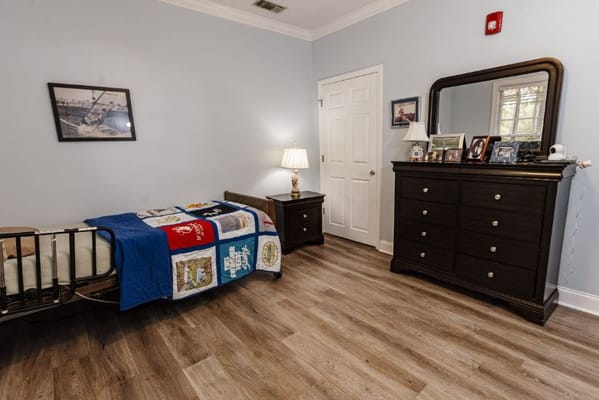
Private and semi-private accommodations are available. In a private room, a single resident occupies the area, while in a semi-private room, two residents coexist.
Community insights.
About This Community
Places of interest near LiveWell @ Governors Club Cottages (1) (Chapel Hill)
2.1 miles from city center
Estimated distance in miles from Chapel Hill's city center to LiveWell @ Governors Club Cottages (1) (Chapel Hill)'s address, calculated via Google Maps.
Calculate Travel Distance to LiveWell @ Governors Club Cottages (1) (Chapel Hill)
Add your location
Compare Assisted Living around Chapel Hill
Info below is compiled from the NC Dept. of Health & Human Services (NCDHHS), senior community websites & trusted data sources such as Walk Score & BBB.
Communities are listed from highest-ranked to lowest-ranked based on our methodology.
Care Types in This Table
AL (Assisted Living):
Housing with help for daily activities like bathing, dressing, and medication, without 24-hour skilled nursing.
MC (Memory Care):
Secured, specialized care for people living with Alzheimer's or dementia.
HC (Home Care):
Professional care delivered in the person's own home, from companionship to skilled nursing.
|
City and state of the facility. Used for mapping and state-average comparisons.
|
Licensed bed capacity (maximum allowed). Not the same as how many beds are currently filled.
|
Indicates whether residents are allowed to have pets in the facility.
|
Third-party neighborhood walkability score (0–100). Convenience/context metric, not a healthcare quality measure.
|
Reported or derived occupancy for the facility—typically how fully licensed capacity is utilized. Compare across peers in the same market.
|
NC DHSR Star Rating (0–4 stars). Issued by North Carolina's Division of Health Service Regulation based on annual facility inspections. Stars reflect overall compliance with state health and safety rules - 4 stars requires scores of 100+ on two consecutive annual inspections. Ratings can change between inspections if new violations or licensure actions occur.
|
DHSR Quality Score (/200). Each annual inspection starts at a base of 100 points. Facilities earn demerit points for violations and citations, and merit points for correcting issues, maintaining resident/family councils, sprinkler systems, and other quality programs. The "/200" display reflects the two most recent annual inspections combined - giving a longer-term view of compliance trends rather than a single snapshot.
|
Count of regulatory inspections in the reporting window. Higher volume can reflect more oversight visits, complaint-driven surveys, or routine licensure cycles.
|
Share of inspections that resulted in deficiencies, expressed as a percentage of total inspections in the window.
|
Housing or bed configuration options (e.g. studio, shared), often from facility-reported amenities and licensing details.
| |
|---|---|---|---|---|---|---|---|---|---|---|---|
| Brookdale Meadowmont | AL MC | Chapel Hill (Glen Lennox Appartments) | 64
Facility
64
NC AVG
66
Rank
#160 / 297 | Yes |
53
Facility
53
NC AVG
34
Rank
#75 / 334 |
100.0%
Facility
100.0%
NC AVG
65%
Rank
#1 / 149 | 103.50/200
Facility
103.50/200
NC AVG
94.9
Rank
#33 / 294 | 13 | 46%
Facility
46%
NC AVG
63.4%
Rank
#45 / 294 | Studio / Suite | |
| LiveWell @ Coker Hills (Chapel Hill) | AL HC MC | Chapel Hill (Blue Hill District) | 6
Facility
6
NC AVG
66
Rank
#248 / 297 | No |
63
Facility
63
NC AVG
34
Rank
#26 / 334 |
33.3%
Facility
33.3%
NC AVG
65%
Rank
#124 / 149 | 102.50/200
Facility
102.50/200
NC AVG
94.9
Rank
#69 / 294 | 9 | 56%
Facility
56%
NC AVG
63.4%
Rank
#82 / 294 | Private / Semi-Private Rooms | |
| Brookdale Chapel Hill | AL MC | Chapel Hill (Falconbridge) | 38
Facility
38
NC AVG
66
Rank
#233 / 297 | Yes |
35
Facility
35
NC AVG
34
Rank
#157 / 334 |
100.0%
Facility
100.0%
NC AVG
65%
Rank
#1 / 149 | 96.75/200
Facility
96.75/200
NC AVG
94.9
Rank
#172 / 294 | 18 | 72%
Facility
72%
NC AVG
63.4%
Rank
#191 / 294 | Studio / Suite | |
| LiveWell @ Governors Club Cottages (2) (Chapel Hill) | AL HC MC | Chapel Hill (Governors Club) | 6
Facility
6
NC AVG
66
Rank
#248 / 297 | No |
7
Facility
7
NC AVG
34
Rank
#292 / 334 |
100.0%
Facility
100.0%
NC AVG
65%
Rank
#1 / 149 | 102.50/200
Facility
102.50/200
NC AVG
94.9
Rank
#69 / 294 | 5 | 60%
Facility
60%
NC AVG
63.4%
Rank
#106 / 294 | Private / Semi-Private Rooms | |
| LiveWell @ Governors Club Cottages (1) (Chapel Hill) | AL HC MC | Chapel Hill | 6 Residents | No |
63
Facility
63
NC AVG
34
Rank
#26 / 334 | - | - | - | - | - | Private / Semi-Private Rooms |
Rank badges are statewide and care-type specific: each assisted living community is ranked against every other NC assisted living community we track that reports that metric, not just the 5 on this page. See how we rank facilities
Programs that may help with care and living costs in North Carolina
LiveWell @ Governors Club Cottages (1) (Chapel Hill) is in Chapel Hill, North Carolina. These programs may support different care settings or living expenses. A listing does not confirm this community participates; our concierge team can help confirm.
VA Aid and Attendance (A&A) and Housebound Benefits
- Who it is for
- Veterans or survivors with VA pension eligibility and an Aid and Attendance or Housebound medical need
- Income limit
- 2026 · Countable income is compared with the applicable maximum annual pension rate (MAPR), which varies by dependents and benefit category. For a veteran with one dependent and Aid and Attendance, MAPR is $34,488/year.
- Asset limit
- VA pension net-worth ceiling is $163,699 from December 1, 2025 through November 30, 2026. Net worth includes countable assets plus income for VA purposes; exclusions and transfer rules apply.
Eligibility
- General
- Aid and Attendance or Housebound is an increased VA pension rate for eligible veterans or surviving spouses who meet pension and additional care/disability requirements; it is not a stand-alone state benefit.
- NC specifics
- Federal VA pension rules apply nationwide.
What it provides
- Monthly pension is based on the applicable MAPR less countable annual income; divided by 12. Maximum annual veteran Aid and Attendance rates are $29,093 without dependents and $34,488 with one dependent; actual payments may be lower.
State/County Special Assistance (SA)
Eligibility
- General
- Low-income people who need help with room and board in an eligible residential facility, or who qualify for the separate in-home component because they are at risk of entering a residential facility.
- NC specifics
- Special Assistance has separate adult-care-home and in-home programs. The latter assists eligible people at risk of residential placement; rules and payment standards must be matched to the correct setting.
What it provides
- A cash supplement for eligible low-income residents toward residential-facility room and board; or separate assistance through the in-home program.
Community Alternatives Program for Disabled Adults
Eligibility
- General
- CAP/DA is a Medicaid home/community waiver for adults age 18+ with disabilities at risk of institutionalization who meet applicable Medicaid and care requirements.
What it provides
- Assessed supports may include personal care; adult day health; home accessibility adaptations; meals; respite; emergency-response services and assistive technology.
In-Home Aide Services
Eligibility
- General
- Age 60+, living at home, and unable to complete one or more daily-living or household tasks; a responsible helper is unavailable or the primary caregiver needs relief.
- NC specifics
- Local providers supported by the Home and Community Care Block Grant offer levels of home management, personal care and respite. Service must be appropriate for needs that can be safely met at home.
What it provides
- Assessed home-management help; personal care or caregiver respite.
Medicare Savings Program (MSP)
- Who it is for
- Medicare beneficiaries with limited income who need help with premiums or cost sharing
Eligibility
- General
- Medicare beneficiary; the state determines the applicable Medicare Savings Program. QMB helps with premiums and Medicare cost sharing; SLMB and QI generally help with Part B premiums.
- NC specifics
- QI requires annual application and is funded first-come, first-served with priority for prior recipients. QMB, SLMB and QI confer Part D Extra Help.
What it provides
- QMB pays eligible Part A/Part B premiums and Medicare deductibles and cost sharing; SLMB and QI pay Part B premiums. The exact benefit depends on the approved program.
Low Income Energy Assistance Program (LIEAP)
- Who it is for
- Income-eligible households responsible for home heating costs
- Income limit
- NC DHHS describes an income test based on 130% of the federal poverty guideline. Category-specific rules and current household-size tables should be checked.
- Asset limit
- NC DOA’s LIEAP description lists a household resource ceiling of $2,250.
Eligibility
- General
- Eligible households responsible for heating costs may receive LIEAP assistance; age 60+ households and certain disability households have an early application period.
- NC specifics
- Early applications run December 1–31 for qualifying older/disability households; others January 1–March 31 or until funds are exhausted. Crisis Intervention is a separate component with different rules.
What it provides
- One-time vendor payment toward heating costs; subject to eligibility and funding.