Smaller home · May offer a more intimate, personalized care environment.
Preston House
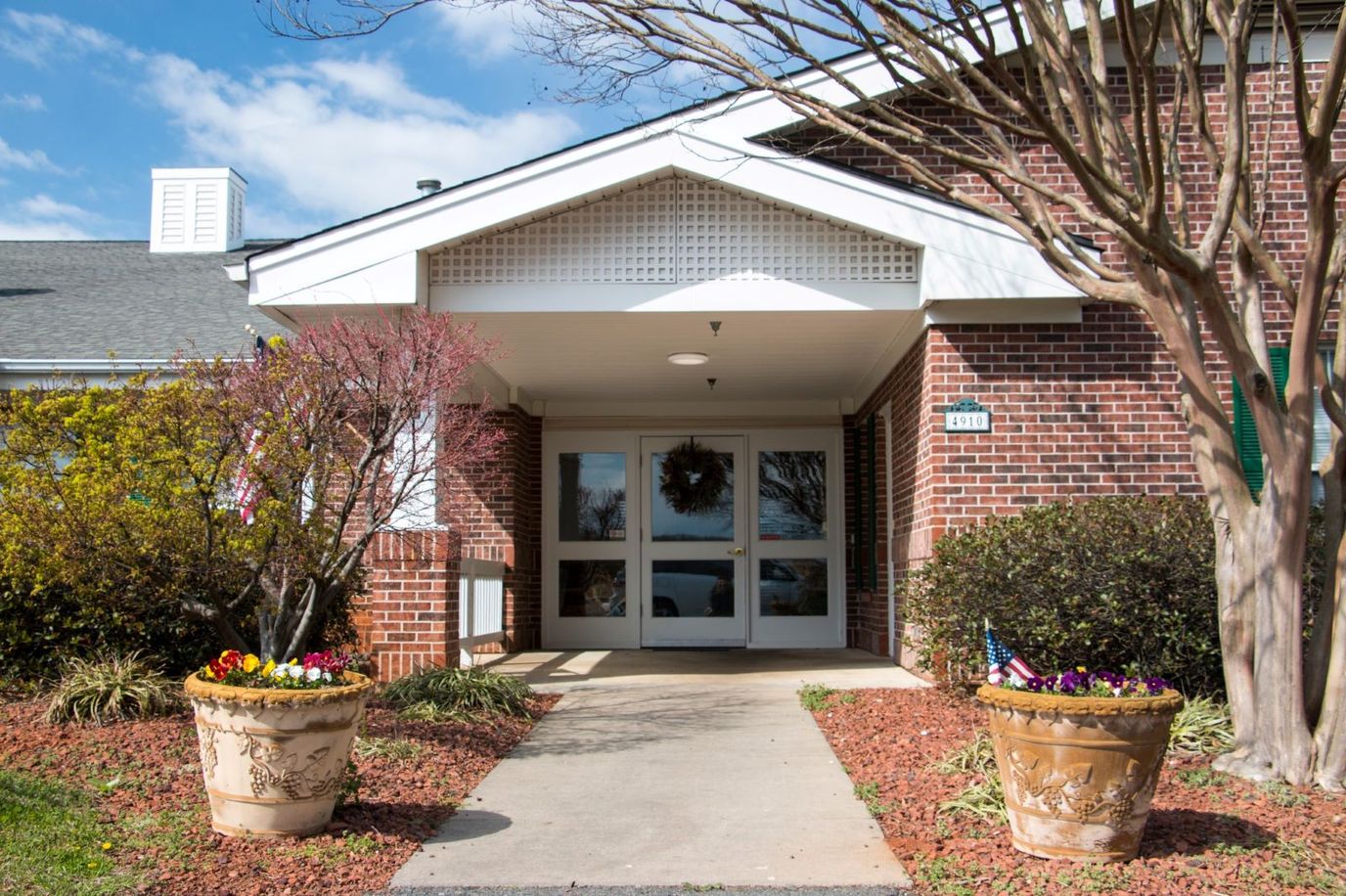
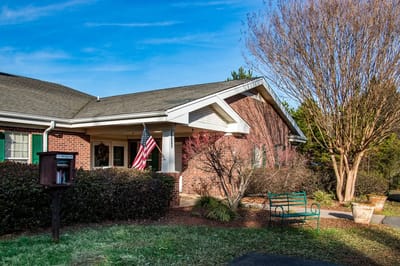
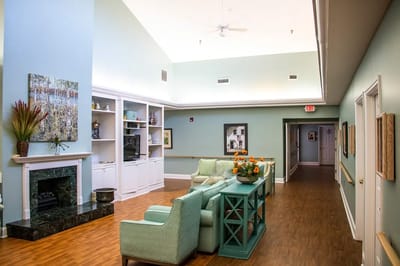
Preston House is a memory care community in Charlotte, North Carolina, set in a suburban pocket of Mecklenburg County about 7.8 miles from the city center. The single-story building holds 40 beds, which puts it in moderate territory for size: large enough to sustain daily programming and shared spaces, small enough that staff tend to know residents individually. Residents live in private rooms, an arrangement many families prefer when a loved one is easily overstimulated or unsettled by a roommate. The community has been operating for 29 years, a long track record in a field where turnover is common.
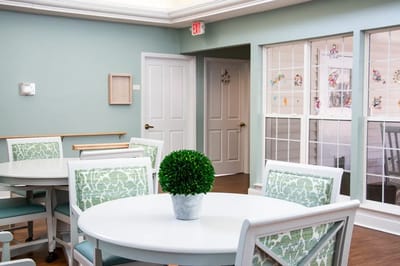
Care is built specifically around memory impairment, with a team trained in memory care supporting residents through the day. The building reflects that focus in practical ways, including handicapped-accessible bathrooms and a wireless emergency response system that brings staff quickly when someone needs help. A full-time social director oversees the activity calendar, and residents have access to fitness and recreation programming as well as transportation services for outings and appointments. Atrium Health University City sits roughly four miles away, which matters when medical needs come up.
State inspections by the North Carolina Department of Health and Human Services have most often pointed to building systems and physical-plant upkeep, including fire safety equipment, ventilation, plumbing, and wander-alert devices, rather than concerns with hands-on resident care. Follow-up review confirmed that flagged items were corrected. Families touring the community may want to ask how maintenance and safety checks are handled on an ongoing basis.
The neighborhood scores 53 out of 100 for walkability, meaning some errands can be handled on foot while most trips involve a short drive. For visiting family, the suburban setting and single-story layout make regular, low-effort visits practical.
Community insights.
About This Community
Pricing & Financial Information
The below pricing was updated on
Inspection History
In North Carolina, the Department of Health and Human Services, Division of Health Service Regulation conducts unannounced surveys to ensure nursing and adult care homes meet safety standards.
The figures below cover inspections recorded between January 27, 2016 and November 6, 2024.
ALM Inspection Grade
14 points above the North Carolina average for state-licensed facilities (83/100)
Category breakdown
Deficiencies
Strong
1 deficiency per inspection (11 in 11 inspections) · 3× fewer than the typical state-licensed NC facility (median: 2.5)
Finding Frequency
Strong
36% of inspections found a deficiency · 2× fewer than the typical state-licensed NC facility (median: 67%)
Star Rating
Strong
Average Star Rating score of 104.2 across 9 inspections · higher than the typical state-licensed NC facility (median: 96.8)
Penalties
Strong
No fines on record
Inspection Scorecard
This scorecard compares key inspection, deficiency, and complaint metrics at this facility against the North Carolina state average. Metrics rated ≥15% worse than average are highlighted in red; those ≥15% better are highlighted in green.
• Total deficiencies (73% below)
• Deficiencies per inspection (63% below)
• Inspections with deficiencies (56% below)
• Inspection deficiency rate (44% below)
• Average Star Rating score (10% above)
Deficiencies
| This Facility | NC Average | vs. NC Avg |
|---|---|---|---|
|
Total deficiencies
| 11 | 40.0 | This facility has 73% fewer total deficiencies than a typical North Carolina assisted living residence (11 vs. NC avg 40).↓ 73% better |
|
Deficiencies per inspection
| 1.0 | 2.7 | This facility has 63% fewer deficiencies per inspection than a typical North Carolina assisted living residence (1 vs. NC avg 2.7).↓ 63% better |
Inspections
| This Facility | NC Average | vs. NC Avg |
|---|---|---|---|
|
Total inspections
| 11 | 13.0 | This facility has had 15% fewer total inspections than the North Carolina average (11 vs. NC avg 13). More inspections can mean more regulatory scrutiny rather than worse care.↓ 15% fewer |
|
Inspections with deficiencies
| 4 | 9.0 | This facility has 56% fewer inspections with deficiencies than a typical North Carolina assisted living residence (4 vs. NC avg 9).↓ 56% better |
|
Inspection deficiency rate
| 36% | 64% | This facility has 28 percentage points lower inspection deficiency rate than a typical North Carolina assisted living residence (36% vs. NC avg 64%).↓ 28% better |
|
Average Star Rating score
| 104.2 | 94.6 | This facility has 10% more average star rating score than the North Carolina average (104.2 vs. NC avg 94.6).↑ 10% better |
Places of interest near Preston House
7.8 miles from city center
Estimated distance in miles from Charlotte's city center to Preston House's address, calculated via Google Maps.
— 4.29 miles to nearest hospital (Atrium Health University City)
Calculate Travel Distance to Preston House
Add your location
Compare Memory Care around Charlotte
Info below is compiled from the NC Dept. of Health & Human Services (NCDHHS), senior community websites & trusted data sources such as Walk Score & BBB.
Communities are listed from highest-ranked to lowest-ranked based on our methodology.
Care Types in This Table
AL (Assisted Living):
Housing with help for daily activities like bathing, dressing, and medication, without 24-hour skilled nursing.
MC (Memory Care):
Secured, specialized care for people living with Alzheimer's or dementia.
|
City and state of the facility. Used for mapping and state-average comparisons.
|
Licensed bed capacity (maximum allowed). Not the same as how many beds are currently filled.
|
A 0–100 score of a facility's regulatory inspection record, shown as a letter and compared with other facilities of the same kind in the same state. This is a proprietary Assisted Living Magazine grade. It is not a government rating. A dash means we have no inspection data for that facility.
|
Indicates whether residents are allowed to have pets in the facility.
|
Third-party neighborhood walkability score (0–100). Convenience/context metric, not a healthcare quality measure.
|
Reported or derived occupancy for the facility—typically how fully licensed capacity is utilized. Compare across peers in the same market.
|
Better Business Bureau grade for the operating company. Reflects complaint handling and business practices, not clinical care quality.
|
NC DHSR Star Rating (0–4 stars). Issued by North Carolina's Division of Health Service Regulation based on annual facility inspections. Stars reflect overall compliance with state health and safety rules - 4 stars requires scores of 100+ on two consecutive annual inspections. Ratings can change between inspections if new violations or licensure actions occur.
|
DHSR Quality Score (/200). Each annual inspection starts at a base of 100 points. Facilities earn demerit points for violations and citations, and merit points for correcting issues, maintaining resident/family councils, sprinkler systems, and other quality programs. The "/200" display reflects the two most recent annual inspections combined - giving a longer-term view of compliance trends rather than a single snapshot.
|
Count of regulatory inspections in the reporting window. Higher volume can reflect more oversight visits, complaint-driven surveys, or routine licensure cycles.
|
Share of inspections that resulted in deficiencies, expressed as a percentage of total inspections in the window.
|
Housing or bed configuration options (e.g. studio, shared), often from facility-reported amenities and licensing details.
| |
|---|---|---|---|---|---|---|---|---|---|---|---|---|---|
| Brookdale South Charlotte | MC AL | Charlotte (Wessex Square) | 82
Facility
82
NC AVG
75
Rank
#103 / 262 | B+ | Yes |
16
Facility
16
NC AVG
35
Rank
#229 / 299 |
74.4%
Facility
74.4%
NC AVG
67.3%
Rank
#76 / 155 | A+ | 101.50/200
Facility
101.50/200
NC AVG
94
Rank
#64 / 225 | 13 | 69%
Facility
69%
NC AVG
63.9%
Rank
#122 / 225 | Private Rooms / Semi-Private Rooms | |
| Brookdale South Park | MC | Charlotte (Closeburn - Glenkirk) | 56
Facility
56
NC AVG
75
Rank
#206 / 262 | B- | Yes |
50
Facility
50
NC AVG
35
Rank
#79 / 299 |
82.1%
Facility
82.1%
NC AVG
67.3%
Rank
#57 / 155 | A+ | 93.50/200
Facility
93.50/200
NC AVG
94
Rank
#150 / 225 | 14 | 79%
Facility
79%
NC AVG
63.9%
Rank
#181 / 225 | Apartment / Shared Apartment | |
| Navion of Cotswold | MC AL | Charlotte (Wendover - Sedgewood) | 104
Facility
104
NC AVG
75
Rank
#44 / 262 | D- | Yes |
22
Facility
22
NC AVG
35
Rank
#200 / 299 |
68.3%
Facility
68.3%
NC AVG
67.3%
Rank
#83 / 155 | A+ | 90.75/200
Facility
90.75/200
NC AVG
94
Rank
#168 / 225 | 16 | 94%
Facility
94%
NC AVG
63.9%
Rank
#215 / 225 | Studio / 1 Bed | |
| Preston House | MC | Charlotte (West Sugar Creek) | 40
Facility
40
NC AVG
75
Rank
#221 / 262 | A+ | No |
53
Facility
53
NC AVG
35
Rank
#68 / 299 | - | A+ | 103.50/200
Facility
103.50/200
NC AVG
94
Rank
#14 / 225 | 11 | 36%
Facility
36%
NC AVG
63.9%
Rank
#13 / 225 | Private Rooms | |
| Cadence Senior Living at Mint Hill by Cogir | MC AL | Mint Hill | 84
Facility
84
NC AVG
75
Rank
#97 / 262 | A- | Yes |
36
Facility
36
NC AVG
35
Rank
#137 / 299 |
42.9%
Facility
42.9%
NC AVG
67.3%
Rank
#117 / 155 | - | 100.50/200
Facility
100.50/200
NC AVG
94
Rank
#83 / 225 | 12 | 58%
Facility
58%
NC AVG
63.9%
Rank
#72 / 225 | Suite / Studio / 1 Bed |
Rank badges are statewide and care-type specific: each memory care community is ranked against every other NC memory care community we track that reports that metric, not just the 5 on this page. See how we rank facilities
Programs that may help with care and living costs in North Carolina
Preston House is in Charlotte, North Carolina. These programs may support different care settings or living expenses. A listing does not confirm this community participates; our concierge team can help confirm.
VA Aid and Attendance (A&A) and Housebound Benefits
- Who it is for
- Veterans or survivors with VA pension eligibility and an Aid and Attendance or Housebound medical need
- Income limit
- 2026 · Countable income is compared with the applicable maximum annual pension rate (MAPR), which varies by dependents and benefit category. For a veteran with one dependent and Aid and Attendance, MAPR is $34,488/year.
- Asset limit
- VA pension net-worth ceiling is $163,699 from December 1, 2025 through November 30, 2026. Net worth includes countable assets plus income for VA purposes; exclusions and transfer rules apply.
Eligibility
- General
- Aid and Attendance or Housebound is an increased VA pension rate for eligible veterans or surviving spouses who meet pension and additional care/disability requirements; it is not a stand-alone state benefit.
- NC specifics
- Federal VA pension rules apply nationwide.
What it provides
- Monthly pension is based on the applicable MAPR less countable annual income; divided by 12. Maximum annual veteran Aid and Attendance rates are $29,093 without dependents and $34,488 with one dependent; actual payments may be lower.
State/County Special Assistance (SA)
Eligibility
- General
- Low-income people who need help with room and board in an eligible residential facility, or who qualify for the separate in-home component because they are at risk of entering a residential facility.
- NC specifics
- Special Assistance has separate adult-care-home and in-home programs. The latter assists eligible people at risk of residential placement; rules and payment standards must be matched to the correct setting.
What it provides
- A cash supplement for eligible low-income residents toward residential-facility room and board; or separate assistance through the in-home program.
Community Alternatives Program for Disabled Adults
Eligibility
- General
- CAP/DA is a Medicaid home/community waiver for adults age 18+ with disabilities at risk of institutionalization who meet applicable Medicaid and care requirements.
What it provides
- Assessed supports may include personal care; adult day health; home accessibility adaptations; meals; respite; emergency-response services and assistive technology.
In-Home Aide Services
Eligibility
- General
- Age 60+, living at home, and unable to complete one or more daily-living or household tasks; a responsible helper is unavailable or the primary caregiver needs relief.
- NC specifics
- Local providers supported by the Home and Community Care Block Grant offer levels of home management, personal care and respite. Service must be appropriate for needs that can be safely met at home.
What it provides
- Assessed home-management help; personal care or caregiver respite.
Medicare Savings Program (MSP)
- Who it is for
- Medicare beneficiaries with limited income who need help with premiums or cost sharing
Eligibility
- General
- Medicare beneficiary; the state determines the applicable Medicare Savings Program. QMB helps with premiums and Medicare cost sharing; SLMB and QI generally help with Part B premiums.
- NC specifics
- QI requires annual application and is funded first-come, first-served with priority for prior recipients. QMB, SLMB and QI confer Part D Extra Help.
What it provides
- QMB pays eligible Part A/Part B premiums and Medicare deductibles and cost sharing; SLMB and QI pay Part B premiums. The exact benefit depends on the approved program.
Low Income Energy Assistance Program (LIEAP)
- Who it is for
- Income-eligible households responsible for home heating costs
- Income limit
- NC DHHS describes an income test based on 130% of the federal poverty guideline. Category-specific rules and current household-size tables should be checked.
- Asset limit
- NC DOA’s LIEAP description lists a household resource ceiling of $2,250.
Eligibility
- General
- Eligible households responsible for heating costs may receive LIEAP assistance; age 60+ households and certain disability households have an early application period.
- NC specifics
- Early applications run December 1–31 for qualifying older/disability households; others January 1–March 31 or until funds are exhausted. Crisis Intervention is a separate component with different rules.
What it provides
- One-time vendor payment toward heating costs; subject to eligibility and funding.