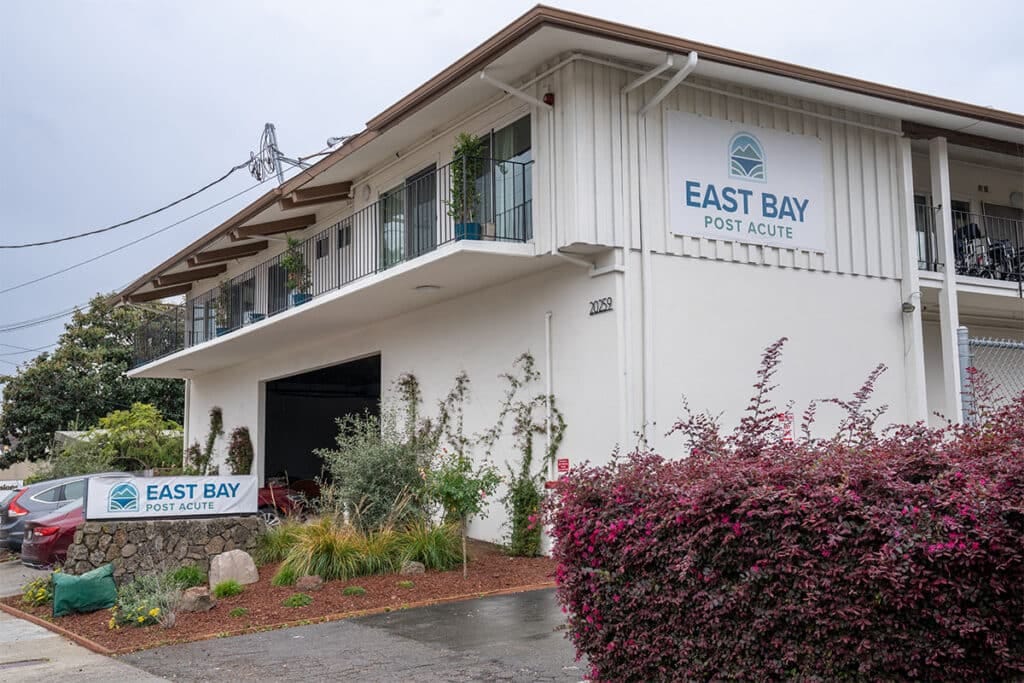
East Bay Post-Acute Healthcare Center
Nursing Home, Hospice Care & Skilled Nursing · Castro Valley, CA
CMS overall rating Info CMS (the Centers for Medicare & Medicaid Services) is the federal agency that rates nursing home quality. Its Overall Rating runs from 1 to 5 stars, combining health inspections, staffing, and quality measures, with inspections weighted most heavily.

East Bay Post-Acute Healthcare Center

Nursing Home, Hospice Care & Skilled Nursing · Castro Valley, CA
CMS overall rating Info CMS (the Centers for Medicare & Medicaid Services) is the federal agency that rates nursing home quality. Its Overall Rating runs from 1 to 5 stars, combining health inspections, staffing, and quality measures, with inspections weighted most heavily.
East Bay Post-Acute Healthcare Center accepts Medicare, Medicaid, and private pay.

Overview of East Bay Post-Acute Healthcare Center

East Bay Post-Acute Healthcare Center in Castro Valley, CA, provides comprehensive clinical support, including skilled nursing, long-term nursing home care, and hospice services. Skilled nursing care delivers around-the-clock professional medical management, while residential nursing care supports individuals requiring continuous assistance. Specialized hospice services deliver compassionate end-of-life care in a comfortable setting.

The 91-bed facility offers both private and semi-private rooms, accommodating personal preferences for solitary or shared living. Daily nurse staffing averages 3 hours and 32 minutes per resident. Specialized rehabilitation programs and complex wound care are available directly on site, making the center well-suited for individuals recovering after a hospital stay.

Financial options include private pay, Medicaid, and Medicare, which typically covers qualifying short-term post-acute rehabilitation.

Prospective representatives exploring short-term rehabilitation or skilled nursing care can reach out to the center to inquire about room availability or arrange a visit.

Quality ratings

Measured by Centers for Medicare & Medicaid Services (CMS)

Overall rating Info The Overall CMS Rating combines results from health inspections, staffing levels and quality measures. Health inspections carry the most weight. Staffing and quality scores can increase or decrease the final rating based on performance compared to state and national standards.
▼ 37.1% Below CA avg. ▼ 37.1% Below CA avg.CA average: 3.2Click the badge to see the full State ranking.Click here to see the full State ranking.
Health Inspection Info Based on the results of the facility's three most recent standard inspections and any complaint investigations. CMS reviews the number, scope, and severity of deficiencies, with more recent findings weighted more heavily.
▼ 64.4% Below CA avg. ▼ 64.4% Below CA avg.CA average: 2.8Click the badge to see the full State ranking.Click here to see the full State ranking.
Staffing Info Measures average nursing staff hours per resident per day, including Registered Nurses (RNs) and total nursing staff. Ratings are adjusted based on the level of care residents require and are compared to state and national benchmarks.
▼ 9.1% Below CA avg. ▼ 9.1% Below CA avg.CA average: 3.3Click the badge to see the full State ranking.Click here to see the full State ranking.
Quality Measures Info Based on clinical and physical health indicators reported to CMS, such as hospital readmissions, falls, pressure ulcers, and improvements in mobility. These measures reflect how well residents' health needs are being managed.
▲ 22.0% Above CA avg. ▲ 22.0% Above CA avg.CA average: 4.1Click the badge to see the full State ranking.Click here to see the full State ranking.

Staffing Info Data period: Q4 2025 (October 1 – December 31, 2025).
Nursing care per resident per day and state rankings: CMS Provider Information.
Headcount, shifts and contractors: CMS Payroll-Based Journal (PBJ).
Resident count: CMS Long-Term Care Facility Characteristics (data as of Jun 2026).

Total nursing care per resident / day Info This nursing home is ranked 247th out of 280 nursing homes we track in California for nurse hours. Total adjusted nursing hours per resident per day, combining RN, LPN, and aide time. CMS adjusts this for case-mix so facilities can be fairly compared.
↓ 18% · CA 4h 19mThis facility: 3h 32m per resident per day, 18% below the California average of 4h 19m (among California facilities reporting a recent figure).Green: 5% or more better than the state average. Yellow: within 5%. Red: 5% or more worse. Rank #247 / 280Nurse hours — State benchmarked This nursing home is ranked 247th out of 280 nursing homes we track in California for nurse hours. Shows adjusted nurse hours per resident per day benchmarked to the California average, with a ranking across 280 California facilities. More hours mean more direct care. The national average is about 3.5 hrs; below 3.0 is a red flag. Communities with the same value for a metric share the same rank. Rankings compare like with like: every nursing home we track in California that reports data for that category. Nursing homes without available data are excluded, so the pool size varies from metric to metric.
3h 32m

Standout metric: RN, weekends is +33% above California average

3 of 6 metrics below California average

Staff by category

Q4 2025 · Oct 1 – Dec 31 More info This data comes from the CMS Payroll-Based Journal report covering October 1 – December 31, 2025.
Certified Nursing Assistant4713618315,76592100%7.6
Licensed Practical Nurse217286,79492100%8
Registered Nurse150155,61592100%7.9
Speech Language Pathologist4041,0167076%6.9
RN Director of Nursing2028806773%8
Respiratory Therapy Technician3037867177%6.6
Other Dietary Services Staff3037568693%7.6
Physical Therapy Aide2026656267%7.9
Physical Therapy Assistant4045167076%5
Nurse Practitioner1015126470%8
Qualified Social Worker3034696470%6.8
Dental Services Staff1014505661%8
Dietitian1014485661%8
Administrator1012566470%4
183 Certified Nursing Assistant
Coverage 100%
28 Licensed Practical Nurse
Coverage 100%
15 Registered Nurse
Coverage 100%
4 Speech Language Pathologist
Coverage 76%
By The Numbers

Community insights.

Bed count Info A smaller, more intimate setting that may offer a quieter environment and closer staff-resident interactions. 91 Rank #209 / 321Bed count — State benchmarked This nursing home is ranked 209th out of 321 nursing homes we track in California for bed count. Shows this facility's certified or reported bed count compared to other California facilities. Larger communities may offer more amenities, programs, and on-site services for residents and families. Communities with the same value for a metric share the same rank. Rankings compare like with like: every nursing home we track in California that reports data for that category. Nursing homes without available data are excluded, so the pool size varies from metric to metric.

Smaller home · May offer a more intimate, personalized care environment.

Walk Score Info Very walkable. Most errands can be accomplished on foot, and many essentials are within a short walk. Rank #94 / 344Walk Score — State benchmarked This nursing home is ranked 94th out of 344 nursing homes we track in California for walk score. Shows how walkable this facility's neighborhood is compared to the average walk score across California facilities. Higher scores benefit residents, families, and staff. Communities with the same value for a metric share the same rank. Rankings compare like with like: every nursing home we track in California that reports data for that category. Nursing homes without available data are excluded, so the pool size varies from metric to metric.
76 / 100
Occupancy rate Info Occupancy between 85% and 95% suggests balanced demand. Rank #97 / 282Occupancy rate — State benchmarked This nursing home is ranked 97th out of 282 nursing homes we track in California for occupancy. Shows this facility's occupancy rate versus the California average, with its Statewide rank out of 282. Higher occupancy signals strong local demand and financial stability. Communities with the same value for a metric share the same rank. Rankings compare like with like: every nursing home we track in California that reports data for that category. Nursing homes without available data are excluded, so the pool size varies from metric to metric.
92.3% This home usually has limited availability

Based on residents per day and 91 beds.

Higher than the California average: 83%
Residents per day (avg) Info The average number of residents living at this facility on a given day. CMS calculates this figure from the facility's Minimum Data Set (MDS) assessments and uses this value for other measures like Hours Per Resident Per Day (HPRD) and 5-Star Staffing rating.
84

Source: CMS Provider Information, average daily residents (data as of Aug 2026)

Avg. Length of Stay Info Average number of days residents stay at this facility, based on CMS cost report data. Shorter stays often reflect post-acute or rehab care; longer stays reflect long-term care.
121 days

About This Community

Payment & Insurance

1 service
Accept Medicare

Therapy & Rehabilitation

2 services
Short-Term Rehab
Short-Term Rehabilitation

Staffing & Medical

1 service
Complex Wound CareSpecialized treatment for wounds that are deep, slow to heal, infected, or otherwise difficult to manage. Care may include cleaning, dressings, and monitoring for healing.

Additional Policies & Features

Pets not allowed

Amenities & Lifestyle

Touring HoursMonday – Friday: 8 am to 5 pm; Weekends: 9:30 am to 4 pm

Room Accommodations

Building Type2-story
Room Types
Private Semi-Private Rooms

Contact East Bay Post-Acute Healthcare Center

CMS Health Inspection History

Since 2023 · 3 years of data · Last health inspection Apr 2026

ALM Inspection Grade

75 / 100 Calculated from CMS inspection data for this community's nursing-home beds
How it compares

9 points below the California average for CMS-certified facilities (84/100)

Category breakdown

Citations Concern

172 severity-weighted points (58 citations) · 2× higher than the typical CMS-certified CA facility (median: 96)

Enforcement Strong

No fines on record · 0 enforcement actions

Persistence Concern

33 days to fix issues · slower than the typical CMS-certified CA facility (median: 25)

Inspection grade: 75 out of 100, letter grade C.
Total health inspections
9 ↓ 26% · CA 12.2This facility: 9, 26% below the California average of 12.2 (among California facilities reporting a recent figure).Green: 5% or more better than the state average. Yellow: within 5%. Red: 5% or more worse.
Total health citations
58 Rank #208 / 283Health citations — State benchmarked This nursing home is ranked 208th out of 283 nursing homes we track in California for health citations. Shows this facility's total health deficiency citations benchmarked to the California State average, with a ranking across all 283 CA facilities. Lower citation counts earn a better rank. Communities with the same value for a metric share the same rank. Rankings compare like with like: every nursing home we track in California that reports data for that category. Nursing homes without available data are excluded, so the pool size varies from metric to metric.↑ 16% · CA 49.9This facility: 58, 16% above the California average of 49.9 (among California facilities reporting a recent figure).Green: 5% or more better than the state average. Yellow: within 5%. Red: 5% or more worse.
Citations per inspection
6.44 Rank #239 / 283Citations per inspection — State benchmarked This nursing home is ranked 239th out of 283 nursing homes we track in California for citations per inspection. Shows average deficiency citations per CMS inspection for this facility versus the California mean across 283 facilities with citation data. Lower is better. Communities with the same value for a metric share the same rank. Rankings compare like with like: every nursing home we track in California that reports data for that category. Nursing homes without available data are excluded, so the pool size varies from metric to metric.↑ 36% · CA 4.75This facility: 6.44, 36% above the California average of 4.75 (among California facilities reporting a recent figure).Green: 5% or more better than the state average. Yellow: within 5%. Red: 5% or more worse.
Citation severity
100% corrected 58 of 58 citations corrected
Bar = mix of this home's 58 citations, not a state comparison

Lighter shade = corrected

Critical J–L
0 ↓ 100% · CA 0.3This facility: 0, 100% below the California average of 0.3 (among California facilities reporting a recent figure).Green: 5% or more better than the state average. Yellow: within 5%. Red: 5% or more worse.
Immediate jeopardy
Serious G–I
2 ↑ 122% · CA 0.9This facility: 2, 122% above the California average of 0.9 (among California facilities reporting a recent figure).Green: 5% or more better than the state average. Yellow: within 5%. Red: 5% or more worse.
Actual harm
Moderate D–F
55 ↑ 17% · CA 47.2This facility: 55, 17% above the California average of 47.2 (among California facilities reporting a recent figure).Green: 5% or more better than the state average. Yellow: within 5%. Red: 5% or more worse.
No harm, more than minimal risk
Minor A–C
1 ↓ 33% · CA 1.5This facility: 1, 33% below the California average of 1.5 (among California facilities reporting a recent figure).Green: 5% or more better than the state average. Yellow: within 5%. Red: 5% or more worse.
No harm, minimal risk

Latest inspection: Apr 07, 2026 · 2 citations, all corrected

Most cited category: Quality of Life & Care, 14 of 58 citations · 10 categories in total

Citations history
Most recent first
Apr 07, 2026 2 citations
Abuse/Neglect moderate citation Corrected
Dec 03, 2025 1 citation
Quality of Care moderate citation Corrected
Nov 17, 2025 15 citations
Administration moderate citation Corrected
Infection Control moderate citation Corrected
Nutrition moderate citation Corrected
Pharmacy moderate citation Corrected
Quality of Care moderate citation Corrected
Care Planning moderate citation Corrected
Resident Rights moderate citation Corrected
Oct 24, 2024 1 citation
Quality of Care moderate citation Corrected
Aug 29, 2024 2 citations
Infection Control moderate citation Corrected
Quality of Care moderate citation Corrected
May 16, 2024 1 citation
Nutrition moderate citation Corrected
Jan 12, 2024 27 citations
Environmental moderate citation Corrected
Infection Control moderate citation Corrected
Nursing Services moderate citation Corrected
Nursing Services minor citation Corrected
Nutrition moderate citation Corrected
Pharmacy serious citation Corrected
Pharmacy moderate citation Corrected
Pharmacy serious citation Corrected
Pharmacy moderate citation Corrected
Quality of Care moderate citation Corrected
Care Planning moderate citation Corrected
Resident Rights moderate citation Corrected
Sep 20, 2023 1 citation
Resident Rights moderate citation Corrected

Showing the 50 most recent of 58 citations.

Top deficiency categories
Share of 58 citations
Quality of Life & Care 14 deficiencies (24%)
Nutrition & Dietary 12 deficiencies (21%)
Pharmacy Services 9 deficiencies (16%)
Resident Assessment & Care Planning 7 deficiencies (12%)
Resident Rights 5 deficiencies (9%)
Infection Control 4 deficiencies (7%)
Abuse, Neglect & Exploitation 2 deficiencies (3%)
Nursing & Physician Services 2 deficiencies (3%)
Environmental 2 deficiencies (3%)
Administration 1 deficiency (2%)
How citations are counted

Health citations are formal notices following inspections when they fail to comply with safety and care standards.

47 of 58 citations resulted from standard inspections; 10 of 58 resulted from complaint investigations; and 1 of 58 came from combined inspections (standard and complaint).

Includes all CMS health inspection records for this property, which could include management/ownership changes.

Source

Data sourced from CMS Health Deficiencies reports. Citation severity codes range from A (least serious) to L (most serious). Immediate Jeopardy (J-L) citations indicate situations where the facility's noncompliance has placed residents at risk of death or serious harm.

Show Inspection Reports

Penalties and fines

Federal penalties imposed by CMS for regulatory violations, including civil money penalties (fines) and denials of payment for new Medicare/Medicaid admissions.

Source: CMS Penalties Database

No penalties in the past 3 years

No civil money penalties or payment denials were reported in the last 3 years.

Quality of care over time

How residents at this home fare on health outcomes and preventive care, compared with the California average.

Data as of Aug 2026 · CMS Care Compare

Long-stay quality rating Info CMS star rating for the care of long-stay residents, who live at the home for 100 days or more. It is built from the long-stay quality measures below. 5 stars is the best. 5 / 5 Significantly above average ↑ 18% · CA 4.2This facility: 5.0, 18% above the CA average of 4.2 (among CA facilities reporting a recent figure).Green: 5% or more better than the state average. Yellow: within 5%. Red: 5% or more worse.
Short-stay quality rating Info CMS star rating for the care of short-stay residents, mostly people recovering after a hospital stay for under 100 days. It is built from the short-stay quality measures below. 5 stars is the best. 5 / 5 Significantly above average ↑ 42% · CA 3.5This facility: 5.0, 42% above the CA average of 3.5 (among CA facilities reporting a recent figure).Green: 5% or more better than the state average. Yellow: within 5%. Red: 5% or more worse.
High-risk clinical events Info Average of five long-stay measures: pressure ulcers, falls with major injury, unplanned weight loss, worsening ability to walk, and needing more help with daily activities. Each is the % of residents affected, so lower is better. 4.2 Score · lower is better ↓ 29% · CA 5.9This facility: 4.2, 29% below the CA average of 5.9 (among CA facilities reporting a recent figure).Green: 5% or more better than the state average. Yellow: within 5%. Red: 5% or more worse.
Functional decline Info Average of three long-stay measures: needing more help with daily activities, worsening ability to walk, and loss of bowel or bladder control. Each is the % of residents affected, so lower is better. 6.9 Score · lower is better ↓ 31% · CA 10.0This facility: 6.9, 31% below the CA average of 10.0 (among CA facilities reporting a recent figure).Green: 5% or more better than the state average. Yellow: within 5%. Red: 5% or more worse.

13 long-stay measures: 10 better, 1 worse, 2 near CA average

8 short-stay measures: 4 better, 1 worse, 3 compared with US only

Breakdown by payment type

Medicare

31% of new residents, usually for short-term rehab.

Typical stay 1 - 2 months

Private pay

68% of new residents, often for short stays.

Typical stay 4 - 5 months

Medicaid

1% of new residents, often for long-term daily care.

Typical stay 2 years

Facility Characteristics

Source: CMS Long-Term Care Facility Characteristics (Data as of Jun 2026)

Total residents 69
Medicare
16
23.2% of residents
Medicaid
53
76.8% of residents
Programs & Services
Residents Group

Residents meet regularly to discuss policies, care quality, and activities

Nurse Aide Training

State-approved Nurse Aide Training and Competency Evaluation Program on-site

Active Resident Council

Organized group of residents that meets regularly to discuss facility policies, quality of life, and activities.

Finances and operations

Based on CMS SNF Cost Report for fiscal year ending in 12/2024.

For-profit
Operated by a business corporation.
Net patient revenue Info Net patient revenue — what the home actually collects for resident care, after contractual allowances, bad debt and discounts are subtracted from its gross charges (CMS cost report, Worksheet G-3). It covers resident care only; money the home earns from other sources is shown separately as "Other income."
$13.7MFiscal year ending 12/2024
Net patient income Info Net patient income: net patient revenue minus the home's total operating expenses. A positive figure means it earns more from resident care than it spends to deliver it; a negative figure means the opposite. It excludes non-operating "other income."
-$1.5MFiscal year ending 12/2024
For-profit Operated by a business corporation.
Net patient revenue Info Net patient revenue — what the home actually collects for resident care, after contractual allowances, bad debt and discounts are subtracted from its gross charges (CMS cost report, Worksheet G-3). It covers resident care only; money the home earns from other sources is shown separately as "Other income."
$13.7MFiscal year ending 12/2024 Rank #130 / 252Net patient revenue — State benchmarked This nursing home is ranked 130th out of 252 nursing homes we track in California. Shows this facility's net patient revenue compared to the California average, among facilities reporting a recent fiscal year. Higher revenue generally means more resources for staffing and capital — read alongside Payroll %. Communities with the same value for a metric share the same rank. Rankings compare like with like: every nursing home we track in California that reports data for that category. Nursing homes without available data are excluded, so the pool size varies from metric to metric.
Net patient income Info Net patient income: net patient revenue minus the home's total operating expenses. A positive figure means it earns more from resident care than it spends to deliver it; a negative figure means the opposite. It excludes non-operating "other income."
-$1.5MFiscal year ending 12/2024
Other income Info Money the home earns outside of resident care — such as investments, grants, rentals and other non-operating sources (CMS cost report, Worksheet G-3). It is tracked separately from net patient revenue: it is not part of that figure, and it is not included in net patient income.
$15.6KFiscal year ending 12/2024
Payroll costs Info Staff salaries plus wage-related costs — benefits such as payroll taxes, health insurance and retirement — from the home's own accounting records (CMS cost report, Worksheet A). Contract or agency labor is counted separately, under other operating costs. Rank #164 / 252Payroll costs — State benchmarked This nursing home is ranked 164th out of 252 nursing homes we track in California. Shows total staff payroll — salaries plus wage-related benefits — benchmarked to the California average, among facilities reporting a recent fiscal year. Higher payroll relative to peers often signals better staffing and less reliance on contract labor. Communities with the same value for a metric share the same rank. Rankings compare like with like: every nursing home we track in California that reports data for that category. Nursing homes without available data are excluded, so the pool size varies from metric to metric.
$7.8MFiscal year ending 12/2024 56.8% of net patient revenue Info Payroll as a share of revenue: staff salaries and wage-related benefits divided by net patient revenue. A higher figure means more of each revenue dollar goes to staff pay. Rank #202 / 252Payroll % of net patient revenue — State benchmarked This nursing home is ranked 202nd out of 252 nursing homes we track in California. Shows payroll as a percentage of net patient revenue versus the California average, among facilities reporting a recent fiscal year. Below 25% may signal understaffing or heavy agency use — read with Staffing ratings. Communities with the same value for a metric share the same rank. Rankings compare like with like: every nursing home we track in California that reports data for that category. Nursing homes without available data are excluded, so the pool size varies from metric to metric.
Other operating costs Info Everything it costs to run the home apart from payroll — food, utilities, supplies, maintenance, contract labor and administration. Calculated as total operating expense minus payroll (staff salaries and wage-related benefits).
$7.4MFiscal year ending 12/2024
Total costs Info The home's total operating expense for the year — all the costs of running it, salaries included (CMS cost report, Worksheet G-3).
$15.2MFiscal year ending 12/2024

Who this home usually serves

TYPE OF STAY

Primarily short stays

Residents typically stay for brief periods, with frequent admissions and discharges throughout the year.

Most new residents arrive under private pay (68% of admissions), and a typical private pay stay runs around 4 - 5 months.

Admissions
237 total

Coverage residents most often arrive under.

Medicare 31%
Private pay 68%
Medicaid 1%
Discharges
229 total

Coverage residents most often leave under.

Medicare 26%
Private pay 70%
Medicaid 3%

Places of interest near East Bay Post-Acute Healthcare Center

Address 0.9 miles from city center Info Estimated distance in miles from Castro Valley's city center to East Bay Post-Acute Healthcare Center's address, calculated via Google Maps.

Calculate Travel Distance to East Bay Post-Acute Healthcare Center

Add your location

Address

Compare Nursing Homes around Alameda County

Info below is compiled from CMS reports & the CA Dept. of Social Services (CDSS), senior community websites & trusted data sources such as Walk Score & BBB.

Communities are listed from highest-ranked to lowest-ranked based on our methodology.

The facility name. Click to view the full profile page on Assisted Living Magazine, including photos, services, and contact info.
CMS (Centers for Medicare & Medicaid Services, the federal agency that regulates nursing homes) Overall 5-star rating — a composite of Health Inspection, Staffing, and Quality Measures scores. 5 stars = top 10% nationally. 1 star = bottom 10%. The single most important number to start with when comparing facilities.
Care Types in This Table NH (Nursing Home): 24/7 skilled nursing care for residents with complex, ongoing medical needs. SNF (Skilled Nursing Facility): Round-the-clock nursing care, often for recovery after surgery, injury, or illness. RC (Respite Care): Short-term temporary care that gives family caregivers a break. HOS (Hospice Care): Comfort-focused care for those with a terminal illness, prioritizing quality of life over treatment.
Neighborhood or city area where the facility is located. Proximity to family, hospitals, and green space matters for both quality of life and ease of visitation. Consider drive time and transit access when evaluating location.
Licensed bed capacity. Larger facilities (300+ beds) often have more specialized programs but can feel institutional. Smaller homes (under 150 beds) tend to deliver more personalized care. Compare with Avg Res/Day to understand how full the facility typically runs.
A 0–100 score of a facility's regulatory inspection record, shown as a letter and compared with other facilities of the same kind in the same state. This is a proprietary Assisted Living Magazine grade. It is not a government rating. A dash means we have no inspection data for that facility.
Percentage of licensed beds filled on an average day. Color indicates financial health: green (90%+) = operationally strong, typically profitable. Amber (80–89%) = stable but leaving revenue on the table. Orange (70–79%) = financial strain likely, may struggle with fixed costs. Red (<70%) = significant distress, closure or ownership change risk increases sharply.
This facility's occupancy rate compared to the statewide average for similar facilities. A positive number means above-average demand. Facilities running 5%+ above the state average are typically the most sought-after in their market — a strong proxy for reputation.
CMS-adjusted total nurse hours per resident per day (RN + LPN + CNA combined). The national average is approximately 3.5 hrs. Higher is better — more direct care time per resident. Below 3.0 is a red flag. CMS weights RN hours more heavily because RNs handle complex clinical decisions that CNAs cannot.
CMS Health Inspection star rating (1–5 stars), based on the 3 most recent annual state surveys plus any complaint investigations. This is the hardest rating to manipulate — it reflects real surveyor findings on-site. 5 stars = fewest deficiencies found. 1 star = most. It carries the heaviest weight in the Overall CMS rating.
CMS Staffing star rating (1–5 stars), based on daily nurse staffing hours submitted to CMS via verified payroll data. Compares RN, LPN, and CNA coverage relative to resident acuity level. 5 stars = well above expected staffing. Weekend staffing is evaluated separately, as that's where many facilities quietly reduce coverage.
CMS Quality Measures star rating (1–5 stars), based on 15 clinical outcome metrics including fall rates, pressure ulcers, antipsychotic drug use, and hospital readmissions. Captures actual resident health outcomes, not just compliance. High QM combined with low Health Inspection scores can indicate a facility with strong care but weak documentation practices.
Registered Nurse hours per resident/day compared to the statewide average. RNs are the highest-skilled nursing staff — they assess residents, manage medications, and respond to emergencies. A value of +50% means RN coverage is 50% above the state norm. Negative values are a concern for residents with complex or acute medical needs.
Total nursing staff hours (RN + LPN + CNA combined) per resident/day vs. the statewide average. A broader measure than RN vs State — it captures the entire care team. A facility can have high total staffing but low RN hours, meaning more aides and fewer nurses. Read both columns together for the full picture.
Total dollar amount of federal monetary fines (civil money penalties) issued by CMS in the past 3 years. Fines are only levied for serious violations — typically actual harm to residents, repeated uncorrected deficiencies, or systemic non-compliance. Even a single fine is noteworthy. Multiple fines strongly suggest a pattern, not isolated incidents.
Total health deficiency citations from the most recent standard inspection cycle. Minor citations (scope A–C) are common and often administrative in nature. Higher counts aren't always disqualifying, but should be read alongside Severe Citations to understand actual harm levels. Under 10 is strong for a large facility; 30+ warrants a closer look.
Average deficiency citations per CMS inspection (survey) in the reporting window — total citations divided by the number of inspections. Lower is better; compare alongside total Citations and Severe Citations for context.
Citations at CMS scope/severity level G or higher — G–I means actual harm occurred; J–L means residents were placed in immediate jeopardy. (D–F is potential for harm only). Examples include unaddressed falls, medication errors causing injury, neglect, or abuse.
Average number of residents in the building on any given day, derived from annual census data. Reflects true operating scale — a 400-bed facility running 200 residents/day operates very differently from one at 390. Higher resident counts generally mean more funded staffing hours.
Better Business Bureau rating (A+ to F). Reflects complaint history, business transparency, and how family disputes were resolved. A+ means no significant unresolved complaints. A blank (—) means the facility isn't BBB-accredited, which is common for healthcare providers and not necessarily a negative signal.
Walk Score® (0–100). Measures walkability of the surrounding area. 90–100 = Walker's Paradise. 70–89 = Very Walkable. 50–69 = Somewhat Walkable. Below 50 = Car-Dependent. Higher scores benefit family visitors, resident outings, and staff commuting.
The licensed owner or operator of record filed with CMS — the individual or organization legally accountable for the facility. Searching the operator name across other facilities can reveal chain or multi-site ownership, which matters: chain-operated homes tend to have more variable quality outcomes than independently run facilities.
What the home actually collects for resident care, after contractual allowances, bad debt and discounts — not gross billings. Taken from the latest complete annual cost report, so it is comparable across homes reporting the same period. Revenue alone doesn't indicate care quality, but it funds staffing and capital reinvestment. Pair with Payroll %. Figures are from each facility's most recent complete fiscal year — hover a value for the exact year; a * marks homes that report an older period than most facilities.
Staff salaries plus wage-related benefits from the latest complete annual cost report. Contract and agency labour is counted separately, under other operating costs, so a home leaning on agency staff can show a low figure here. Payroll is the cost most directly tied to care quality — compare with Payroll % for full context. Figures are from each facility's most recent complete fiscal year — hover a value for the exact year; a * marks homes that report an older period than most facilities.
Payroll as a share of NET PATIENT REVENUE (not gross revenue). Both figures come from the same cost-report year. A higher figure means more of each revenue dollar goes to staff pay. Read with the Staffing star rating to judge whether spend translates into coverage — and note that homes whose patient revenue covers only part of their operation can read implausibly high. The California average is: 60.9% Figures are from each facility's most recent complete fiscal year — hover a value for the exact year; a * marks homes that report an older period than most facilities.
CMS Certification Number: the unique federal identifier for this skilled nursing provider.
Marina Garden Nursing Center ★ ★ ★ ★ ★
NH
HOS
RC
SNF
Alameda
32
Facility 32
CA AVG 148
Rank #304 / 321
A
90.6%
Facility 90.6%
CA AVG 83%
Rank #115 / 282
+9%
3.60
Facility 3.60
CA AVG 4.31
Rank #227 / 280
★ ★ ★ ★ ★ ★ ★ ★ ☆ ☆ ★ ★ ★ ☆ ☆ +22%-17%
$0
Facility $0
CA AVG $60.5k
Rank #1 / 285
10
Facility 10
CA AVG 49.9
Rank #3 / 283
3.3
Facility 3.3
CA AVG 4.7
Rank #74 / 283
-29A+
72
Facility 72
CA AVG 60
Rank #117 / 344
-
$4.0MFiscal year ending 12/2024
Facility $4.0MFiscal year ending 12/2024
CA AVG $15.9M
Rank #246 / 252
$2.7MFiscal year ending 12/2024
Facility $2.7MFiscal year ending 12/2024
CA AVG $9.0M
Rank #252 / 252
66.6%Fiscal year ending 12/2024
Facility 66.6%Fiscal year ending 12/2024
CA AVG 60.9%
Rank #191 / 252
555461
East Bay Post-Acute Healthcare Center ★ ★ ☆ ☆ ☆
NH
HOS
SNF
Castro Valley
91
Facility 91
CA AVG 148
Rank #209 / 321
C
92.3%
Facility 92.3%
CA AVG 83%
Rank #97 / 282
+11%
3.53
Facility 3.53
CA AVG 4.31
Rank #247 / 280
★ ☆ ☆ ☆ ☆ ★ ★ ★ ☆ ☆ ★ ★ ★ ★ ★ -33%-18%
$0
Facility $0
CA AVG $60.5k
Rank #1 / 285
58
Facility 58
CA AVG 49.9
Rank #208 / 283
6.4
Facility 6.4
CA AVG 4.7
Rank #239 / 283
284-
76
Facility 76
CA AVG 60
Rank #94 / 344
Gurpreet Dhugga
$13.7MFiscal year ending 12/2024
Facility $13.7MFiscal year ending 12/2024
CA AVG $15.9M
Rank #130 / 252
$7.8MFiscal year ending 12/2024
Facility $7.8MFiscal year ending 12/2024
CA AVG $9.0M
Rank #164 / 252
56.8%Fiscal year ending 12/2024
Facility 56.8%Fiscal year ending 12/2024
CA AVG 60.9%
Rank #202 / 252
055239
Bay View Rehabilitation ★ ☆ ☆ ☆ ☆
NH
SNF
Alameda (South Shore)
180
Facility 180
CA AVG 148
Rank #65 / 321
C
92.3%
Facility 92.3%
CA AVG 83%
Rank #97 / 282
+11%
4.32
Facility 4.32
CA AVG 4.31
Rank #104 / 280
★ ☆ ☆ ☆ ☆ ★ ★ ★ ☆ ☆ ★ ★ ☆ ☆ ☆ -38%0%
$202.0k
Facility $202.0k
CA AVG $60.5k
Rank #285 / 285
35
Facility 35
CA AVG 49.9
Rank #114 / 283
2.7
Facility 2.7
CA AVG 4.7
Rank #32 / 283
2166-
73
Facility 73
CA AVG 60
Rank #113 / 344
Bay View Rehabilitation Hospital LLC
$25.5MFiscal year ending 12/2024
Facility $25.5MFiscal year ending 12/2024
CA AVG $15.9M
Rank #25 / 252
$16.6MFiscal year ending 12/2024
Facility $16.6MFiscal year ending 12/2024
CA AVG $9.0M
Rank #17 / 252
65.2%Fiscal year ending 12/2024
Facility 65.2%Fiscal year ending 12/2024
CA AVG 60.9%
Rank #54 / 252
056348

Rank badges are statewide and care-type specific: each nursing home is ranked against every other CA nursing home we track that reports that metric, not just the 3 on this page. See how we rank facilities

Financial Assistance for
Nursing Home in California

East Bay Post-Acute Healthcare Center is located in Castro Valley, California.
Here are the financial assistance programs available to residents in California.

Get Financial aid guidance

Multipurpose Senior Services Program

MSSP (Medi-Cal Waiver)

Age 65+
General California resident, Medi-Cal eligible, nursing home risk.
Income Limits (2025) ~$2,829/month 300% FBR, individual
Asset Limits $2,000 (individual), $3,000 (couple).
CA

County-managed; waitlists possible.

Benefits
In-home support (4-6 hours/day) Respite care (14 days/year) Meals (~$6/meal) Transportation (8 trips/month) Care management

In-Home Supportive Services (IHSS)

California IHSS

Age 65+
General California resident, Medicaid-eligible or low-income.
Income Limits ~$1,732/month individual, Medi-Cal threshold
Asset Limits $2,000 individual
CA

Can hire family as caregivers.

Benefits
Personal care (up to 283 hours/month) Homemaker services Respite (varies)

Multipurpose Senior Services Program (MSSP)

CA MSSP

Age 65+
General California resident, Medi-Cal-eligible, nursing home-eligible but community-capable.
Income Limits ~$2,829/month 300% FBR, individual
Asset Limits $2,000 individual
CA

Available in 38 counties; waitlists common.

Benefits
Case management Respite care (up to 10 days/year) Minor home mods (avg. $500) Adult day care (~$50/day)

Property Tax Postponement Program (PTP)

CA PTP

Age 62+
General California resident, own and live in home, 40% equity.
Income Limits (2025) ~$51,500/year household, adjusted annually
Asset Limits Equity-based; no strict asset cap.
CA

Deferred taxes accrue interest (5% as of 2024); repaid upon sale/death.

Benefits
Property tax deferral (avg. $1,000-$3,000/year, varies by county)

Assisted Living Waiver (ALW)

CA ALW

Age 65+ or disabled
General California resident, Medi-Cal-eligible, nursing home-eligible.
Income Limits ~$2,829/month 300% FBR, individual
Asset Limits $2,000 individual
CA

Available in 15 counties (e.g., LA, Sacramento); waitlists common.

Benefits
Personal care in ALFs (5-7 hours/day) Medication management Social services

California CARES Program

CA CARES

Age —
General Caregivers of California residents 60+ needing help with 3+ daily activities; no caregiver age limit.
Income Limits No strict limit; cost-sharing above ~$2,500/month threshold.
Asset Limits Not applicable; need-based.
CA

High demand in urban areas; complements IHSS respite.

Benefits
Respite care (up to 10 days/year) Counseling (4-6 sessions/year) Training (2-3 workshops/year) Supplies (~$200/year)

Frequently Asked Questions about East Bay Post-Acute Healthcare Center

Is East Bay Post-Acute Healthcare Center in a walkable area?

East Bay Post-Acute Healthcare Center has a walk score of 76. Very walkable. Most errands can be accomplished on foot, and many essentials are within a short walk.

What is the occupancy rate at East Bay Post-Acute Healthcare Center?

East Bay Post-Acute Healthcare Center's occupancy is 92.3%.

Are pets allowed at East Bay Post-Acute Healthcare Center?

No, East Bay Post-Acute Healthcare Center has a no-pet policy.

Does East Bay Post-Acute Healthcare Center operate as a for-profit or non-profit?

East Bay Post-Acute Healthcare Center is registered as a for-profit.

What is the overall rating for East Bay Post-Acute Healthcare Center?

East Bay Post-Acute Healthcare Center received a 2-star overall rating from the CMS (Centers for Medicare and Medicaid Services). This score combines results from staffing levels, quality measures, and health inspections.

How many beds does East Bay Post-Acute Healthcare Center have?

East Bay Post-Acute Healthcare Center has 91 beds.

Are there photos of East Bay Post-Acute Healthcare Center?

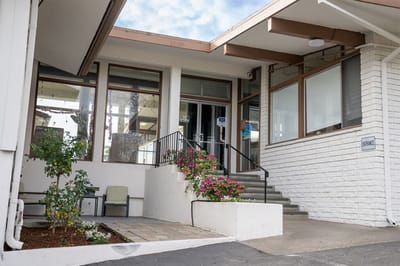
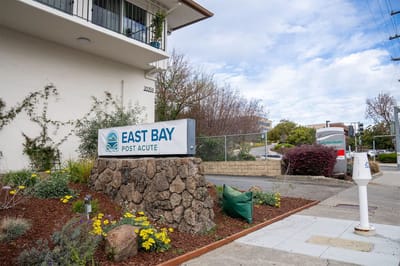
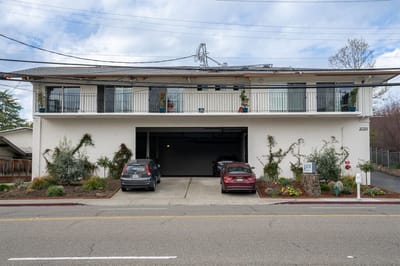
Yes — there are 18 photos of East Bay Post-Acute Healthcare Center in the photo gallery on this page.

Guides for Better Senior Living

Care Cost Calculator: See Prices in Your Area

Nursing Home Data Explorer

Don’t Wait Too Long: 7 Red Flag Signs Your Parent Needs Assisted Living Now

The True Cost of Assisted Living in 2025 – And How Families Are Paying For It

Understanding Senior Living Costs: Pricing Models, Discounts & Financial Assistance