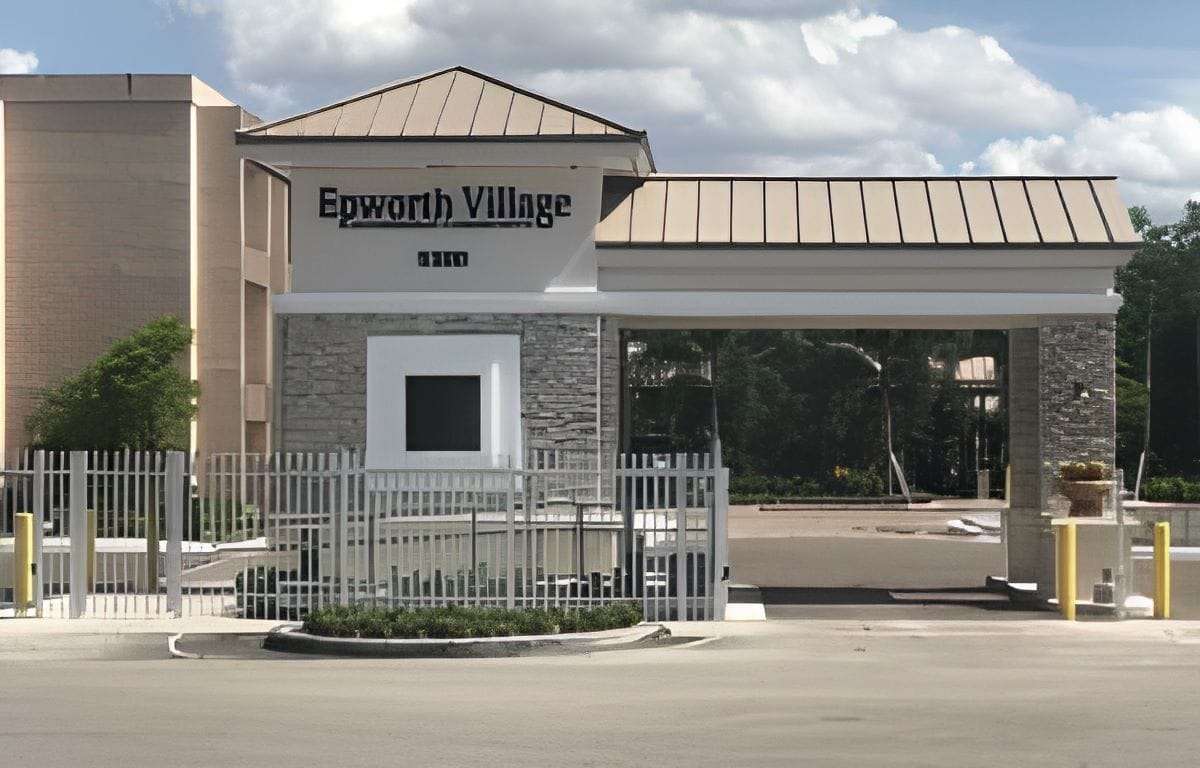
Epworth Village Retirement Community
Epworth Village Retirement Community offers a range of options for seniors, including independent living, assisted living, and skilled nursing care. For seniors who require skilled nursing care, Epworth Village provides specialized services such as pain management, postoperative care, and customized diets for those with heart disease, diabetes, and other health issues. They also offer specialized care for individuals with memory loss or other neurological degenerative conditions. Their services include enteral feeding, IV therapy, and palliative care, among other things.
The home is a unique and compassionate nonprofit community that values a family-style living atmosphere, where residents can enjoy a sense of togetherness with diverse people from all walks of life. They provide various amenities and services to enhance the living experience of their residents. From a fully-equipped fitness center to a serene chapel, a well-stocked library to a cozy theater, this gated community has it all. The game room, housekeeping, and linen services ensure that everything stays clean, spacious, and airy.
Community insights.
Compare Assisted Living around Miami
Info below is compiled from the FL Agency for Health Care Administration (AHCA), senior community websites & trusted data sources such as Walk Score & BBB.
Communities are listed from highest-ranked to lowest-ranked based on our methodology.
Care Types in This Table
AL (Assisted Living):
Housing with help for daily activities like bathing, dressing, and medication, without 24-hour skilled nursing.
NH (Nursing Home):
24/7 skilled nursing care for residents with complex, ongoing medical needs.
SNF (Skilled Nursing Facility):
Round-the-clock nursing care, often for recovery after surgery, injury, or illness.
MC (Memory Care):
Secured, specialized care for people living with Alzheimer's or dementia.
IL (Independent Living):
Community living with dining, activities, and transportation for active seniors who need little personal care.
HC (Home Care):
Professional care delivered in the person's own home, from companionship to skilled nursing.
CCRC (Continuing Care Retirement Community):
A campus with multiple care levels so residents can age in place without moving.
|
City and state of the facility. Used for mapping and state-average comparisons.
|
Licensed bed capacity (maximum allowed). Not the same as how many beds are currently filled.
|
Indicates whether residents are allowed to have pets in the facility.
|
Third-party neighborhood walkability score (0–100). Convenience/context metric, not a healthcare quality measure.
|
Name of the licensed owner, operator, or managing entity as filed with the state. Useful for grouping facilities under the same organization.
|
Count of regulatory inspections in the reporting window. Higher volume can reflect more oversight visits, complaint-driven surveys, or routine licensure cycles.
|
Share of inspections that resulted in citations, expressed as a percentage of total inspections in the window.
|
Total count of citations (cited regulatory issues) recorded in the selected reporting period. Read alongside inspection counts for context.
|
The average number of citations this facility receives each time it's inspected, calculated as total citations ÷ total inspections. A lower number suggests more consistent compliance with safety and care standards.
|
Reported profit orientation for the operator or facility (e.g. for-profit vs nonprofit), as provided in state licensing or disclosure data.
|
A named contact for the facility. Hover the name to see their role — Administrator (state administrator of record or facility-provided administrator), Nursing Director, Medical Director, or Staff. The most authoritative available is shown.
|
Housing or bed configuration options (e.g. studio, shared), often from facility-reported amenities and licensing details.
| |
|---|---|---|---|---|---|---|---|---|---|---|---|---|---|
| The Palace Royale at Kendall | AL CCRC HC IL MC NH SNF | Miami | 690
Facility
690
FL AVG
85
Rank
#1 / 1,044 | Yes |
51
Facility
51
FL AVG
40
Rank
#333 / 998 | Kendall Healthcare Properties | 28 | 18%
Facility
18%
FL AVG
30.6%
Rank
#164 / 1,006 | 7
Facility
7
FL AVG
25
Rank
#219 / 1,006 | 0.3
Facility
0.3
FL AVG
0.9
Rank
#126 / 1,006 | For-Profit | Ricardo A Martinez | Studio / 1 bed |
| Epworth Village Retirement Community | AL IL SNF | Miami | - | No |
63
Facility
63
FL AVG
40
Rank
#198 / 998 | - | - | - | - | - | - | Laura Glover | - |
Rank badges are statewide and care-type specific: each assisted living community is ranked against every other FL assisted living community we track that reports that metric, not just the 2 on this page. See how we rank facilities
Programs that may help with care and living costs in Florida
Epworth Village Retirement Community is in Miami, Florida. These programs may support different care settings or living expenses. Listing a program here does not confirm that this community participates or that your costs would be covered; confirm eligibility, provider participation and covered costs with the program and the community.
Long-Term Care Waiver
Florida Statewide Medicaid Managed Care Long-Term Care (SMMC LTC)
- Income limit
- 2026 · The 2026 individual ICP/HCBS income standard is $2,982/month; trust and spousal rules require individualized review.
Eligibility
- General
- Medicaid-eligible adults age 65+ or adults age 18+ eligible because of disability who meet the required nursing-facility or qualifying hospital level of care.
- FL specifics
- DOEA assesses medical eligibility and DCF determines financial eligibility; managed-care enrollment and assessed need determine services.
What it provides
- Authorized long-term-care services through the SMMC LTC plan; specific hours and respite benefits depend on the care plan.
Optional State Supplementation (OSS)
Florida Optional State Supplementation
- Income limit
- 2026 · January 2026 individual income limits vary by category: $1,072.40 redesign; $1,179 protected. Couple limits and income deductions differ.
- Asset limit
- $2,000 for one person or $3,000 for a couple under the January 2026 OSS standards.
Eligibility
- General
- Eligible older, blind or disabled Florida residents in qualifying non-institutional residential settings who meet OSS financial and other requirements.
- FL specifics
- Redesign and protected categories use different provider-payment and subsidy standards; DCF determines the applicable category.
What it provides
- Monthly residential-support supplement based on countable income; individual maximum is $184.40 redesign or $345 protected under the January 2026 table; $160 personal-needs allowance.
Community Care for the Elderly (CCE)
Florida CCE
Eligibility
- General
- Florida residents age 60+ with assessed functional impairment who need community support.
- FL specifics
- A needs assessment determines service priority; Adult Protective Services referrals involving abuse, neglect or exploitation receive priority.
What it provides
- Assessed community services such as home support; meals; respite; adult day care and transportation; subject to the local care plan and funding.
Home Care for the Elderly (HCE)
Florida Home Care for the Elderly
- Income limit
- Income must meet the Institutional Care Program standard used for HCE eligibility.
- Asset limit
- Applicable Institutional Care Program resource standards apply.
Eligibility
- General
- Adults age 60+ at risk of nursing-home placement living in a private family setting with an approved adult live-in caregiver.
- FL specifics
- Caregiver approval and a case-managed plan are required; this is distinct from CCE and Medicaid LTC.
What it provides
- Basic subsidy of $160/month; additional special subsidies for approved needs may be available without a universal fixed amount.
Alzheimer’s Disease Initiative
Florida Alzheimer’s Disease Initiative (ADI)
Eligibility
- General
- Dementia caregiver support and temporary respite for adults age 18+ with diagnosed or suspected Alzheimer’s/related dementia affecting daily activities, assessed through Florida’s aging network.
- FL specifics
- Clients cannot also enroll in a Medicaid capitated long-term-care program. Funding, priority assessment, service requirements and copayment rules apply.
What it provides
- Authorized in-home or facility-based respite; caregiver support and related services. Extended respite may last up to 30 days; this is temporary caregiver relief; not ongoing assisted-living room-and-board coverage.