Independence Village of Olde Raleigh
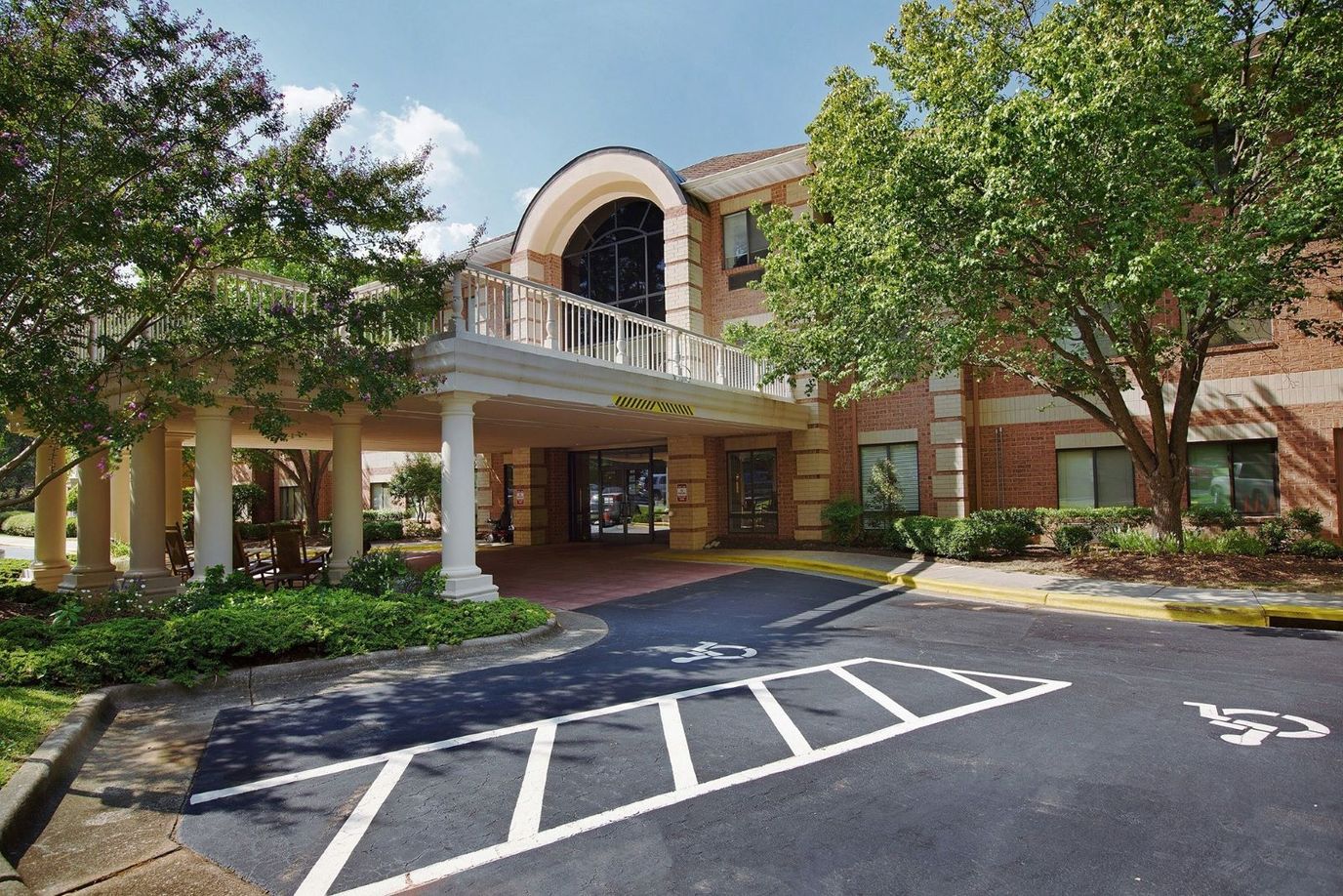
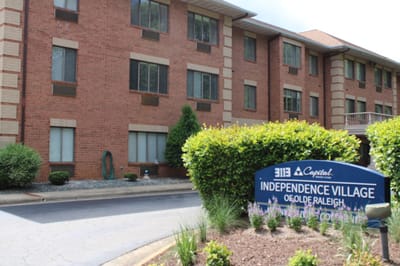
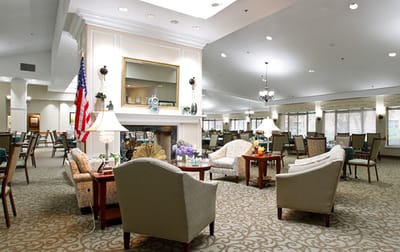
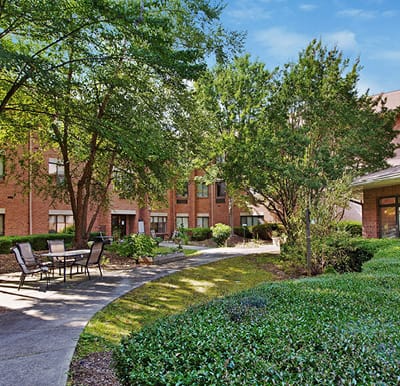
Independence Village of Olde Raleigh offers two types of care in Raleigh, NC, independent living and hospice care. In independent living, individuals maintain privacy, use community services, and receive no daily care. Hospice focuses on comfort and support for individuals facing a life-limiting illness.
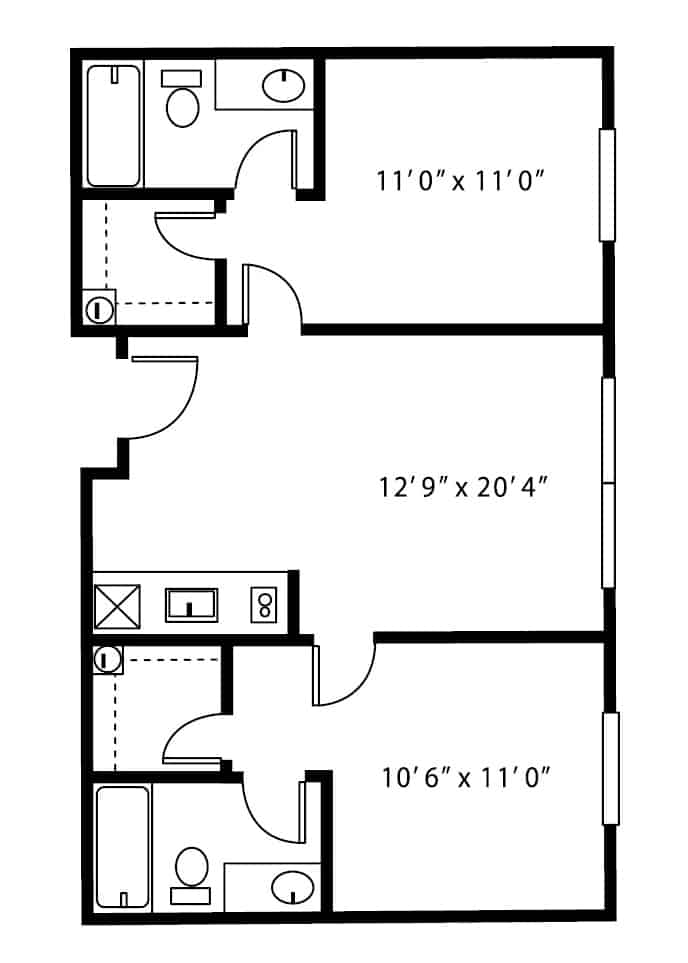
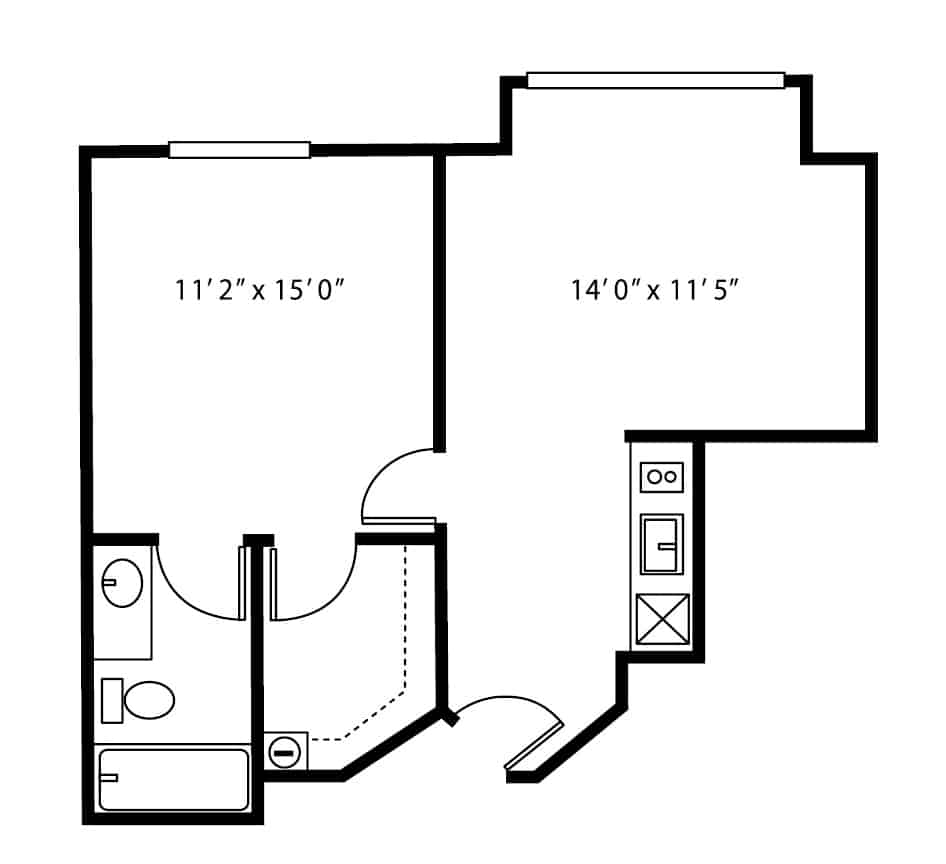
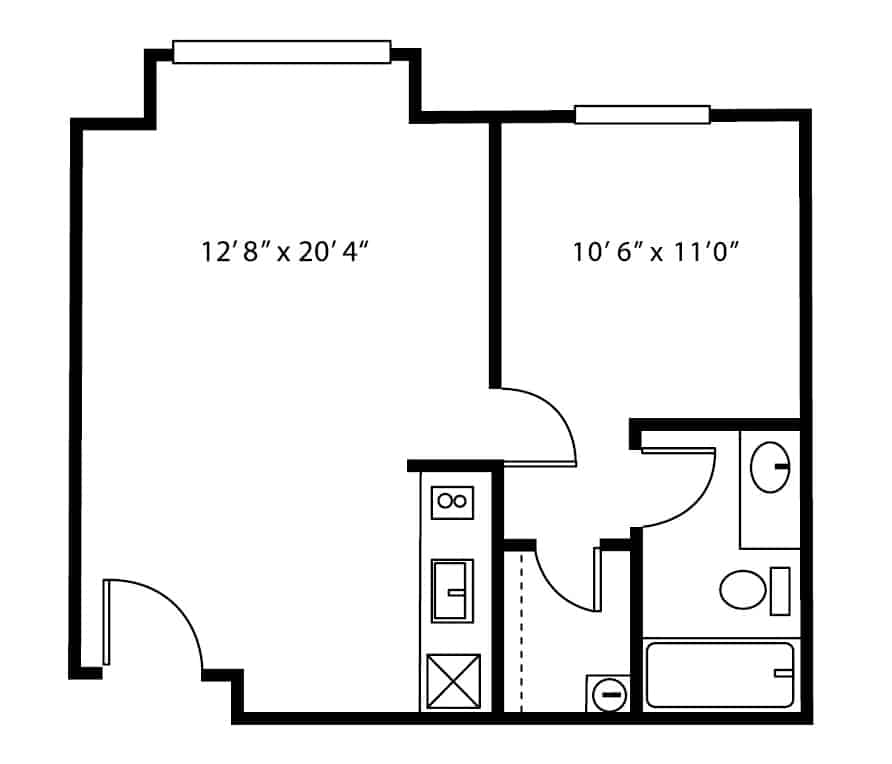
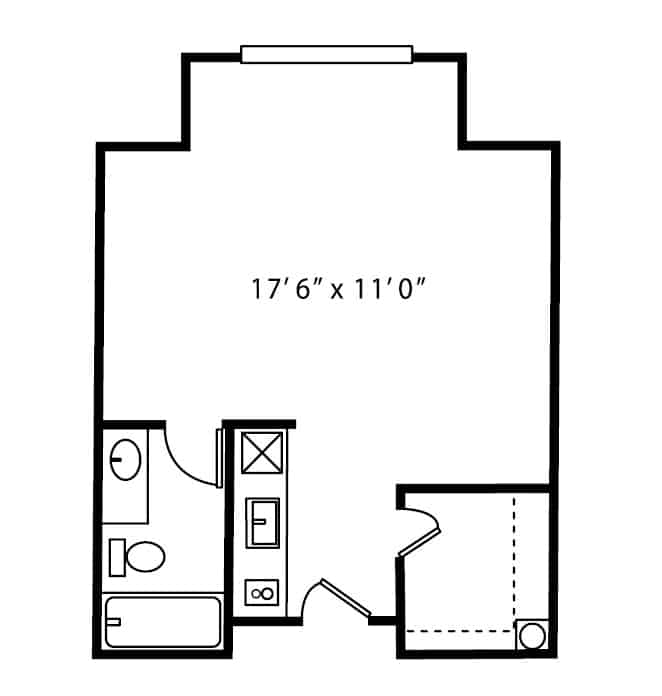
Residents are allowed to have pets. With a Walk Score of 67, Northwest Raleigh is somewhat walkable, allowing some errands to be completed on foot, enabling those who have ceased driving to handle local chores. Studio, one-bedroom, and two-bedroom apartments are available, designed for an individual or for someone relocating with a companion.
Community insights.
About This Community
Living Spaces & Floor Plans for Independence Village of Olde Raleigh
Places of interest near Independence Village of Olde Raleigh
5.2 miles from city center
Estimated distance in miles from Raleigh's city center to Independence Village of Olde Raleigh's address, calculated via Google Maps.
— 0.71 miles to nearest hospital (UNC REX Hospital)
Calculate Travel Distance to Independence Village of Olde Raleigh
Add your location
Compare Independent Living around Raleigh
Info below is compiled from the NC Dept. of Health & Human Services (NCDHHS), senior community websites & trusted data sources such as Walk Score & BBB.
Communities are listed from highest-ranked to lowest-ranked based on our methodology.
Care Types in This Table
AL (Assisted Living):
Housing with help for daily activities like bathing, dressing, and medication, without 24-hour skilled nursing.
NH (Nursing Home):
24/7 skilled nursing care for residents with complex, ongoing medical needs.
SNF (Skilled Nursing Facility):
Round-the-clock nursing care, often for recovery after surgery, injury, or illness.
MC (Memory Care):
Secured, specialized care for people living with Alzheimer's or dementia.
IL (Independent Living):
Community living with dining, activities, and transportation for active seniors who need little personal care.
HOS (Hospice Care):
Comfort-focused care for those with a terminal illness, prioritizing quality of life over treatment.
|
City and state of the facility. Used for mapping and state-average comparisons.
|
Licensed bed capacity (maximum allowed). Not the same as how many beds are currently filled.
|
Indicates whether residents are allowed to have pets in the facility.
|
Third-party neighborhood walkability score (0–100). Convenience/context metric, not a healthcare quality measure.
|
Reported or derived occupancy for the facility—typically how fully licensed capacity is utilized. Compare across peers in the same market.
|
Better Business Bureau grade for the operating company. Reflects complaint handling and business practices, not clinical care quality.
|
NC DHSR Star Rating (0–4 stars). Issued by North Carolina's Division of Health Service Regulation based on annual facility inspections. Stars reflect overall compliance with state health and safety rules - 4 stars requires scores of 100+ on two consecutive annual inspections. Ratings can change between inspections if new violations or licensure actions occur.
|
DHSR Quality Score (/200). Each annual inspection starts at a base of 100 points. Facilities earn demerit points for violations and citations, and merit points for correcting issues, maintaining resident/family councils, sprinkler systems, and other quality programs. The "/200" display reflects the two most recent annual inspections combined - giving a longer-term view of compliance trends rather than a single snapshot.
|
Count of regulatory inspections in the reporting window. Higher volume can reflect more oversight visits, complaint-driven surveys, or routine licensure cycles.
|
Share of inspections that resulted in deficiencies, expressed as a percentage of total inspections in the window.
|
Housing or bed configuration options (e.g. studio, shared), often from facility-reported amenities and licensing details.
| |
|---|---|---|---|---|---|---|---|---|---|---|---|---|
| The Reserve at Mills Farm | IL AL MC | Apex | 35
Facility
35
NC AVG
69
Rank
#50 / 63 | No |
37
Facility
37
NC AVG
35
Rank
#61 / 141 | - | - | 103.50/200
Facility
103.50/200
NC AVG
95.5
Rank
#6 / 42 | 6 | 67%
Facility
67%
NC AVG
63.9%
Rank
#22 / 42 | Studio / 1 Bed / 2 Bed | |
| Magnolia Glen | IL AL | Raleigh (Northwest Raleigh) | 66
Facility
66
NC AVG
69
Rank
#28 / 63 | Yes |
50
Facility
50
NC AVG
35
Rank
#40 / 141 | - | - | 103.00/200
Facility
103.00/200
NC AVG
95.5
Rank
#10 / 42 | 10 | 60%
Facility
60%
NC AVG
63.9%
Rank
#20 / 42 | - | |
| Waltonwood Lake Boone | IL AL MC | Raleigh | 68
Facility
68
NC AVG
69
Rank
#25 / 63 | Yes |
61
Facility
61
NC AVG
35
Rank
#16 / 141 |
60.3%
Facility
60.3%
NC AVG
72.3%
Rank
#28 / 39 | - | 94.50/200
Facility
94.50/200
NC AVG
95.5
Rank
#31 / 42 | 7 | 0%
Facility
0%
NC AVG
63.9%
Rank
#1 / 42 | - | |
| The East Tower at Cardinal North Hills | IL AL MC NH SNF | Raleigh | 49
Facility
49
NC AVG
69
Rank
#45 / 63 | Yes |
34
Facility
34
NC AVG
35
Rank
#68 / 141 |
73.5%
Facility
73.5%
NC AVG
72.3%
Rank
#25 / 39 | - | 95.50/200
Facility
95.50/200
NC AVG
95.5
Rank
#29 / 42 | 2 | 0%
Facility
0%
NC AVG
63.9%
Rank
#1 / 42 | - | |
| Independence Village of Olde Raleigh | IL HOS | Raleigh (Northwest Raleigh) | - | Yes |
67
Facility
67
NC AVG
35
Rank
#7 / 141 | - | A+ | - | - | - | - | Studio / 1 Bed / 2 Bed |
Rank badges are statewide and care-type specific: each independent living community is ranked against every other NC independent living community we track that reports that metric, not just the 5 on this page. See how we rank facilities
Programs that may help with care and living costs in North Carolina
Independence Village of Olde Raleigh is in Raleigh, North Carolina. These programs may support different care settings or living expenses. A listing does not confirm this community participates; our concierge team can help confirm.
VA Aid and Attendance (A&A) and Housebound Benefits
- Who it is for
- Veterans or survivors with VA pension eligibility and an Aid and Attendance or Housebound medical need
- Income limit
- 2026 · Countable income is compared with the applicable maximum annual pension rate (MAPR), which varies by dependents and benefit category. For a veteran with one dependent and Aid and Attendance, MAPR is $34,488/year.
- Asset limit
- VA pension net-worth ceiling is $163,699 from December 1, 2025 through November 30, 2026. Net worth includes countable assets plus income for VA purposes; exclusions and transfer rules apply.
Eligibility
- General
- Aid and Attendance or Housebound is an increased VA pension rate for eligible veterans or surviving spouses who meet pension and additional care/disability requirements; it is not a stand-alone state benefit.
- NC specifics
- Federal VA pension rules apply nationwide.
What it provides
- Monthly pension is based on the applicable MAPR less countable annual income; divided by 12. Maximum annual veteran Aid and Attendance rates are $29,093 without dependents and $34,488 with one dependent; actual payments may be lower.
State/County Special Assistance (SA)
Eligibility
- General
- Low-income people who need help with room and board in an eligible residential facility, or who qualify for the separate in-home component because they are at risk of entering a residential facility.
- NC specifics
- Special Assistance has separate adult-care-home and in-home programs. The latter assists eligible people at risk of residential placement; rules and payment standards must be matched to the correct setting.
What it provides
- A cash supplement for eligible low-income residents toward residential-facility room and board; or separate assistance through the in-home program.
Community Alternatives Program for Disabled Adults
Eligibility
- General
- CAP/DA is a Medicaid home/community waiver for adults age 18+ with disabilities at risk of institutionalization who meet applicable Medicaid and care requirements.
What it provides
- Assessed supports may include personal care; adult day health; home accessibility adaptations; meals; respite; emergency-response services and assistive technology.
In-Home Aide Services
Eligibility
- General
- Age 60+, living at home, and unable to complete one or more daily-living or household tasks; a responsible helper is unavailable or the primary caregiver needs relief.
- NC specifics
- Local providers supported by the Home and Community Care Block Grant offer levels of home management, personal care and respite. Service must be appropriate for needs that can be safely met at home.
What it provides
- Assessed home-management help; personal care or caregiver respite.
Medicare Savings Program (MSP)
- Who it is for
- Medicare beneficiaries with limited income who need help with premiums or cost sharing
Eligibility
- General
- Medicare beneficiary; the state determines the applicable Medicare Savings Program. QMB helps with premiums and Medicare cost sharing; SLMB and QI generally help with Part B premiums.
- NC specifics
- QI requires annual application and is funded first-come, first-served with priority for prior recipients. QMB, SLMB and QI confer Part D Extra Help.
What it provides
- QMB pays eligible Part A/Part B premiums and Medicare deductibles and cost sharing; SLMB and QI pay Part B premiums. The exact benefit depends on the approved program.
Low Income Energy Assistance Program (LIEAP)
- Who it is for
- Income-eligible households responsible for home heating costs
- Income limit
- NC DHHS describes an income test based on 130% of the federal poverty guideline. Category-specific rules and current household-size tables should be checked.
- Asset limit
- NC DOA’s LIEAP description lists a household resource ceiling of $2,250.
Eligibility
- General
- Eligible households responsible for heating costs may receive LIEAP assistance; age 60+ households and certain disability households have an early application period.
- NC specifics
- Early applications run December 1–31 for qualifying older/disability households; others January 1–March 31 or until funds are exhausted. Crisis Intervention is a separate component with different rules.
What it provides
- One-time vendor payment toward heating costs; subject to eligibility and funding.