

Occupancy rate
74%
 23% higher than Maryland average
Maryland average: 60%

We arrange tours, appointments, and even moving support so you don’t have to

Thank you for your interest!
Our team will be in touch shortly to help with next steps.

 The Overall CMS Rating combines results from health inspections, staffing levels and quality measures. Health inspections carry the most weight. Staffing and quality scores can increase or decrease the final rating based on performance compared to state and national standards.
 The Overall CMS Rating combines results from health inspections, staffing levels and quality measures. Health inspections carry the most weight. Staffing and quality scores can increase or decrease the final rating based on performance compared to state and national standards.
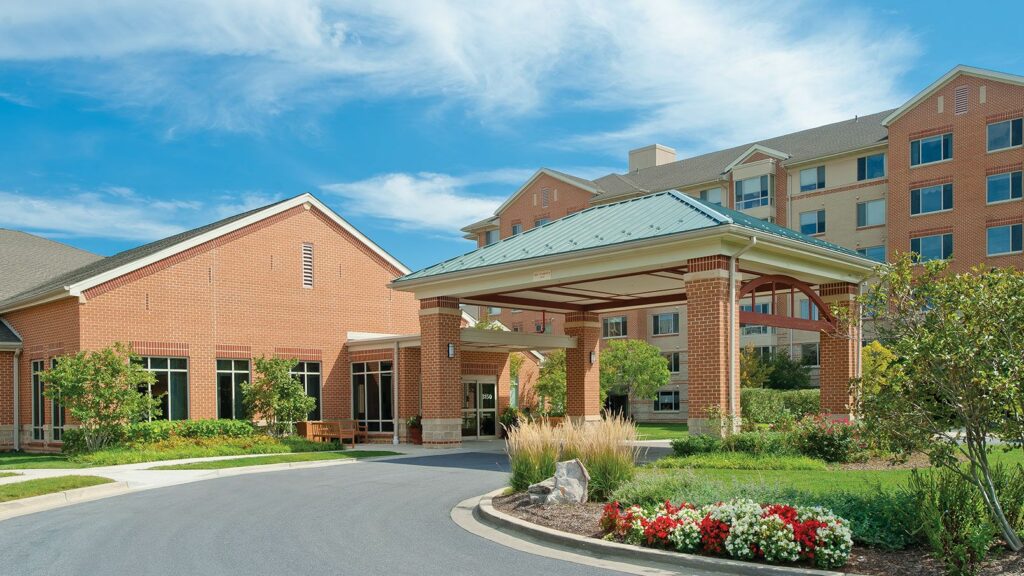
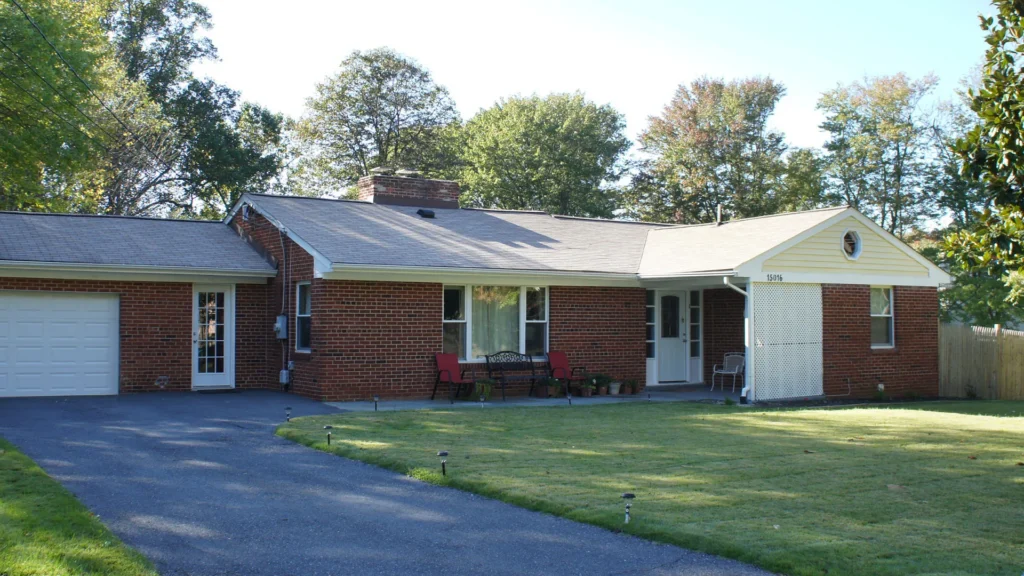
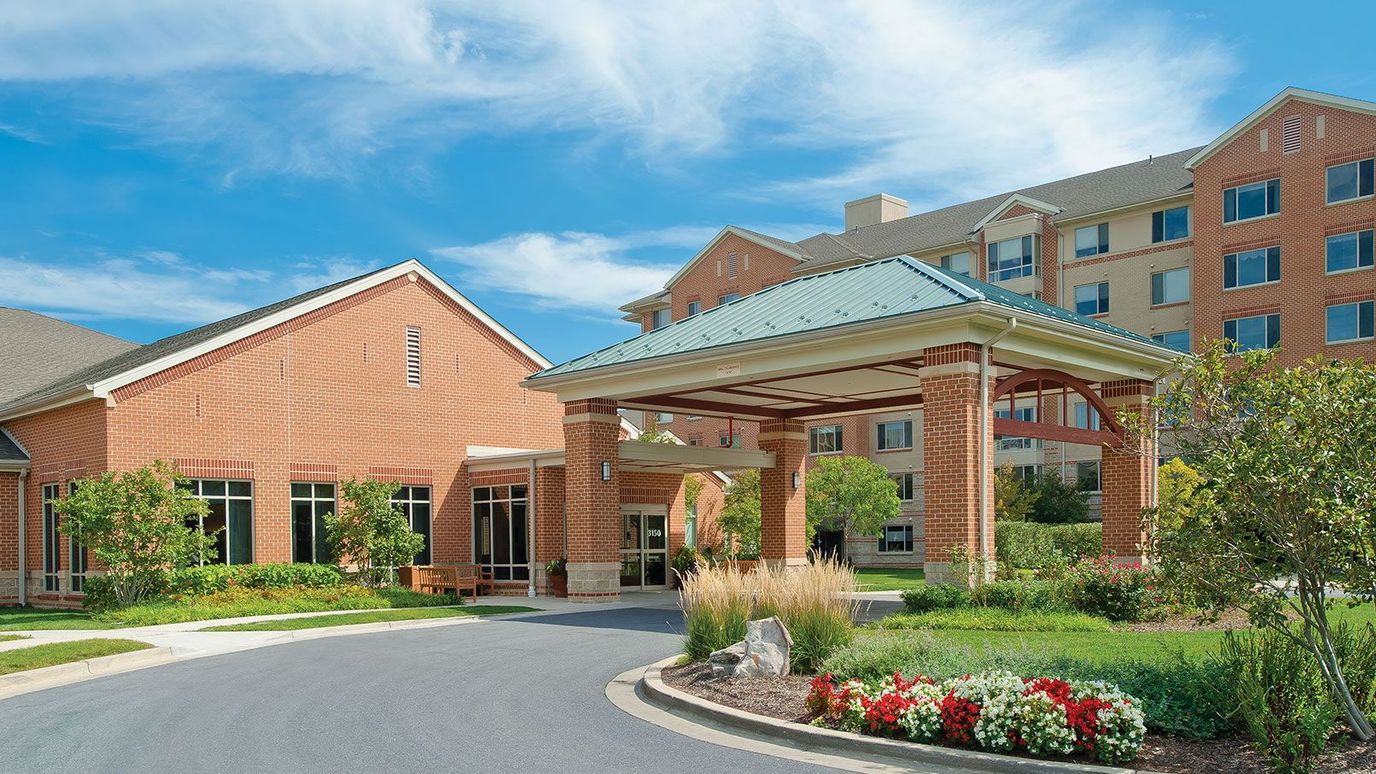
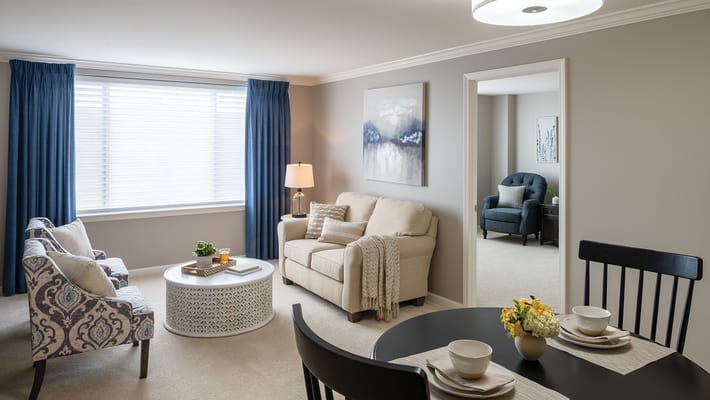
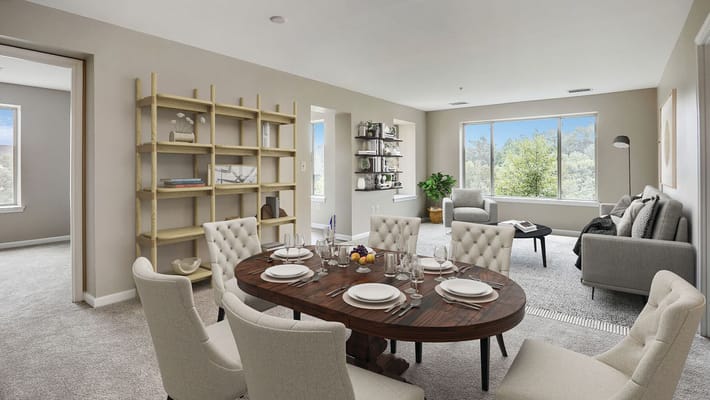
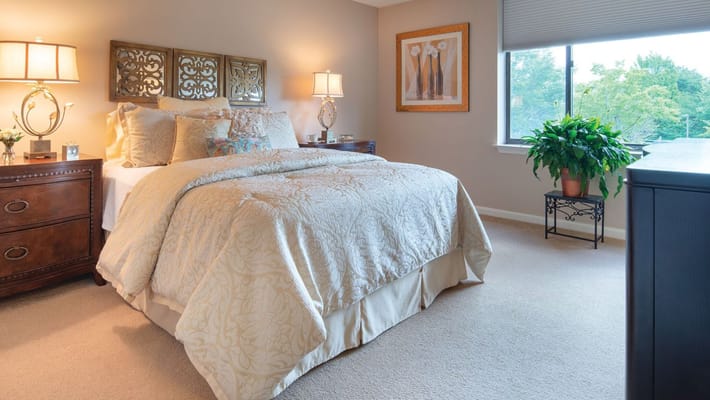
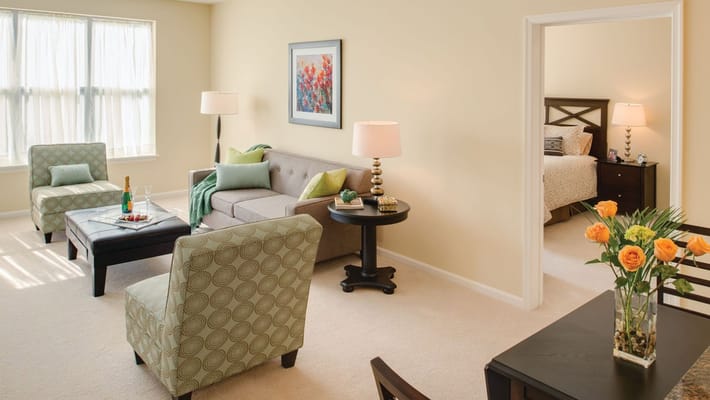
Riderwood Village is an ideal place that provides programs and activities that are enjoyable and nurturing. Offering assisted living, memory care, long-term care, and rehabilitation– their approach to modern senior living promotes a lifestyle centered on growth. Residents are able to learn to love life through the staff’s encouragement of purposeful living. At Riderwood Village, residents are able to feel comfortable and safe because of the welcoming environment that is balanced with the urban and vibrant atmosphere.
As an Erickson Senior Living Community, seniors are able to discover endless opportunities in the community: from having chef-prepared meals to digesting what they just ate by walking on the walking trails nearby; or from squeezing in a workout before getting a haircut at the salon/barbershop; or having personal care assistance with bathing and dressing to requesting transportation services to get to medical appointments.
The Overall CMS Rating combines results from health inspections, staffing levels and quality measures. Health inspections carry the most weight. Staffing and quality scores can increase or decrease the final rating based on performance compared to state and national standards.
Based on the results of the facility's three most recent standard inspections and any complaint investigations. CMS reviews the number, scope, and severity of deficiencies, with more recent findings weighted more heavily.
Measures average nursing staff hours per resident per day, including Registered Nurses (RNs) and total nursing staff. Ratings are adjusted based on the level of care residents require and are compared to state and national benchmarks.
Based on clinical and physical health indicators reported to CMS, such as hospital readmissions, falls, pressure ulcers, and improvements in mobility. These measures reflect how well residents' health needs are being managed.
This shows how many total hours of nursing staff time are available per resident each day. Higher numbers usually mean more staff support.
May provide extensive amenities, services and programs.
Lower occupancy suggests more openings may be available.
Most residents typically stay for a few weeks or months before returning home or moving on.
62% of new residents, usually for short-term rehab.
38% of new residents, often for short stays.
The portion of the home's budget spent on staff, including nurses, caregivers, and other employees who support care and operations.
All remaining costs needed to run the home, such as food, utilities, building maintenance, supplies and administrative expenses.


 23% higher than Maryland average
Maryland average: 60%

Key information about the people who lead and staff this community.
Resident demographic information for this facility.
Maryland average 3.9
Last Health inspection on Sep 2025
Maryland average 49.9
Maryland average 12.81
Health citations are formal notices following inspections when they fail to comply with safety and care standards.
17 of 18 citations resulted from standard inspections; and 1 of 18 came from combined inspections (standard and complaint).
0
100% better than Maryland averageMaryland average: 0.5
0
100% better than Maryland averageMaryland average: 0.6
 Issues related to building safety, cleanliness, maintenance, and overall living conditions.
Sep 22, 2025
Corrected
Issues related to building safety, cleanliness, maintenance, and overall living conditions.
Sep 22, 2025
Corrected
Issues related to preventing and controlling infections, including hygiene practices and safety protocols.
Sep 22, 2025
Corrected
Issues related to how well residents receive appropriate treatment and support for their medical and daily care needs.
Sep 22, 2025
Corrected
Issues related to building safety, cleanliness, maintenance, and overall living conditions.
Sep 22, 2025
Corrected
Issues related to building safety, cleanliness, maintenance, and overall living conditions.
Sep 22, 2025
Corrected
Issues related to preventing and controlling infections, including hygiene practices and safety protocols.
Sep 22, 2025
Corrected
Issues related to how well residents receive appropriate treatment and support for their medical and daily care needs.
Sep 22, 2025
Corrected
Data sourced from CMS Health Deficiencies reports. Citation severity codes range from A (least serious) to L (most serious). Immediate Jeopardy (J-L) citations indicate situations where the facility's noncompliance has placed residents at risk of death or serious harm.
Assisted Living A licensed, long-term care setting for seniors or individuals with disabilities who need help with daily activities — like bathing, dressing, and medication management — but not 24-hour skilled nursing. Offers housing, meals, and around-the-clock support while aiming to maximize resident independence.
Memory Care Secured, specialized care for people living with Alzheimer's or dementia. Staff trained in cognitive impairment, with higher staff-to-resident ratios and an environment designed to reduce confusion and wandering risk.
Nursing Home Licensed facility providing 24/7 skilled nursing care for residents with complex, ongoing medical needs. Staffed by RNs, LPNs, and CNAs. Inspected and star-rated annually by CMS. Accepts Medicare (short-term rehab) and Medicaid (long-term care).
Male Residents — State Benchmarked 29% of residents are male, compared to the Maryland average of 31%. This facility caters to a majority female resident pool (71% female), consistent with the broader assisted living trend where women significantly outnumber men.
Female Residents — State Benchmarked 71% of residents are female, compared to the Maryland average of 69%. Women comprise the large majority, consistent with national assisted living demographics where women live longer and enter care facilities at higher rates.
White Residents — State Benchmarked 89% of residents are reported as White, compared to the Maryland average of 81%. Close to the average for this category among assisted living facilities in Maryland with reported race/ethnicity data.
African American Residents — State Benchmarked 7% of residents are reported as African American or Black, compared to the Maryland average of 12%. In line with the Maryland average for African American residents among facilities reporting this breakdown.
Other Ethnicity Residents — State Benchmarked 4% of residents fall into categories other than White or African American (combined), compared to the Maryland average of 7%. This column aggregates Hispanic, Asian, multiracial, and any other labeled groups that are not classified as White or African American. Reported subgroups in this total: Asian (3%), Hispanic (0%).
Residents Age 65–74 — State Benchmarked 2% of residents are 65–74, compared to the Maryland average of 12%. Fewer younger seniors suggests the resident population skews older, likely requiring higher acuity care and more hands-on support.
Residents Age 75–84 — State Benchmarked 23% of residents are 75–84, compared to the Maryland average of 31%. Below the state norm — the resident mix may skew either younger or older than this typical middle bracket.
Residents Age 85–94 — State Benchmarked 52% of residents are 85–94, compared to the Maryland average of 44%. A high concentration of very elderly residents signals a higher-acuity facility with experience caring for advanced age-related needs.
Residents Age 95+ — State Benchmarked 23% of residents are 95 or older, compared to the Maryland average of 16%. A high proportion of the oldest-old suggests strong end-of-life care experience and very-high-acuity capabilities.
Assisted Living A licensed, long-term care setting for seniors or individuals with disabilities who need help with daily activities — like bathing, dressing, and medication management — but not 24-hour skilled nursing. Offers housing, meals, and around-the-clock support while aiming to maximize resident independence.
Assisted Living A licensed, long-term care setting for seniors or individuals with disabilities who need help with daily activities — like bathing, dressing, and medication management — but not 24-hour skilled nursing. Offers housing, meals, and around-the-clock support while aiming to maximize resident independence.
Assisted Living A licensed, long-term care setting for seniors or individuals with disabilities who need help with daily activities — like bathing, dressing, and medication management — but not 24-hour skilled nursing. Offers housing, meals, and around-the-clock support while aiming to maximize resident independence.
Respite Care Short-term temporary care — days to weeks — to give family caregivers a break. Full care provided during the stay. Often used after hospitalization or to trial a facility before a permanent placement decision.
Assisted Living A licensed, long-term care setting for seniors or individuals with disabilities who need help with daily activities — like bathing, dressing, and medication management — but not 24-hour skilled nursing. Offers housing, meals, and around-the-clock support while aiming to maximize resident independence.
 7.3 miles from city center — 4.31 miles to nearest hospital (UM Laurel Medical Center)
Add your location
This data corresponds to Q2 2025 and is based on CMS Payroll-Based Journal.
32% better than Maryland averageMaryland average ratio: 1.81:1
8% worse than Maryland averageMaryland average: 8 hours
Manages medical care and health needs.
Average shift length. Calculated as total hours divided by days worked and average staff per day.
7.1 hoursNo contractors work on this role.
Assists with medical care and medications.
Average shift length. Calculated as total hours divided by days worked and average staff per day.
8.5 hoursNo contractors work on this role.
Helps with daily care and mobility.
Average shift length. Calculated as total hours divided by days worked and average staff per day.
7.6 hoursNo contractors work on this role.
Total hours from contractors
434 contractor hours this quarter
| Certified Nursing Assistant | 55 | 0 | 55 | 17,067 | 91 | 100% | 7.6 |
| Clinical Nurse Specialist | 17 | 0 | 17 | 4,417 | 90 | 99% | 7.6 |
| Licensed Practical Nurse | 14 | 0 | 14 | 4,090 | 91 | 100% | 8.5 |
| Registered Nurse | 17 | 0 | 17 | 3,221 | 91 | 100% | 7.1 |
| Medication Aide/Technician | 36 | 0 | 36 | 1,612 | 84 | 92% | 8.1 |
| Respiratory Therapy Technician | 8 | 1 | 9 | 783 | 67 | 74% | 6.1 |
| Physical Therapy Assistant | 6 | 0 | 6 | 779 | 69 | 76% | 5.3 |
| Occupational Therapy Aide | 2 | 0 | 2 | 711 | 65 | 71% | 7.1 |
| Administrator | 2 | 0 | 2 | 576 | 60 | 66% | 8 |
| Nurse Practitioner | 1 | 0 | 1 | 480 | 60 | 66% | 8 |
| Dietitian | 1 | 0 | 1 | 472 | 59 | 65% | 8 |
| Other Dietary Services Staff | 1 | 0 | 1 | 472 | 59 | 65% | 8 |
| Mental Health Service Worker | 2 | 0 | 2 | 448 | 48 | 53% | 8 |
| Dental Services Staff | 1 | 0 | 1 | 296 | 37 | 41% | 8 |
| Qualified Social Worker | 4 | 0 | 4 | 152 | 34 | 37% | 4.5 |
| Medical Director | 0 | 1 | 1 | 130 | 13 | 14% | 10 |
| Speech Language Pathologist | 2 | 0 | 2 | 64 | 9 | 10% | 6.4 |
| Occupational Therapy Assistant | 0 | 1 | 1 | 40 | 46 | 51% | 0.9 |
Source: CMS Long-Term Care Facility Characteristics (Data as of Jan 2026)
Residents meet regularly to discuss policies, care quality, and activities
Family members meet regularly to discuss policies, care quality, and activities
Part of a Continuing Care Retirement Community offering multiple care levels
Organized group of family members that meets regularly to discuss facility policies, resident care, and activities.
Organized group of residents that meets regularly to discuss facility policies, quality of life, and activities.
Data sourced from CMS Long-Term Care Facility Characteristics quarterly report. Payer mix reflects the current resident census by primary payment source.
These measures show how residents usually do over time at this home, based on health outcomes and preventive care.
A composite score based on pressure ulcers, falls with injury, weight loss, walking ability decline, and activities of daily living decline.
6.6
49% better than Maryland averageMaryland average: 12.9
A composite score based on activities of daily living decline, walking ability decline, and incontinence.
17.8
31% better than Maryland averageMaryland average: 25.7
Percent of long-stay residents whose need for help with daily activities has increased
16.0%
33% better than Maryland averageMaryland average: 23.7%
Percent of low risk long-stay residents who lose control of their bowels or bladder
19.6%
25% better than Maryland averageMaryland average: 25.9%
Percent of long-stay residents experiencing one or more falls with major injury
1.5%
35% better than Maryland averageMaryland average: 2.3%
Percent of long-stay high risk residents with pressure ulcers
4.2%
36% better than Maryland averageMaryland average: 6.5%
Percent of long-stay residents with a urinary tract infection
2.0%
25% worse than Maryland averageMaryland average: 1.6%
Percent of long-stay residents who lose too much weight
4.9%
16% better than Maryland averageMaryland average: 5.8%
Percent of long-stay residents who have depressive symptoms
0.0%
100% better than Maryland averageMaryland average: 20.2%
Percent of long-stay residents who received an antipsychotic medication
14.4%
11% worse than Maryland averageMaryland average: 12.9%
Percent of long-stay residents assessed and appropriately given the pneumococcal vaccine
99.0%
8% better than Maryland averageMaryland average: 92.0%
Percent of long-stay residents assessed and appropriately given the seasonal influenza vaccine
96.4% In line with Maryland average
Maryland average: 96.6%
Percent of short-stay residents assessed and appropriately given the pneumococcal vaccine
92.8%
18% better than Maryland averageMaryland average: 78.4%
Percent of short-stay residents who newly received an antipsychotic medication
2.6%
88% worse than Maryland averageMaryland average: 1.4%
Percent of short-stay residents assessed and appropriately given the seasonal influenza vaccine
86.8%
8% better than Maryland averageMaryland average: 80.6%
Quality measures are calculated from Minimum Data Set (MDS) assessments. For most measures, lower percentages indicate better care quality.
Historical financial and operational data for Riderwood Village based on CMS SNF Cost Reports.
Loading trend charts...
Care Cost Calculator: See Prices in Your Area
Nursing Home Data Explorer
Don’t Wait Too Long: 7 Red Flag Signs Your Parent Needs Assisted Living Now
The True Cost of Assisted Living in 2025 – And How Families Are Paying For It
Understanding Senior Living Costs: Pricing Models, Discounts & Financial Assistance



Touring a community? Use this expert-backed checklist to stay organized, ask the right questions, and find the perfect fit.
We'll send you a PDF version of the touring checklist.