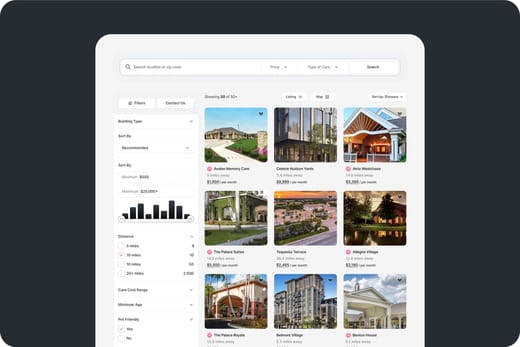
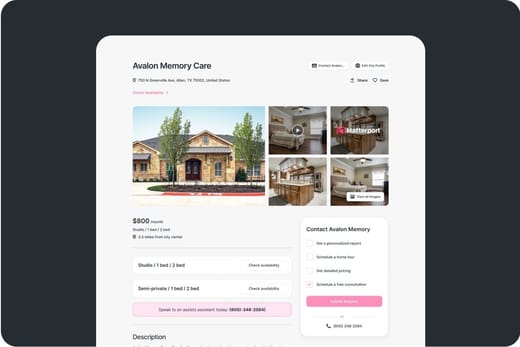
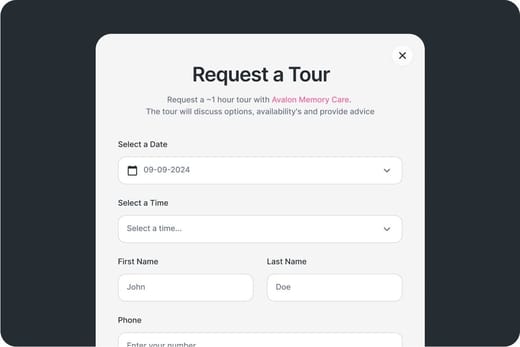
We arrange tours, appointments, and even moving support so you don’t have to
2
Ranked on Data, Not Dollars
We rank communities on objective measures like inspection records, quality scores, and care data, so you can find trusted options without the guesswork.
3
Personalized Guidance
From lifestyle matching to help with insurance and financial assistance, we make sure the community is the right fit
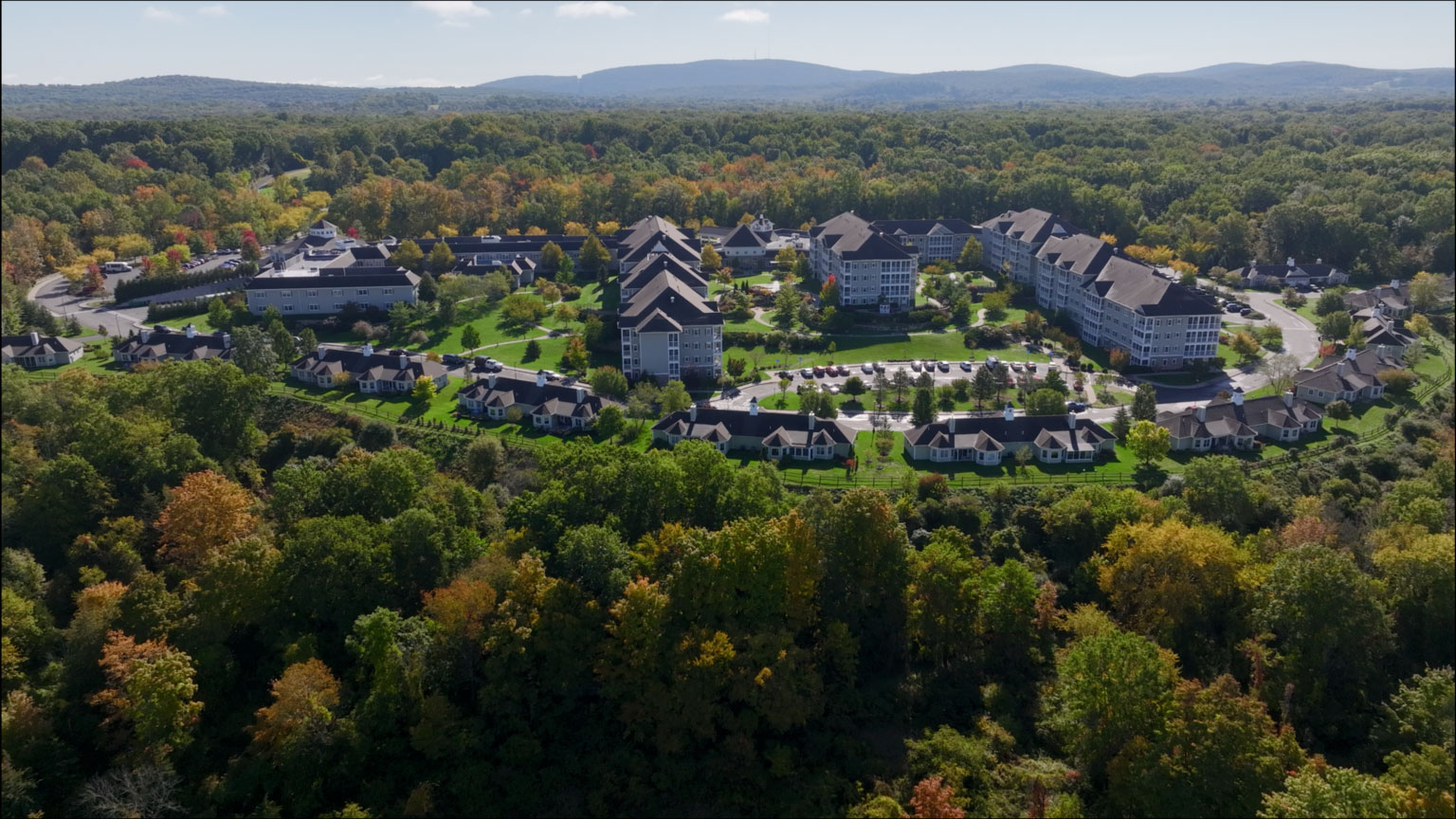
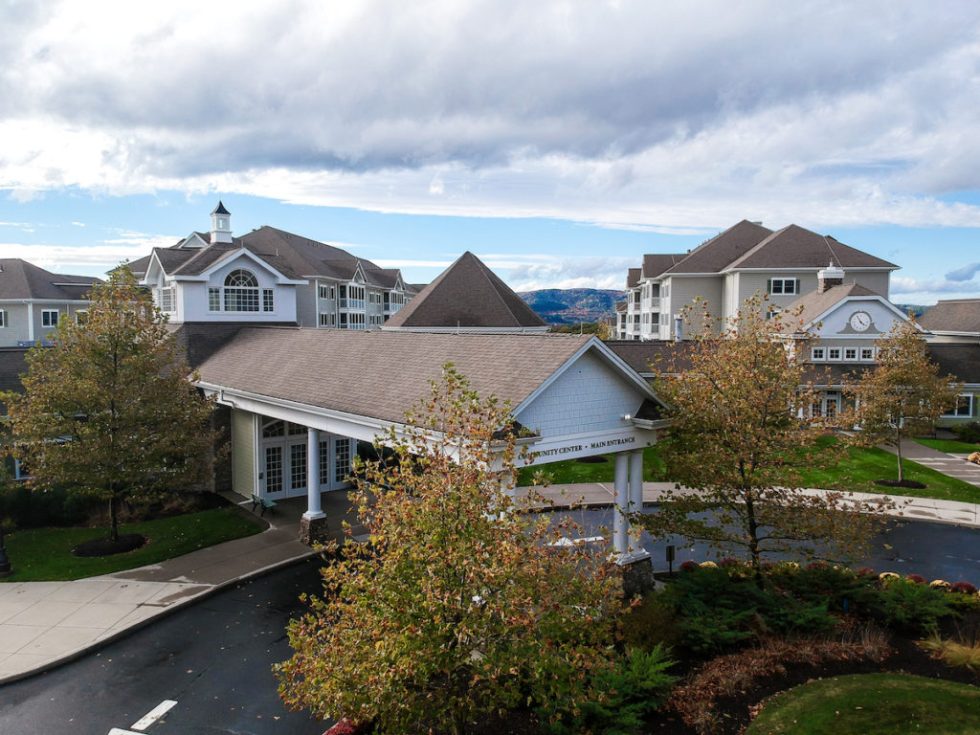
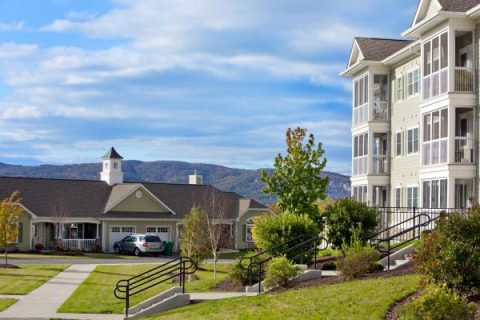
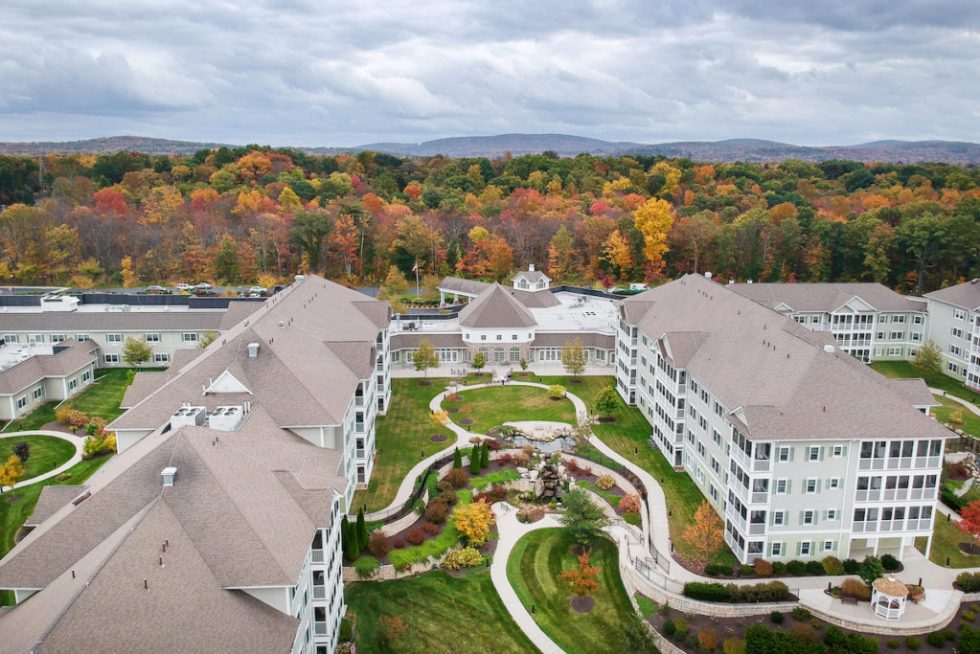
Woodland Pond at New Paltz
Nursing Home, Assisted Living, Independent Living, Memory Care, Respite Care & Skilled Nursing · New Paltz, NY
CMS overall rating
4/5
CMS (the Centers for Medicare & Medicaid Services) is the federal agency that rates nursing home quality. Its Overall Rating runs from 1 to 5 stars, combining health inspections, staffing, and quality measures, with inspections weighted most heavily.
Nursing Home, Assisted Living, Independent Living, Memory Care, Respite Care & Skilled Nursing · New Paltz, NY
CMS overall rating
4/5
CMS (the Centers for Medicare & Medicaid Services) is the federal agency that rates nursing home quality. Its Overall Rating runs from 1 to 5 stars, combining health inspections, staffing, and quality measures, with inspections weighted most heavily.
Woodland Pond at New Paltz accepts Medicare, Medicaid, and private pay.
Overview of Woodland Pond at New Paltz
Woodland Pond at New Paltz offers nursing home, assisted living, independent living, memory care, respite care, and skilled nursing in New Paltz, NY. Independent living provides private living with community services and no daily care, while assisted living adds help with daily tasks. Memory care provides a secured setting with supervision, and nursing home and skilled nursing provide licensed nursing care on site around the clock.
Respite care offers a short stay for someone whose usual caregiver needs to travel or recover. The range of care levels can suit a person age 62 or older whose needs may grow over time. Woodland Pond opened in 2009 and has 60 beds, and the community is operated by Woodland Pond.
Medicare, Medicaid, and private pay are accepted, giving families several listed ways to cover care, including Medicaid when savings may not cover a long stay and Medicare for short-term skilled care after a hospital stay. Total nurse staffing is 5h 47m per resident/day, representing the daily hands-on nurse time per resident. A Walk Score of 89 / 100 means the area is very walkable, with most errands possible on foot, so a resident who no longer drives can still get out independently.
Dining options include gourmet dining, casual bistro selections, and private dining services, while special diets are available for residents with documented dietary needs. Rehabilitation services allow a resident to receive therapy at the community rather than arranging transportation elsewhere. This may be a good fit for someone age 62 or older whose care needs could increase over time.
Measured by Centers for Medicare & Medicaid Services (CMS)
Overall ratingThe Overall CMS Rating combines results from health inspections, staffing levels and quality measures. Health inspections carry the most weight. Staffing and quality scores can increase or decrease the final rating based on performance compared to state and national standards.
Health InspectionBased on the results of the facility's three most recent standard inspections and any complaint investigations. CMS reviews the number, scope, and severity of deficiencies, with more recent findings weighted more heavily.
StaffingMeasures average nursing staff hours per resident per day, including Registered Nurses (RNs) and total nursing staff. Ratings are adjusted based on the level of care residents require and are compared to state and national benchmarks.
Quality MeasuresBased on clinical and physical health indicators reported to CMS, such as hospital readmissions, falls, pressure ulcers, and improvements in mobility. These measures reflect how well residents' health needs are being managed.
Staffing hours
Daily nursing hours per resident by staff type, reported to CMS. Higher is generally better — compare this facility to state and national averages to see where staffing stands.
Hours per resident per day vs New York averages
Rank#3 / 399Nurse hours — State benchmarkedThis nursing home is ranked 3rd out of 399 nursing homes we track in New York for nurse hours. Shows adjusted nurse hours per resident per day benchmarked to the New York average, with a ranking across 399 New York facilities. More hours mean more direct care. The national average is about 3.5 hrs; below 3.0 is a red flag.Communities with the same value for a metric share the same rank. Rankings compare like with like: every nursing home we track in New York that reports data for that category. Nursing homes without available data are excluded, so the pool size varies from metric to metric.Click the rank badge to see the full State ranking.Click here to see the full State ranking.
Total nursing care
This nursing home is ranked 3rd out of 399 nursing homes we track in New York for nurse hours. Total adjusted nursing hours per resident per day, combining RN, LPN, and aide time. CMS adjusts this for case-mix so facilities can be fairly compared.
5h 47m
62% above state avg
This facilityState avg 3h 35m
Staff type
Hours / day / resident
vs state avg
Registered Nurse (RN)RNs hold the highest nursing license and can assess residents, interpret test results, and direct care plans. More RN hours per day often signals stronger clinical oversight and faster response to health changes.
1h 18m
+86% State avg: 42m per day · National avg: 41m per day
LPN / LVNLicensed Practical Nurses (LPNs) or Licensed Vocational Nurses (LVNs) deliver routine hands-on care — medication administration, wound dressing, and monitoring vital signs. They work under RN supervision and make up a large share of daily bedside care.
1h 33m
+102% State avg: 46m per day · National avg: 52m per day
Nurse AideCertified Nurse Aides (CNAs) provide the most direct day-to-day assistance: bathing, dressing, feeding, and mobility. Nurse aide hours are typically the largest staffing category and directly affect residents' quality of life.
2h 56m
+34% State avg: 2h 11m per day · National avg: 2h 20m per day
Weekend Total NursingCombined nursing hours (RN + LPN + Nurse Aide) per resident per day on weekends. Staffing often drops on weekends — this figure reveals whether the facility maintains adequate coverage outside of weekday hours.
5h 12m
+64% State avg: 3h 10m per day · National avg: 3h 26m per day
Physical TherapistHours per resident per day provided by licensed Physical Therapists (PTs) or PT Assistants. PT services help residents recover mobility after injury or illness and are especially important for post-acute (short-stay) rehabilitation.
20m
+185% State avg: 7m per day · National avg: 4m per day
Weekend RNRegistered nurse hours specifically on weekends. Facilities sometimes reduce RN presence on Saturdays and Sundays — a low weekend RN figure compared to weekday hours can indicate reduced clinical oversight when most administrative staff are absent.
41m
+48% State avg: 28m per day · National avg: 28m per day
All 6 underlying metrics are above the state average
By The Numbers
Community insights.
Bed count
A smaller, more intimate setting that may offer a quieter environment and closer staff-resident interactions.60Rank#416 / 429Bed count — State benchmarkedThis nursing home is ranked 416th out of 429 nursing homes we track in New York for bed count. Shows this facility's certified or reported bed count compared to other New York facilities. Larger communities may offer more amenities, programs, and on-site services for residents and families.Communities with the same value for a metric share the same rank. Rankings compare like with like: every nursing home we track in New York that reports data for that category. Nursing homes without available data are excluded, so the pool size varies from metric to metric.Click the rank badge to see the full State ranking.Click here to see the full State ranking.
Smaller home
· May offer a more intimate, personalized care environment.
Walk Score
Very walkable. Most errands can be accomplished on foot, and many essentials are within a short walk.Rank#77 / 457Walk Score — State benchmarkedThis nursing home is ranked 77th out of 457 nursing homes we track in New York for walk score. Shows how walkable this facility's neighborhood is compared to the average walk score across New York facilities. Higher scores benefit residents, families, and staff.Communities with the same value for a metric share the same rank. Rankings compare like with like: every nursing home we track in New York that reports data for that category. Nursing homes without available data are excluded, so the pool size varies from metric to metric.Click the rank badge to see the full State ranking.Click here to see the full State ranking.
89/ 100
Occupancy rate
Occupancy lower than 85% suggests more openings may be available.Rank#284 / 388Occupancy rate — State benchmarkedThis nursing home is ranked 284th out of 388 nursing homes we track in New York for occupancy. Shows this facility's occupancy rate versus the New York average, with its Statewide rank out of 388. Higher occupancy signals strong local demand and financial stability.Communities with the same value for a metric share the same rank. Rankings compare like with like: every nursing home we track in New York that reports data for that category. Nursing homes without available data are excluded, so the pool size varies from metric to metric.Click the rank badge to see the full State ranking.Click here to see the full State ranking.
60%This home usually has availability
Lower than the New York average: 90.6%
Occupied beds
36/ 60
Avg. Length of Stay
Average number of days residents stay at this facility, based on CMS cost report data. Shorter stays often reflect post-acute or rehab care; longer stays reflect long-term care.
122days
About this community
License Details
StatusActive
CountyUlster
License Number5522303N
CMS Certification Number335858
Ownership & Operating Entity
Woodland Pond at New Paltz is legally operated by Woodland Pond, Inc.
Owner NameWoodland Pond, Inc. (Not for Profit)
Therapy & Rehabilitation
2 services
Rehabilitation Services
Respite Care
Additional Policies & Features
Pets not allowed
Minimum Age62
HousekeepingYes
Linen ServiceYes
This profile shows two inspection records, and their totals often differ.
Inspection History and the Inspection Scorecard below are state data — the
figures the state publishes and the state inspection reports we hold on file —
covering the entire facility. CMS Health Inspection History covers only this
home's Medicare and Medicaid-certified nursing beds, from federal certification
surveys.
Inspection History
In New York, the Department of Health, Office of Aging and Long Term Care performs unannounced onsite inspections to monitor compliance with state and federal healthcare regulations.
Inspection Scorecard
This scorecard compares key inspection, violation, and complaint metrics at this facility against the New York state average. Metrics rated ≥15% worse than average are highlighted in red; those ≥15% better are highlighted in green.
Overall vs. NY average
1 Worse
Metrics worse than New York average:
• Total violations (26% above)
2 At Avg
Metrics at New York average:
• Health violations (at NY avg)
• Life safety violations (at NY avg)
3 Better
Metrics better than New York average:
• Inspections with violations (75% below)
• Inspection violation rate (9% below)
• Total complaints (80% below)
Inspections State inspections evaluate whether the facility meets health and safety standards.
This Facility
NY Average
vs. NY Avg
Total inspections Combined count of all inspections conducted at this facility.
2
9.0
This facility has had 78% fewer total inspections than the New York average (2 vs. NY avg 9). More inspections can mean more regulatory scrutiny rather than worse care.↓ 78% fewer
Inspections with violations Inspections that uncovered at least one regulatory violation.
1
4.0
This facility has 75% fewer inspections with violations than a typical New York assisted living residence (1 vs. NY avg 4).↓ 75% better
Inspection violation rate Percentage of inspections that resulted in at least one violation.
50%
55%
This facility has 5 percentage points lower inspection violation rate than a typical New York assisted living residence (50% vs. NY avg 55%).↓ 5% better
Complaint visits On-site visits triggered by formal complaints filed by residents, families, or staff.
2
6.0
This facility has had 67% fewer complaint visits than the New York average (2 vs. NY avg 6). More inspections can mean more regulatory scrutiny rather than worse care.↓ 67% fewer
Violations Violations are formal regulatory issues recorded during state inspections.
This Facility
NY Average
vs. NY Avg
Total violations Formal regulatory issues recorded by inspectors across all inspection types.
24
19.0
This facility has 26% more total violations than a typical New York assisted living residence (24 vs. NY avg 19).↑ 26% worse
Health violations Violations related to resident care, clinical practices, and day-to-day operations.
20
20.0
This facility has health violations in line with the New York average (20 vs. NY avg 20).— At avg
Life safety violations Violations related to building safety — fire prevention, emergency egress, and similar.
4
4.0
This facility has life safety violations in line with the New York average (4 vs. NY avg 4).— At avg
Complaints & Investigations Complaints are formal concerns filed by residents, families, or staff. Investigations are on-site follow-ups.
This Facility
NY Average
vs. NY Avg
Total complaints Formal expressions of concern made by residents, families, or staff.
16
79.0
This facility has 80% fewer total complaints than a typical New York assisted living residence (16 vs. NY avg 79).↓ 80% better
Complaint investigations On-site investigations triggered by complaints filed with New York regulators.
4
15.0
This facility has had 73% fewer complaint investigations than the New York average (4 vs. NY avg 15). More inspections can mean more regulatory scrutiny rather than worse care.↓ 73% fewer
Federal inspection data published by CMS, covering this home's Medicare and/or
Medicaid-certified skilled-nursing/nursing beds only.
InspectionsSince 2020 · 6 years of data
Includes all CMS health inspection records for this property, which could include management/ownership changes.
Total health inspections2
New York average4.2
Last Health inspection on Apr 2025
Total health citations
10Rank#60 / 402Health citations — State benchmarkedThis nursing home is ranked 60th out of 402 nursing homes we track in New York for health citations. Shows this facility's total health deficiency citations benchmarked to the New York State average, with a ranking across all 402 NY facilities. Lower citation counts earn a better rank.Communities with the same value for a metric share the same rank. Rankings compare like with like: every nursing home we track in New York that reports data for that category. Nursing homes without available data are excluded, so the pool size varies from metric to metric.Click the rank badge to see the full State ranking.Click here to see the full State ranking.
New York average20.1
Citations per inspection
5Rank#238 / 402Citations per inspection — State benchmarkedThis nursing home is ranked 238th out of 402 nursing homes we track in New York for citations per inspection. Shows average deficiency citations per CMS inspection for this facility versus the New York mean across 402 facilities with citation data. Lower is better.Communities with the same value for a metric share the same rank. Rankings compare like with like: every nursing home we track in New York that reports data for that category. Nursing homes without available data are excluded, so the pool size varies from metric to metric.Click the rank badge to see the full State ranking.Click here to see the full State ranking.
New York average4.77
Health citations are formal notices following inspections when they fail to comply with safety and care standards.
8 of 10 citations resulted from standard inspections; and 2 of 10 came from combined inspections (standard and complaint).
Breakdown of citation severity (last 6 years)
Critical health citations
0
100% better than New York average
New York average: 0.3
Serious health citations
0
100% better than New York average
New York average: 0.4
0 critical citationsNew York average: 0.3
0 serious citationsNew York average: 0.4
10 moderate citationsNew York average: 18.7
0 minor citationsNew York average: 0.7
Citations history (last 6 years)
Infection Control moderate citationApr 24, 2025
Corrected
Nursing Services moderate citationApr 24, 2025
Corrected
Nutrition moderate citationApr 24, 2025
Corrected
Quality of Care moderate citationApr 24, 2025
Corrected
Citations history (last 6 years)
Infection Prevention & Vaccination
How this facility protects residents through staff vaccination policies and immunization practices.
Employee Flu Vaccination Rate: 76%
Percentage of facility employees vaccinated against influenza.
Lawsuit overview for Woodland Pond at New Paltz
Summary of court-record activity tied to this facility, compiled from publicly available case dockets.
Source: State court e-filing records
Total CasesEvery lawsuit on record involving this facility since the earliest filing. Long-term volume signals overall legal exposure.2
Active CasesLawsuits still moving through the courts. Active claims can affect day-to-day operations, settlement risk, and insurance posture.1
ClosedCases that have been disposed of — dismissed, settled, or decided. Shows how the facility has historically resolved disputes.1
SinceYear of the earliest case on record. A long history with steady filings suggests persistent issues; a recent first filing means newer exposure.2013
Most RecentMost recent filing on record. Recent activity means legal disputes are still being raised against this facility.2025
Last Scheduled Court DateMost recent court appearance scheduled on record. Court dates are captured when the report is compiled and are not updated as dockets move, so later hearings may have been set since.Aug 03, 2026
Federal penalties imposed by CMS for regulatory violations, including civil money penalties (fines)
and denials of payment for new Medicare/Medicaid admissions.
Source: CMS Penalties Database
(Data as of Jan 2026)
Total fines amount
$13K Rank#325 / 402Federal fines — State benchmarkedThis nursing home is ranked 325th out of 402 nursing homes we track in New York for federal fines. Shows this facility's cumulative CMS federal fine dollars versus the New York average among facilities with fines, and where it ranks among 402 facilities in the pool. Lower total dollars mean a better rank.Communities with the same value for a metric share the same rank. Rankings compare like with like: every nursing home we track in New York that reports data for that category. Nursing homes without available data are excluded, so the pool size varies from metric to metric.Click the rank badge to see the full State ranking.Click here to see the full State ranking.
80% lower than New York average
New York average: $66K
Number of fines
3
48% more fines than New York average
New York average: 2.0
Payment DenialsSerious action where Medicare and/or Medicaid temporarily stops payments for new residents until issues are fixed.
0
100% fewer payment denials than New York average
New York average: 0.1
Fines amount comparison
This facility$13K
New York average$66K
Penalty History
Penalties are imposed by CMS for violations of federal nursing home regulations.
3 penalties in the past 3 years
Multiple penalties were reported in the last 3 years.
Civil Money PenaltyFines imposed for noncompliance, which can be assessed per day or per instance of violation.Feb 20, 2024
$3K
Civil Money PenaltyFines imposed for noncompliance, which can be assessed per day or per instance of violation.Jan 30, 2024
$7K
Civil Money PenaltyFines imposed for noncompliance, which can be assessed per day or per instance of violation.Dec 26, 2023
$3K
Last updated: Jan 2026
Quality of care over time
These measures show how residents usually do over time at this home, based on health outcomes and preventive care.
High-risk clinical events scoreA composite score based on pressure ulcers, falls with injury, weight loss, walking ability decline, and activities of daily living decline.15.2
55% worse than New York average
New York average: 9.8
Functional decline scoreA composite score based on activities of daily living decline, walking ability decline, and incontinence.22.2
22% worse than New York average
New York average: 18.1
Long-stay resident measures
Above averageNew York avg: 4.0CMS star rating based on long-stay quality measure performance. 5 stars = significantly above average, 1 star = significantly below average.
Need for Help with Daily Activities Increased Percent of long-stay residents whose need for help with daily activities has increased15.5%
6% better than New York average
New York average: 16.4%
Walking Ability Worsened Percent of long-stay residents whose ability to move independently worsened31.6%
90% worse than New York average
New York average: 16.6%
Low Risk Residents with Bowel/Bladder Incontinence Percent of low risk long-stay residents who lose control of their bowels or bladder19.5%
9% better than New York average
New York average: 21.4%
Falls with Major Injury Percent of long-stay residents experiencing one or more falls with major injury6.2%
108% worse than New York average
New York average: 3.0%
High Risk Residents with Pressure Ulcers Percent of long-stay high risk residents with pressure ulcers10.3%
44% worse than New York average
New York average: 7.2%
Urinary Tract Infection Percent of long-stay residents with a urinary tract infection3.3%
132% worse than New York average
New York average: 1.4%
Lost Too Much Weight Percent of long-stay residents who lose too much weight12.5%
105% worse than New York average
New York average: 6.1%
Depressive Symptoms Percent of long-stay residents who have depressive symptoms1.0%
94% better than New York average
New York average: 18.1%
Antipsychotic Use Percent of long-stay residents who received an antipsychotic medication6.2%
51% better than New York average
New York average: 12.6%
Pneumococcal Vaccine Percent of long-stay residents assessed and appropriately given the pneumococcal vaccine100.0%
9% better than New York average
New York average: 91.4%
Influenza Vaccine Percent of long-stay residents assessed and appropriately given the seasonal influenza vaccine100.0%
5% better than New York average
New York average: 95.2%
Hospitalizations per 1,000 days Number of hospitalizations per 1,000 long-stay resident days.2.12
24% worse than New York average
New York average: 1.71
ED visits per 1,000 days Number of outpatient emergency department visits per 1,000 long-stay resident days.1.38
In line with New York average
New York average: 1.35
Short-stay resident measures
Below averageNew York avg: 3.5CMS star rating based on short-stay quality measure performance. 5 stars = much above average, 1 star = much below average.
Pneumococcal VaccinePercent of short-stay residents assessed and appropriately given the pneumococcal vaccine100.0%
30% better than New York average
New York average: 76.6%
Antipsychotic medication increasePercent of short-stay residents who newly received an antipsychotic medication1.4%
9% worse than New York average
New York average: 1.3%
Influenza VaccinePercent of short-stay residents assessed and appropriately given the seasonal influenza vaccine100.0%
27% better than New York average
New York average: 78.8%
Re-hospitalized after SNF stayPercentage of short-stay residents who were re-hospitalized after their nursing home admission.20.3%
In line with New York average
New York average: 20.6%
Emergency department visitsPercentage of short-stay residents who had an outpatient emergency department visit.6.0%
38% better than New York average
New York average: 9.7%
Falls with major injuryPercentage of SNF residents who experience falls with major injury during their stay.0.0%
100% better than New York average
New York average: 0.8%
Ability to care for self at dischargePercentage of residents at or above expected ability to care for themselves at discharge.68.1%
27% better than New York average
New York average: 53.7%
Successful return to home or communityRate of successful return to home or community from a skilled nursing facility.34.7%
31% worse than New York average
New York average: 50.6%
Breakdown by payment type
Medicare
77% of new residents, usually for short-term rehab.
Typical stay24 days
Private pay
21% of new residents, often for short stays.
Typical stay11 - 12 months
Medicaid
2% of new residents, often for long-term daily care.
Typical stay3 years
Facility Characteristics
Source: CMS Long-Term Care Facility Characteristics
(Data as of Jan 2026)
Total residents38
Medicare
6
15.8% of residents
Medicaid
7
18.4% of residents
Private pay or other
25
65.8% of residents
Programs & Services
Residents Group
Residents meet regularly to discuss policies, care quality, and activities
Family Member Group
Family members meet regularly to discuss policies, care quality, and activities
CCRC
Part of a Continuing Care Retirement Community offering multiple care levels
Active Family Council
Organized group of family members that meets regularly to discuss facility policies, resident care, and activities.
Active Resident Council
Organized group of residents that meets regularly to discuss facility policies, quality of life, and activities.
Financial Trends
Historical financial and operational data for Woodland Pond at New Paltz from 2017–2023, based on CMS SNF Cost Reports.
Includes all financial data for this property, which could include management/ownership changes.
Key figures below are for fiscal year ending in 12/2023.
Net Patient Income-$25.5M↓ ~$1.8M vs 2022
Payroll Costs$13.7M↑ ~$1.4M vs 2022
Operating Margin-647.7%↓ 12.0pp vs 2022
Financial Performance
Net patient revenueOperating expensesNet patient income
Payroll & Labor Costs
SalariesStaff salaries from the home's own payroll records.Wage CostsWage-related costs — benefits such as payroll taxes, health insurance and retirement. Together with salaries, these make up payroll.Contract LaborPay for temporary or agency staff. Counted under other operating costs, not payroll.
Payer Mix (percentage)
MedicareMedicaidPrivate Pay/Other
Metric
2017
2018
2019
2020
2021
2022
2023
Occupancy %
91.8%
91.8%
88.0%
85.7%
84.0%
81.0%
84.4%
Beds
40
40
40
40
40
40
40
Net Income
-$937,441
$4,514,668
-$3,139,730
-$324,947
$2,504,634
-$2,122,897
$2,435,318
Gross Revenue
$4,078,321
$4,186,060
$4,631,284
$4,048,927
$4,305,445
$4,366,928
$4,343,434
Operating Expenses
$24,194,329
$24,293,343
$24,551,450
$24,826,326
$26,129,578
$27,435,960
$29,402,826
Net Patient Income
-$21,004,204
-$20,879,713
-$20,979,207
-$21,655,687
-$22,536,029
-$23,706,641
-$25,470,264
Net Patient Revenue
$3,190,125
$3,413,630
$3,572,243
$3,170,639
$3,593,549
$3,729,319
$3,932,562
Payroll Costs
$9,562,783
$10,127,971
$9,849,048
$10,220,771
$11,538,949
$12,352,639
$13,724,688
Operating Margin %
-658.4%
-611.7%
-587.3%
-683.0%
-627.1%
-635.7%
-647.7%
Medicare %
24.7%
22.6%
19.6%
16.9%
15.5%
15.5%
16.0%
Medicaid %
11.9%
12.0%
14.1%
14.9%
22.9%
24.2%
19.4%
Private %
63.4%
65.4%
66.3%
68.2%
61.6%
60.3%
64.6%
Net Patient Revenue/Day
$238
$255
$278
$253
$293
$315
$319
Cost/Day
$1,806
$1,812
$1,910
$1,978
$2,130
$2,319
$2,386
Avg Length of Stay
84.3 days
95.8 days
103.7 days
158.9 days
137.8 days
116.0 days
122.0 days
Finances and operations
Based on CMS SNF Cost Report for fiscal year ending in 12/2023.
Nonprofit
Net patient revenueNet patient revenue — what the home actually collects for resident care, after contractual allowances, bad debt and discounts are subtracted from its gross charges (CMS cost report, Worksheet G-3). It covers resident care only; money the home earns from other sources is shown separately as "Other income."
$3.9M
Net patient incomeNet patient income: net patient revenue minus the home's total operating expenses. A positive figure means it earns more from resident care than it spends to deliver it; a negative figure means the opposite. It excludes non-operating "other income."
-$25.5M
Nonprofit
Net patient revenueNet patient revenue — what the home actually collects for resident care, after contractual allowances, bad debt and discounts are subtracted from its gross charges (CMS cost report, Worksheet G-3). It covers resident care only; money the home earns from other sources is shown separately as "Other income."
$3.9M Rank#382 / 387Net patient revenue — State benchmarkedThis nursing home is ranked 382nd out of 387 nursing homes we track in New York. Shows this facility's net patient revenue compared to the New York average, among facilities reporting a recent fiscal year. Higher revenue generally means more resources for staffing and capital — read alongside Payroll %.Communities with the same value for a metric share the same rank. Rankings compare like with like: every nursing home we track in New York that reports data for that category. Nursing homes without available data are excluded, so the pool size varies from metric to metric.
Net patient incomeNet patient income: net patient revenue minus the home's total operating expenses. A positive figure means it earns more from resident care than it spends to deliver it; a negative figure means the opposite. It excludes non-operating "other income."
-$25.5M
Other incomeMoney the home earns outside of resident care — such as investments, grants, rentals and other non-operating sources (CMS cost report, Worksheet G-3). It is tracked separately from net patient revenue: it is not part of that figure, and it is not included in net patient income.
$27.9M
Payroll costsStaff salaries plus wage-related costs — benefits such as payroll taxes, health insurance and retirement — from the home's own accounting records (CMS cost report, Worksheet A). Contract or agency labor is counted separately, under other operating costs.Rank#176 / 387Payroll costs — State benchmarkedThis nursing home is ranked 176th out of 387 nursing homes we track in New York. Shows total staff payroll — salaries plus wage-related benefits — benchmarked to the New York average, among facilities reporting a recent fiscal year. Higher payroll relative to peers often signals better staffing and less reliance on contract labor.Communities with the same value for a metric share the same rank. Rankings compare like with like: every nursing home we track in New York that reports data for that category. Nursing homes without available data are excluded, so the pool size varies from metric to metric.
$13.7M
349% of net patient revenue
Payroll as a share of revenue: staff salaries and wage-related benefits divided by net patient revenue. A higher figure means more of each revenue dollar goes to staff pay.Rank#2 / 386Payroll % of net patient revenue — State benchmarkedThis nursing home is ranked 2nd out of 386 nursing homes we track in New York. Shows payroll as a percentage of net patient revenue versus the New York average, among facilities reporting a recent fiscal year. Below 25% may signal understaffing or heavy agency use — read with Staffing ratings.Communities with the same value for a metric share the same rank. Rankings compare like with like: every nursing home we track in New York that reports data for that category. Nursing homes without available data are excluded, so the pool size varies from metric to metric.
Other operating costsEverything it costs to run the home apart from payroll — food, utilities, supplies, maintenance, contract labor and administration. Calculated as total operating expense minus payroll (staff salaries and wage-related benefits).
$15.7M
Total costsThe home's total operating expense for the year — all the costs of running it, salaries included (CMS cost report, Worksheet G-3).
$29.4M
Certification details
License Number:335858
Owner Name:Woodland Pond, Inc. (Not for Profit)
Rural vs. Urban:Urban
County:Ulster
Type of Control:Nonprofit
Source: Centers for Medicare & Medicaid Services (CMS) and State data
How we calculate these figures
We use the home's most recent CMS SNF Cost Report — the annual financial statement every Medicare- and Medicaid-certified nursing home is required to file — to show how it earns and spends on resident care.
This includes
Net patient revenue — what the home collects for resident care after contractual allowances, bad debt and discounts.
Payroll — staff salaries plus wage-related benefits. Contract and agency labor is counted separately, under other operating costs.
Net patient income — what's left after the home's total operating expenses.
How we calculate net patient income and payroll %
Net patient income is net patient revenue minus the home's total operating expenses. Payroll % is payroll divided by net patient revenue — the share of each revenue dollar that goes to staff pay.
Net patient revenue vs. other income
Net patient revenue is money earned from resident care only. Anything the home earns outside of care — investments, grants, rentals and other non-operating sources — is reported separately as other income. Other income is not part of net patient revenue, and it is not included in net patient income.
Who this home usually serves
TYPE OF STAY
Mostly short-term rehab stays
Most residents typically stay for a few weeks or months before returning home or moving on.
Most new residents arrive under Medicare (77% of admissions), and a typical Medicare stay runs around 24 days.
Admissions
106 total
Coverage residents most often arrive under.
Medicare77%
Private pay21%
Medicaid2%
Discharges
101 total
Coverage residents most often leave under.
Medicare44%
Private pay53%
Medicaid3%
How we assess these insights
We analyze official CMS data on admissions and discharges to understand the types of residents a nursing home most often serves.
This includes
Medicare, Medicaid, and private-pay admissions and discharges
Number of nights covered by each payment type
Typical length of stay
How we calculate length of stay
We calculate length of stay separately for each payment type (Medicare, Medicaid and private) by dividing total number of nights by total number of admissions.
Places of interest near Woodland Pond at New Paltz
0.0 miles from city center Estimated distance in miles from New Paltz's city center to Woodland Pond at New Paltz's address, calculated via Google Maps.
Quick search
Calculate Travel Distance to Woodland Pond at New Paltz
Add your location
Compare Nursing Homes around Ulster County
Info below is compiled from CMS reports & the NY State Dept. of Health (NYSDOH), senior community websites & trusted data sources such as Walk Score & BBB.
Communities are listed from highest-ranked to lowest-ranked based on our methodology.
The facility name. Click to view the full profile page on Assisted Living Magazine, including photos, services, and contact info.
CMS (Centers for Medicare & Medicaid Services, the federal agency that regulates nursing homes) Overall 5-star rating — a composite of Health Inspection, Staffing, and Quality Measures scores. 5 stars = top 10% nationally. 1 star = bottom 10%. The single most important number to start with when comparing facilities.
Care Types in This TableAL (Assisted Living):
Housing with help for daily activities like bathing, dressing, and medication, without 24-hour skilled nursing.
NH (Nursing Home):
24/7 skilled nursing care for residents with complex, ongoing medical needs.
SNF (Skilled Nursing Facility):
Round-the-clock nursing care, often for recovery after surgery, injury, or illness.
MC (Memory Care):
Secured, specialized care for people living with Alzheimer's or dementia.
RC (Respite Care):
Short-term temporary care that gives family caregivers a break.
IL (Independent Living):
Community living with dining, activities, and transportation for active seniors who need little personal care.
PC (Palliative Care):
Comfort-focused care for serious illness at any stage, including alongside curative treatment.
Neighborhood or city area where the facility is located. Proximity to family, hospitals, and green space matters for both quality of life and ease of visitation. Consider drive time and transit access when evaluating location.
Licensed bed capacity. Larger facilities (300+ beds) often have more specialized programs but can feel institutional. Smaller homes (under 150 beds) tend to deliver more personalized care. Compare with Avg Res/Day to understand how full the facility typically runs.
Percentage of licensed beds filled on an average day. Color indicates financial health: green (90%+) = operationally strong, typically profitable. Amber (80–89%) = stable but leaving revenue on the table. Orange (70–79%) = financial strain likely, may struggle with fixed costs. Red (<70%) = significant distress, closure or ownership change risk increases sharply.
This facility's occupancy rate compared to the statewide average for similar facilities. A positive number means above-average demand. Facilities running 5%+ above the state average are typically the most sought-after in their market — a strong proxy for reputation.
CMS-adjusted total nurse hours per resident per day (RN + LPN + CNA combined). The national average is approximately 3.5 hrs. Higher is better — more direct care time per resident. Below 3.0 is a red flag. CMS weights RN hours more heavily because RNs handle complex clinical decisions that CNAs cannot.
CMS Health Inspection star rating (1–5 stars), based on the 3 most recent annual state surveys plus any complaint investigations. This is the hardest rating to manipulate — it reflects real surveyor findings on-site. 5 stars = fewest deficiencies found. 1 star = most. It carries the heaviest weight in the Overall CMS rating.
CMS Staffing star rating (1–5 stars), based on daily nurse staffing hours submitted to CMS via verified payroll data. Compares RN, LPN, and CNA coverage relative to resident acuity level. 5 stars = well above expected staffing. Weekend staffing is evaluated separately, as that's where many facilities quietly reduce coverage.
CMS Quality Measures star rating (1–5 stars), based on 15 clinical outcome metrics including fall rates, pressure ulcers, antipsychotic drug use, and hospital readmissions. Captures actual resident health outcomes, not just compliance. High QM combined with low Health Inspection scores can indicate a facility with strong care but weak documentation practices.
Registered Nurse hours per resident/day compared to the statewide average. RNs are the highest-skilled nursing staff — they assess residents, manage medications, and respond to emergencies. A value of +50% means RN coverage is 50% above the state norm. Negative values are a concern for residents with complex or acute medical needs.
Total nursing staff hours (RN + LPN + CNA combined) per resident/day vs. the statewide average. A broader measure than RN vs State — it captures the entire care team. A facility can have high total staffing but low RN hours, meaning more aides and fewer nurses. Read both columns together for the full picture.
Total dollar amount of federal monetary fines (civil money penalties) issued by CMS in the past 3 years. Fines are only levied for serious violations — typically actual harm to residents, repeated uncorrected deficiencies, or systemic non-compliance. Even a single fine is noteworthy. Multiple fines strongly suggest a pattern, not isolated incidents.
Total health deficiency citations from the most recent standard inspection cycle. Minor citations (scope A–C) are common and often administrative in nature. Higher counts aren't always disqualifying, but should be read alongside Severe Citations to understand actual harm levels. Under 10 is strong for a large facility; 30+ warrants a closer look.
Average deficiency citations per CMS inspection (survey) in the reporting window — total citations divided by the number of inspections. Lower is better; compare alongside total Citations and Severe Citations for context.
Citations at CMS scope/severity level G or higher — G–I means actual harm occurred; J–L means residents were placed in immediate jeopardy. (D–F is potential for harm only). Examples include unaddressed falls, medication errors causing injury, neglect, or abuse.
Average number of residents in the building on any given day, derived from annual census data. Reflects true operating scale — a 400-bed facility running 200 residents/day operates very differently from one at 390. Higher resident counts generally mean more funded staffing hours.
Better Business Bureau rating (A+ to F). Reflects complaint history, business transparency, and how family disputes were resolved. A+ means no significant unresolved complaints. A blank (—) means the facility isn't BBB-accredited, which is common for healthcare providers and not necessarily a negative signal.
Walk Score® (0–100). Measures walkability of the surrounding area. 90–100 = Walker's Paradise. 70–89 = Very Walkable. 50–69 = Somewhat Walkable. Below 50 = Car-Dependent. Higher scores benefit family visitors, resident outings, and staff commuting.
The licensed owner or operator of record filed with CMS — the individual or organization legally accountable for the facility. Searching the operator name across other facilities can reveal chain or multi-site ownership, which matters: chain-operated homes tend to have more variable quality outcomes than independently run facilities.
What the home actually collects for resident care, after contractual allowances, bad debt and discounts — not gross billings. Taken from the latest complete annual cost report, so it is comparable across homes reporting the same period. Revenue alone doesn't indicate care quality, but it funds staffing and capital reinvestment. Pair with Payroll %. Figures are from each facility's most recent complete fiscal year — hover a value for the exact year; a * marks homes that report an older period than most facilities.
Staff salaries plus wage-related benefits from the latest complete annual cost report. Contract and agency labour is counted separately, under other operating costs, so a home leaning on agency staff can show a low figure here. Payroll is the cost most directly tied to care quality — compare with Payroll % for full context. Figures are from each facility's most recent complete fiscal year — hover a value for the exact year; a * marks homes that report an older period than most facilities.
Payroll as a share of NET PATIENT REVENUE (not gross revenue). Both figures come from the same cost-report year. A higher figure means more of each revenue dollar goes to staff pay. Read with the Staffing star rating to judge whether spend translates into coverage — and note that homes whose patient revenue covers only part of their operation can read implausibly high. The New York average is: 55.7% Figures are from each facility's most recent complete fiscal year — hover a value for the exact year; a * marks homes that report an older period than most facilities.
CMS Certification Number: the unique federal identifier for this skilled nursing provider.
Rank badges are statewide and care-type specific: each nursing home is ranked against every other NY nursing home we track that reports that metric, not just the 3 on this page. See how we rank facilities
Woodland Pond at New Paltz is located in New Paltz, New York State. Here are the financial assistance programs available to residents in New York State.
GeneralNew York resident, Medicaid- eligible, care need (not necessarily nursing home level).
Income Limits (2025)~$2,829/month300% FBR, individual
Asset Limits$30,182individual, higher due to NY Medicaid expansion
NY
Higher asset limit; urban density increases demand.
Benefits
Personal care (5-7 hours/day)Respite care (240 hours/year)Home modifications ($1,500 avg.)Assistive technology ($500 avg.)
Expanded In-Home Services for the Elderly Program (EISEP)
NY EISEP
Age60+
GeneralNew York resident, at risk of decline but not nursing home level.
Income Limits~$2,500/monthindividual, varies
Asset Limits$15,000individual
NY
Cost-sharing required above certain income; urban/rural balance.
Benefits
In-home care (3-5 hours/week)Respite (up to 10
days/year)Case managementTransportation (~5 trips/month)
Frequently Asked Questions about Woodland Pond at New Paltz
Who is the owner of Woodland Pond at New Paltz?
Woodland Pond at New Paltz is legally operated by Woodland Pond, Inc.
Is Woodland Pond at New Paltz in a walkable area?
Woodland Pond at New Paltz has a walk score of 89. Very walkable. Most errands can be accomplished on foot, and many essentials are within a short walk.
What is the license number of Woodland Pond at New Paltz?
According to NY state health department records, Woodland Pond at New Paltz's license number is 5522303N.
What is the occupancy rate at Woodland Pond at New Paltz?
Woodland Pond at New Paltz's occupancy is 60%.
Are pets allowed at Woodland Pond at New Paltz?
No, Woodland Pond at New Paltz has a no-pet policy.
Does Woodland Pond at New Paltz operate as a for-profit or non-profit?
Woodland Pond at New Paltz is registered as a non-profit in NY.
What is the overall rating for Woodland Pond at New Paltz?
Woodland Pond at New Paltz received a 4-star overall rating from the CMS (Centers for Medicare and Medicaid Services). This score combines results from staffing levels, quality measures, and health inspections.