Smaller home · May offer a more intimate, personalized care environment.
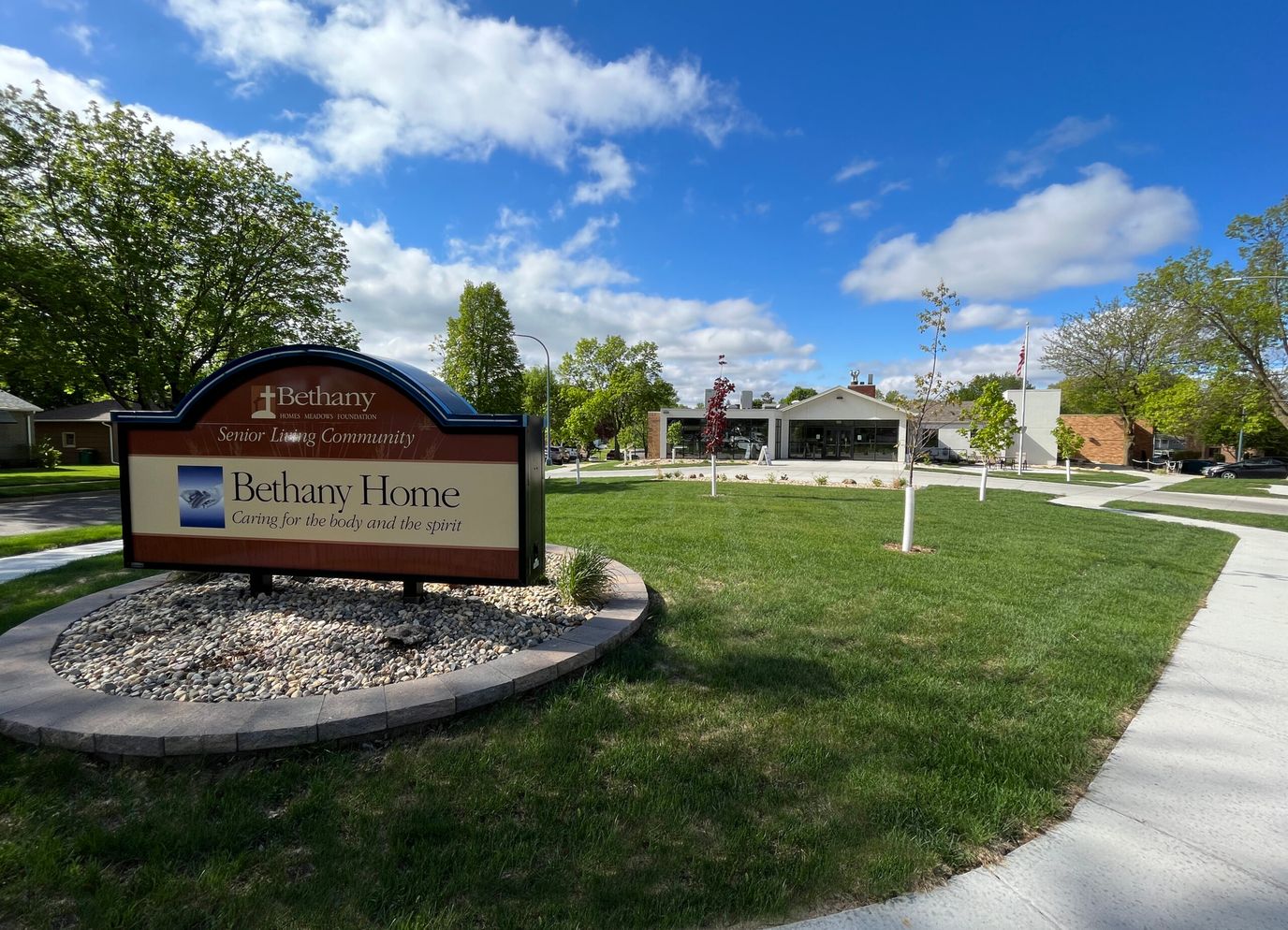
Bethany Home Sioux Falls
With a 28-bed capacity, Bethany Home Sioux Falls offers nursing home, skilled nursing, assisted living, independent living, and memory care in Sioux Falls, SD. Dedicated to adults 55+, the community assists residents with daily tasks, as well as housekeeping, laundry, and linen. Occupational, physical, and speech therapy are also available to help improve residents’ ability to function.
Additionally, creative activities, lifelong learning, and intergenerational opportunities are offered. A chapel and religious services also provide space for worship on-site. With Amanda Peterson as the administrator, the community also accepts Medicare, Medicaid, and private pay. Meanwhile, a Walk Score of 41 places the area in a car-dependent setting, so most errands require a car or a ride, including for a resident who no longer drives.
Community insights.
About This Community
Bethany Home Sioux Falls is administered by Amanda Peterson.
Penalties and fines
Federal penalties imposed by CMS for regulatory violations, including civil money penalties (fines) and denials of payment for new Medicare/Medicaid admissions.
Source: CMS Penalties Database · Data as of Oct 2026
No penalties in the past 3 years
No civil money penalties or payment denials on record since Oct 2023.
Finances and operations
Based on CMS SNF Cost Report for fiscal year ending in 06/2025.
Who this home usually serves
Residents split by who pays for their care: Medicare, Medicaid, or private pay and other sources.Mostly short-term rehab stays
Most residents typically stay for a few weeks or months before returning home or moving on.
Deborah Herrboldt serves as the CEO and Administrator at Bethany Home Sioux Falls. With over 30 years in long-term care, she began as a nurse's aide and has held roles including licensed social worker, marketing director, and administrator. Deborah has been with Bethany since 2003 and holds both a bachelor's and master's degree from the University of South Dakota. She is actively involved in various community and professional organizations.
Places of interest near Bethany Home Sioux Falls
1.7 miles from city center
Estimated distance in miles from Sioux Falls's city center to Bethany Home Sioux Falls's address, calculated via Google Maps.
Calculate Travel Distance to Bethany Home Sioux Falls
Add your location
Compare Nursing Homes around Sioux Falls
Info below is compiled from CMS reports & the SD Dept. of Health (DOH), senior community websites & trusted data sources such as Walk Score & BBB.
Communities are listed from highest-ranked to lowest-ranked based on our methodology.
The facility name. Click to view the full profile page on Assisted Living Magazine, including photos, services, and contact info.
|
CMS (Centers for Medicare & Medicaid Services, the federal agency that regulates nursing homes) Overall 5-star rating — a composite of Health Inspection, Staffing, and Quality Measures scores. 5 stars = top 10% nationally. 1 star = bottom 10%. The single most important number to start with when comparing facilities.
|
Care Types in This Table
AL (Assisted Living):
Housing with help for daily activities like bathing, dressing, and medication, without 24-hour skilled nursing.
NH (Nursing Home):
24/7 skilled nursing care for residents with complex, ongoing medical needs.
SNF (Skilled Nursing Facility):
Round-the-clock nursing care, often for recovery after surgery, injury, or illness.
MC (Memory Care):
Secured, specialized care for people living with Alzheimer's or dementia.
IL (Independent Living):
Community living with dining, activities, and transportation for active seniors who need little personal care.
HOS (Hospice Care):
Comfort-focused care for those with a terminal illness, prioritizing quality of life over treatment.
|
Neighborhood or city area where the facility is located. Proximity to family, hospitals, and green space matters for both quality of life and ease of visitation. Consider drive time and transit access when evaluating location.
|
Licensed bed capacity. Larger facilities (300+ beds) often have more specialized programs but can feel institutional. Smaller homes (under 150 beds) tend to deliver more personalized care. Compare with Avg Res/Day to understand how full the facility typically runs.
|
Percentage of licensed beds filled on an average day. Color indicates financial health: green (90%+) = operationally strong, typically profitable. Amber (80–89%) = stable but leaving revenue on the table. Orange (70–79%) = financial strain likely, may struggle with fixed costs. Red (<70%) = significant distress, closure or ownership change risk increases sharply.
|
This facility's occupancy rate compared to the statewide average for similar facilities. A positive number means above-average demand. Facilities running 5%+ above the state average are typically the most sought-after in their market — a strong proxy for reputation.
|
CMS-adjusted total nurse hours per resident per day (RN + LPN + CNA combined). The national average is approximately 3.5 hrs. Higher is better — more direct care time per resident. Below 3.0 is a red flag. CMS weights RN hours more heavily because RNs handle complex clinical decisions that CNAs cannot.
|
CMS Health Inspection star rating (1–5 stars), based on the 3 most recent annual state surveys plus any complaint investigations. This is the hardest rating to manipulate — it reflects real surveyor findings on-site. 5 stars = fewest deficiencies found. 1 star = most. It carries the heaviest weight in the Overall CMS rating.
|
CMS Staffing star rating (1–5 stars), based on daily nurse staffing hours submitted to CMS via verified payroll data. Compares RN, LPN, and CNA coverage relative to resident acuity level. 5 stars = well above expected staffing. Weekend staffing is evaluated separately, as that's where many facilities quietly reduce coverage.
|
CMS Quality Measures star rating (1–5 stars), based on 15 clinical outcome metrics including fall rates, pressure ulcers, antipsychotic drug use, and hospital readmissions. Captures actual resident health outcomes, not just compliance. High QM combined with low Health Inspection scores can indicate a facility with strong care but weak documentation practices.
|
Registered Nurse hours per resident/day compared to the statewide average. RNs are the highest-skilled nursing staff — they assess residents, manage medications, and respond to emergencies. A value of +50% means RN coverage is 50% above the state norm. Negative values are a concern for residents with complex or acute medical needs.
|
Total nursing staff hours (RN + LPN + CNA combined) per resident/day vs. the statewide average. A broader measure than RN vs State — it captures the entire care team. A facility can have high total staffing but low RN hours, meaning more aides and fewer nurses. Read both columns together for the full picture.
|
Total dollar amount of federal monetary fines (civil money penalties) issued by CMS in the past 3 years. Fines are only levied for serious violations — typically actual harm to residents, repeated uncorrected deficiencies, or systemic non-compliance. Even a single fine is noteworthy. Multiple fines strongly suggest a pattern, not isolated incidents.
|
Total health deficiency citations from the most recent standard inspection cycle. Minor citations (scope A–C) are common and often administrative in nature. Higher counts aren't always disqualifying, but should be read alongside Severe Citations to understand actual harm levels. Under 10 is strong for a large facility; 30+ warrants a closer look.
|
Average deficiency citations per CMS inspection (survey) in the reporting window — total citations divided by the number of inspections. Lower is better; compare alongside total Citations and Severe Citations for context.
|
Citations at CMS scope/severity level G or higher — G–I means actual harm occurred; J–L means residents were placed in immediate jeopardy. (D–F is potential for harm only). Examples include unaddressed falls, medication errors causing injury, neglect, or abuse.
|
Average number of residents in the building on any given day, derived from annual census data. Reflects true operating scale — a 400-bed facility running 200 residents/day operates very differently from one at 390. Higher resident counts generally mean more funded staffing hours.
|
Better Business Bureau rating (A+ to F). Reflects complaint history, business transparency, and how family disputes were resolved. A+ means no significant unresolved complaints. A blank (—) means the facility isn't BBB-accredited, which is common for healthcare providers and not necessarily a negative signal.
|
Walk Score® (0–100). Measures walkability of the surrounding area. 90–100 = Walker's Paradise. 70–89 = Very Walkable. 50–69 = Somewhat Walkable. Below 50 = Car-Dependent. Higher scores benefit family visitors, resident outings, and staff commuting.
|
The licensed owner or operator of record filed with CMS — the individual or organization legally accountable for the facility. Searching the operator name across other facilities can reveal chain or multi-site ownership, which matters: chain-operated homes tend to have more variable quality outcomes than independently run facilities.
|
What the home actually collects for resident care, after contractual allowances, bad debt and discounts — not gross billings. Taken from the latest complete annual cost report, so it is comparable across homes reporting the same period. Revenue alone doesn't indicate care quality, but it funds staffing and capital reinvestment. Pair with Payroll %. Figures are from each facility's most recent complete fiscal year — hover a value for the exact year; a * marks homes that report an older period than most facilities.
|
Staff salaries plus wage-related benefits from the latest complete annual cost report. Contract and agency labour is counted separately, under other operating costs, so a home leaning on agency staff can show a low figure here. Payroll is the cost most directly tied to care quality — compare with Payroll % for full context. Figures are from each facility's most recent complete fiscal year — hover a value for the exact year; a * marks homes that report an older period than most facilities.
|
Payroll as a share of NET PATIENT REVENUE (not gross revenue). Both figures come from the same cost-report year. A higher figure means more of each revenue dollar goes to staff pay. Read with the Staffing star rating to judge whether spend translates into coverage — and note that homes whose patient revenue covers only part of their operation can read implausibly high. The South Dakota average is: 58.8% Figures are from each facility's most recent complete fiscal year — hover a value for the exact year; a * marks homes that report an older period than most facilities.
|
CMS Certification Number: the unique federal identifier for this skilled nursing provider.
|
|---|---|---|---|---|---|---|---|---|---|---|---|---|---|---|---|---|---|---|---|---|---|---|---|---|
| Bethany Home Sioux Falls/Bethany Home-Brandon | NH AL IL MC SNF | Sioux Falls | 112
Facility
112
SD AVG
69
Rank
#4 / 56 | - | - | - | -41% | - | $0
Facility
$0
SD AVG
$52.4k
Rank
#1 / 51 | 12
Facility
12
SD AVG
17.8
Rank
#15 / 50 | 3.0
Facility
3.0
SD AVG
3.6
Rank
#20 / 50 | - | 41 | - |
65
Facility
65
SD AVG
38
Rank
#8 / 57 | Augustana Lutheran Church | $6.4MFiscal year ending 06/2025
Facility
$6.4MFiscal year ending 06/2025
SD AVG
$7.6M
Rank
#24 / 45 | $4.3MFiscal year ending 06/2025
Facility
$4.3MFiscal year ending 06/2025
SD AVG
$4.5M
Rank
#17 / 45 | 67.9%Fiscal year ending 06/2025
Facility
67.9%Fiscal year ending 06/2025
SD AVG
58.8%
Rank
#6 / 45 | 435096 | ||||
| Good Samaritan Society Sioux Falls Village | NH AL IL MC | Sioux Falls | 177
Facility
177
SD AVG
69
Rank
#2 / 56 |
90.5%
Facility
90.5%
SD AVG
86.2%
Rank
#13 / 30 | +5% | 4.37
Facility
4.37
SD AVG
4.54
Rank
#14 / 48 | +12% | -4% | $89.2k
Facility
$89.2k
SD AVG
$52.4k
Rank
#43 / 51 | 32
Facility
32
SD AVG
17.8
Rank
#44 / 50 | 5.3
Facility
5.3
SD AVG
3.6
Rank
#44 / 50 | 6 | 160 | - |
2
Facility
2
SD AVG
38
Rank
#57 / 57 | Dana Bachmeier | $22.9MFiscal year ending 09/2024
Facility
$22.9MFiscal year ending 09/2024
SD AVG
$7.6M
Rank
#1 / 45 | $10.3MFiscal year ending 09/2024
Facility
$10.3MFiscal year ending 09/2024
SD AVG
$4.5M
Rank
#3 / 45 | 45.1%Fiscal year ending 09/2024
Facility
45.1%Fiscal year ending 09/2024
SD AVG
58.8%
Rank
#41 / 45 | 435045 | ||||
| Sunset Manor Avera | NH AL SNF | Irene | 58
Facility
58
SD AVG
69
Rank
#29 / 56 |
85.5%
Facility
85.5%
SD AVG
86.2%
Rank
#23 / 30 | -1% | 5.91
Facility
5.91
SD AVG
4.54
Rank
#2 / 48 | -4% | +30% | $56.9k
Facility
$56.9k
SD AVG
$52.4k
Rank
#37 / 51 | 17
Facility
17
SD AVG
17.8
Rank
#21 / 50 | 2.4
Facility
2.4
SD AVG
3.6
Rank
#14 / 50 | 4 | 50 | - |
11
Facility
11
SD AVG
38
Rank
#52 / 57 | Sunset Manor Inc | $6.3MFiscal year ending 12/2024
Facility
$6.3MFiscal year ending 12/2024
SD AVG
$7.6M
Rank
#26 / 45 | $2.7MFiscal year ending 12/2024
Facility
$2.7MFiscal year ending 12/2024
SD AVG
$4.5M
Rank
#32 / 45 | 42.4%Fiscal year ending 12/2024
Facility
42.4%Fiscal year ending 12/2024
SD AVG
58.8%
Rank
#44 / 45 | 435100 | ||||
| Avantara Norton | - | NH HOS SNF | Sioux Falls | 110
Facility
110
SD AVG
69
Rank
#5 / 56 |
88.2%
Facility
88.2%
SD AVG
86.2%
Rank
#20 / 30 | +2% | 3.81
Facility
3.81
SD AVG
4.54
Rank
#24 / 48 | - | - | - | +33% | -16% | $283.6k
Facility
$283.6k
SD AVG
$52.4k
Rank
#51 / 51 | 75
Facility
75
SD AVG
17.8
Rank
#50 / 50 | 4.0
Facility
4.0
SD AVG
3.6
Rank
#32 / 50 | 19 | 97 | - |
61
Facility
61
SD AVG
38
Rank
#10 / 57 | Jeremy Klinkhammer | $11.4MFiscal year ending 12/2024
Facility
$11.4MFiscal year ending 12/2024
SD AVG
$7.6M
Rank
#5 / 45 | $5.9MFiscal year ending 12/2024
Facility
$5.9MFiscal year ending 12/2024
SD AVG
$4.5M
Rank
#11 / 45 | 51.5%Fiscal year ending 12/2024
Facility
51.5%Fiscal year ending 12/2024
SD AVG
58.8%
Rank
#33 / 45 | 435039 |
Rank badges are statewide and care-type specific: each nursing home is ranked against every other SD nursing home we track that reports that metric, not just the 4 on this page. See how we rank facilities
Programs that may help with care and living costs in South Dakota
Bethany Home Sioux Falls is in Sioux Falls, South Dakota. These programs may support different care settings or living expenses. A listing does not confirm this community participates; our concierge team can help confirm.
VA Aid and Attendance (A&A) and Housebound Benefits
South Dakota VA Aid and Attendance/Housebound
- Who it is for
- Veterans or survivors with VA pension eligibility and an Aid and Attendance or Housebound medical need
- Income limit
- Countable income must be below the applicable Maximum Annual Pension Rate (MAPR); the rate depends on dependents and benefit category; Qualifying unreimbursed medical expenses may reduce countable income.
- Asset limit
- VA pension net-worth limit is $163,699 from December 1 2025 through November 30 2026; net worth includes countable assets and annual income under VA rules.
Eligibility
- General
- Additional pension benefits for qualifying Veterans or survivors who satisfy VA pension eligibility and the medical requirements for Aid and Attendance or Housebound status; being an older veteran or spouse alone does not qualify.
- SD specifics
- This is a federal VA benefit rather than a state-specific grant; Aid and Attendance and Housebound benefits cannot be received together.
What it provides
- Increased monthly VA pension based on the applicable MAPR less countable income.
South Dakota HOPE Waiver
- Income limit
- 2026 · $2,982 per month for the individual under the 300% SSI standard.
- Asset limit
- $2,000 in countable resources for the applicant; married applicants are subject to spousal rules.
Eligibility
- General
- South Dakota resident age 65 or older or a younger adult with qualifying blindness or disability; Medicaid and nursing-facility level of care required.
- SD specifics
- The applicable older-adult HCBS program is the Home and Community-Based Options and Person-Centered Excellence (HOPE) Waiver.
What it provides
- Assessed services may include personal care homemaker adult day services respite meals emergency response and home accessibility adaptations.
Family Caregiver Support Program (FCSP)
South Dakota Family Caregiver Support Program
- Who it is for
- Family or informal caregivers of an adult 60+ or of someone of any age with dementia
- Income limit
- Federal program prioritizes greatest economic and social need.
Eligibility
- General
- Federal NFCSP supports adult informal caregivers of people age 60 or older or people of any age with Alzheimer disease or related disorders; it also includes specified relative caregivers age 55 or older of children or adults with disabilities.
What it provides
- Information and assistance; counseling and support groups; caregiver training; respite and limited supplemental services.
Older Americans Act (OAA) Services
South Dakota OAA Services
- Who it is for
- Adults 60+ looking for meals, in-home help or other local aging services
- Income limit
- OAA nutrition services have no income means test; priority is directed to people with greatest economic or social need.
- Asset limit
- OAA nutrition eligibility is not asset-tested.
Eligibility
- General
- Older Americans Act supportive and nutrition services generally serve adults age 60 or older; individual services can have additional criteria and specified exceptions.
- SD specifics
- Services are subject to local availability and funding; the OAA does not guarantee an individual entitlement.
What it provides
- Locally available nutrition and supportive services may include meals and in-home assistance.
Medicare Savings Program (MSP)
South Dakota Medicare Savings Program
- Who it is for
- Medicare beneficiaries with limited income who need help with premiums or cost sharing
- Asset limit
- 2026 · $9,950 individual and $14,910 couple in countable resources; exclusions apply.
Eligibility
- General
- South Dakota Medicare beneficiary who meets the applicable Medicare Savings Program eligibility requirements.
- SD specifics
- State lists QMB SLMB and QI-1.
What it provides
- QMB pays Medicare Part A and B premiums deductibles and coinsurance; SLMB and QI-1 pay the Part B premium.
Low-Income Home Energy Assistance Program (LIEAP)
South Dakota LIEAP
- Who it is for
- Income-eligible households responsible for home heating costs
Eligibility
- General
- South Dakota household responsible for home heating costs and meeting gross-income and other program requirements.
- SD specifics
- Eligibility and award depend on household size income heating type and cost and location; Emergency assistance requires an eligible heating crisis.
What it provides
- Heating assistance paid to the energy supplier; separate emergency crisis and weatherization assistance may be available.