Willow Valley Communities
Memory Care, Assisted Living, Continuing Care Retirement Community, Independent Living, Nursing Care, Nursing Home & Skilled Nursing · Willow Street, PA

Willow Valley Communities

Memory Care, Assisted Living, Continuing Care Retirement Community, Independent Living, Nursing Care, Nursing Home & Skilled Nursing · Willow Street, PA

Overview of Willow Valley Communities

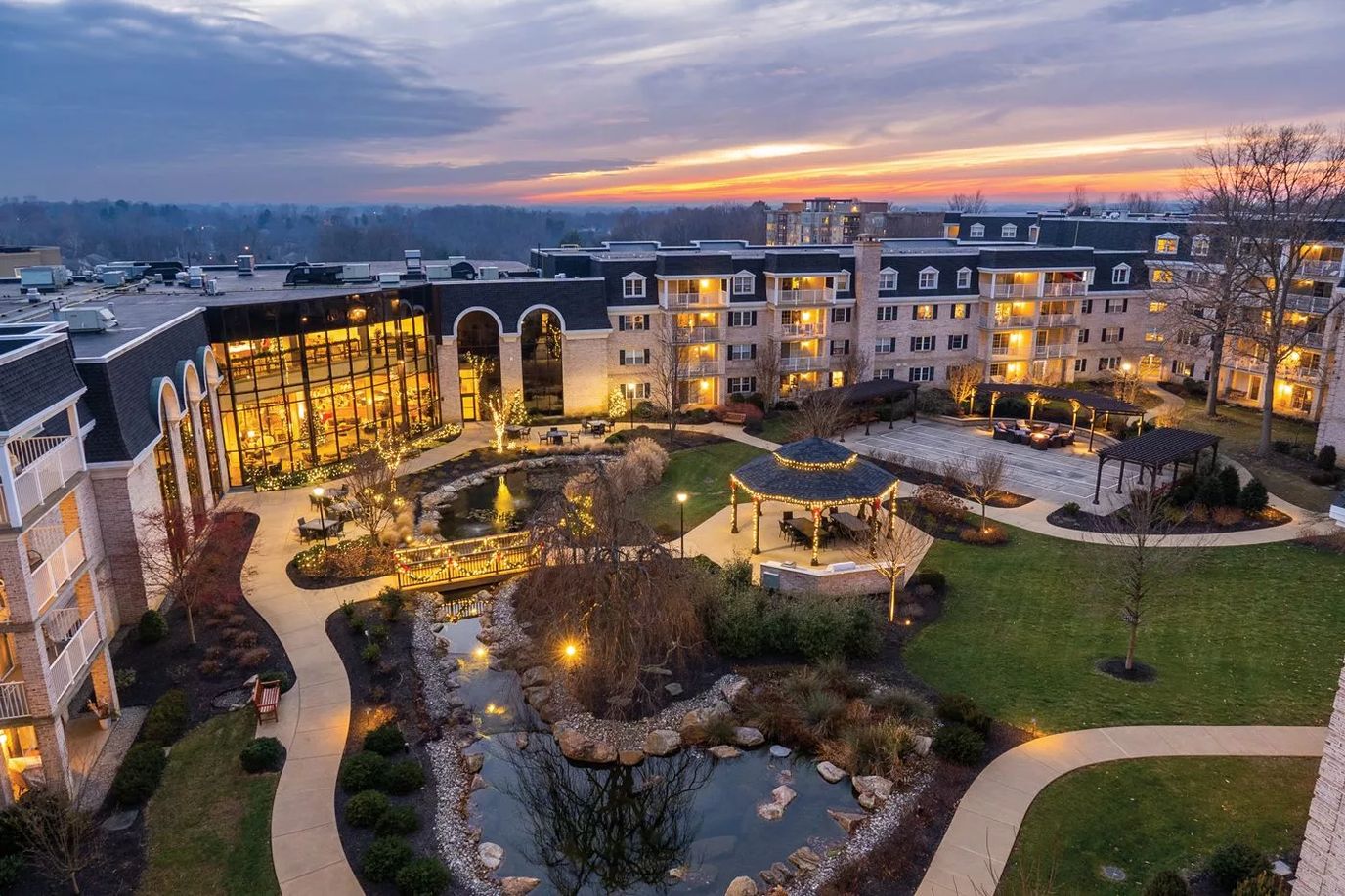
Willow Valley Communities is a 55+ continuing care retirement community in Willow Street, Pennsylvania, with independent living, assisted living, memory care, nursing home care, and skilled nursing. Offering multiple care options at the same location allows a resident to change to a different level as their needs increase without needing to move away. Willow Valley Communities opened in 1984.

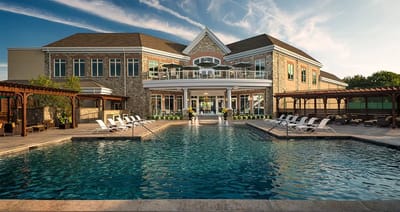
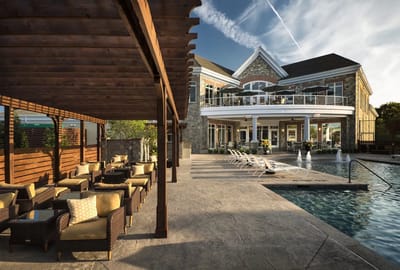
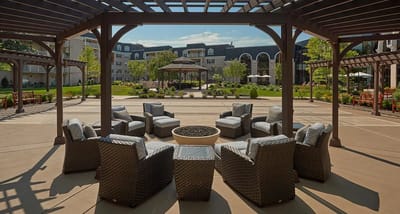
Respite care is available for short stays, giving a family caregiver time to travel or recover. Residents have access to a fitness center and aquatics center, day spa, cultural center programs, clubs and travel, culinary options, dog parks, transportation, and rehabilitation services, with places for exercise, organized activities, outdoor time with a dog, transportation support, and therapy services. Pets are allowed, so residents can bring a pet with them. With a Walk Score of 44, this neighborhood relies mostly on driving, so a car or ride is needed for most errands. Lisa Hawthorne is the director.

By The Numbers

Community insights.

Walk Score Info Car-dependent. A few nearby services may be reachable on foot, but most trips require transportation. Rank #123 / 207Walk Score — State benchmarked This nursing home is ranked 123rd out of 207 nursing homes we track in Pennsylvania for walk score. Shows how walkable this facility's neighborhood is compared to the average walk score across Pennsylvania facilities. Higher scores benefit residents, families, and staff. Communities with the same value for a metric share the same rank. Rankings compare like with like: every nursing home we track in Pennsylvania that reports data for that category. Nursing homes without available data are excluded, so the pool size varies from metric to metric.
44 / 100

About This Community

Additional Services

6 services
Respite CareRespite care provides families and unpaid caregivers with short-term relief from caregiving duties. Care can range from a few hours to a few weeks.
HousekeepingListed as: Housekeeping (weekly or annual)
MaintenanceListed as: Lawn care and snow removal · Utilities (electricity, water, sewer, heat, air conditioning, trash)
Emergency Call SystemListed as: 24-hour residential nursing emergency response
TransportationListed as: Scheduled and on-demand transportation on campus · Scheduled transportation to area shopping, doctors, and grocery stores
Utilities Included

Additional Policies & Features

Pets Allowed
Minimum Age55

Amenities & Lifestyle

Spa
Golf Course
Library
Workshop
Computers
Dog Park
Fitness Center (7,600 Sq Ft)
Aquatic Center with Indoor Pool
30,000 Sq Ft Clubhouse
Six-Lane Bowling Alley
Model Train Room
210-Acre Campus
Activities
Yoga Classes
Tai Chi
Water Aerobics
Scheduled Fitness and Wellness Classes
100+ Clubs and Organizations
Volunteering
Marathon and Triathlon Participation
Senior Games Competition
Tennis
Arts & Crafts
Gardening
  • Educational classes, lecture series, and seminars
  • Planned travel excursions (regional and international)
Touring HoursMon – Fri: 9:00 a.m. – 5:00 p.m.; Weekends & Holidays: By Appointment

Dining & Nutrition

InfoSourced directly from the team at Willow Valley Communities.
  • Bistro / café on site.
  • Multiple dining venues.

Room Accommodations

Room Types
Cottage / Villa

Contact Willow Valley Communities

Managed by Glennda Hart

Vice President of Resident Services

Glennda Hart is Vice President of Resident Services at Willow Valley Communities, overseeing both the Manor and Lakes Campuses. She began her career at Willow Valley in 1985 and has held various leadership roles, including Personal Care Home Administrator and Senior Director of the Lakes Campus. Glennda brings extensive experience in supportive living and a deep commitment to the community’s well-being.

Places of interest near Willow Valley Communities

Address 0.4 miles from city center Info Estimated distance in miles from Willow Street's city center to Willow Valley Communities's address, calculated via Google Maps.

Calculate Travel Distance to Willow Valley Communities

Add your location

Address

Compare Memory Care around Lititz

Info below is compiled from CMS reports & the PA Depts. of Human Services & Health, senior community websites & trusted data sources such as Walk Score & BBB.

Communities are listed from highest-ranked to lowest-ranked based on our methodology.

The facility name. Click to view the full profile page on Assisted Living Magazine, including photos, services, and contact info.
CMS (Centers for Medicare & Medicaid Services, the federal agency that regulates nursing homes) Overall 5-star rating — a composite of Health Inspection, Staffing, and Quality Measures scores. 5 stars = top 10% nationally. 1 star = bottom 10%. The single most important number to start with when comparing facilities.
Care Types in This Table AL (Assisted Living): Housing with help for daily activities like bathing, dressing, and medication, without 24-hour skilled nursing. NH (Nursing Home): 24/7 skilled nursing care for residents with complex, ongoing medical needs. SNF (Skilled Nursing Facility): Round-the-clock nursing care, often for recovery after surgery, injury, or illness. MC (Memory Care): Secured, specialized care for people living with Alzheimer's or dementia. IL (Independent Living): Community living with dining, activities, and transportation for active seniors who need little personal care. HC (Home Care): Professional care delivered in the person's own home, from companionship to skilled nursing. CCRC (Continuing Care Retirement Community): A campus with multiple care levels so residents can age in place without moving.
Neighborhood or city area where the facility is located. Proximity to family, hospitals, and green space matters for both quality of life and ease of visitation. Consider drive time and transit access when evaluating location.
Licensed bed capacity. Larger facilities (300+ beds) often have more specialized programs but can feel institutional. Smaller homes (under 150 beds) tend to deliver more personalized care. Compare with Avg Res/Day to understand how full the facility typically runs.
Percentage of licensed beds filled on an average day. Color indicates financial health: green (90%+) = operationally strong, typically profitable. Amber (80–89%) = stable but leaving revenue on the table. Orange (70–79%) = financial strain likely, may struggle with fixed costs. Red (
This facility's occupancy rate compared to the statewide average for similar facilities. A positive number means above-average demand. Facilities running 5%+ above the state average are typically the most sought-after in their market — a strong proxy for reputation.
CMS-adjusted total nurse hours per resident per day (RN + LPN + CNA combined). The national average is approximately 3.5 hrs. Higher is better — more direct care time per resident. Below 3.0 is a red flag. CMS weights RN hours more heavily because RNs handle complex clinical decisions that CNAs cannot.
CMS Health Inspection star rating (1–5 stars), based on the 3 most recent annual state surveys plus any complaint investigations. This is the hardest rating to manipulate — it reflects real surveyor findings on-site. 5 stars = fewest deficiencies found. 1 star = most. It carries the heaviest weight in the Overall CMS rating.
CMS Staffing star rating (1–5 stars), based on daily nurse staffing hours submitted to CMS via verified payroll data. Compares RN, LPN, and CNA coverage relative to resident acuity level. 5 stars = well above expected staffing. Weekend staffing is evaluated separately, as that's where many facilities quietly reduce coverage.
CMS Quality Measures star rating (1–5 stars), based on 15 clinical outcome metrics including fall rates, pressure ulcers, antipsychotic drug use, and hospital readmissions. Captures actual resident health outcomes, not just compliance. High QM combined with low Health Inspection scores can indicate a facility with strong care but weak documentation practices.
Registered Nurse hours per resident/day compared to the statewide average. RNs are the highest-skilled nursing staff — they assess residents, manage medications, and respond to emergencies. A value of +50% means RN coverage is 50% above the state norm. Negative values are a concern for residents with complex or acute medical needs.
Total nursing staff hours (RN + LPN + CNA combined) per resident/day vs. the statewide average. A broader measure than RN vs State — it captures the entire care team. A facility can have high total staffing but low RN hours, meaning more aides and fewer nurses. Read both columns together for the full picture.
Total dollar amount of federal monetary fines (civil money penalties) issued by CMS in the past 3 years. Fines are only levied for serious violations — typically actual harm to residents, repeated uncorrected deficiencies, or systemic non-compliance. Even a single fine is noteworthy. Multiple fines strongly suggest a pattern, not isolated incidents.
Total health deficiency citations from the most recent standard inspection cycle. Minor citations (scope A–C) are common and often administrative in nature. Higher counts aren't always disqualifying, but should be read alongside Severe Citations to understand actual harm levels. Under 10 is strong for a large facility; 30+ warrants a closer look.
Average deficiency citations per CMS inspection (survey) in the reporting window — total citations divided by the number of inspections. Lower is better; compare alongside total Citations and Severe Citations for context.
Citations at CMS scope/severity level G or higher — G–I means actual harm occurred; J–L means residents were placed in immediate jeopardy. (D–F is potential for harm only). Examples include unaddressed falls, medication errors causing injury, neglect, or abuse.
Average number of residents in the building on any given day, derived from annual census data. Reflects true operating scale — a 400-bed facility running 200 residents/day operates very differently from one at 390. Higher resident counts generally mean more funded staffing hours.
Better Business Bureau rating (A+ to F). Reflects complaint history, business transparency, and how family disputes were resolved. A+ means no significant unresolved complaints. A blank (—) means the facility isn't BBB-accredited, which is common for healthcare providers and not necessarily a negative signal.
Walk Score® (0–100). Measures walkability of the surrounding area. 90–100 = Walker's Paradise. 70–89 = Very Walkable. 50–69 = Somewhat Walkable. Below 50 = Car-Dependent. Higher scores benefit family visitors, resident outings, and staff commuting.
The licensed owner or operator of record filed with CMS — the individual or organization legally accountable for the facility. Searching the operator name across other facilities can reveal chain or multi-site ownership, which matters: chain-operated homes tend to have more variable quality outcomes than independently run facilities.
What the home actually collects for resident care, after contractual allowances, bad debt and discounts — not gross billings. Taken from the latest complete annual cost report, so it is comparable across homes reporting the same period. Revenue alone doesn't indicate care quality, but it funds staffing and capital reinvestment. Pair with Payroll %. Figures are from each facility's most recent complete fiscal year — hover a value for the exact year; a * marks homes that report an older period than most facilities.
Staff salaries plus wage-related benefits from the latest complete annual cost report. Contract and agency labour is counted separately, under other operating costs, so a home leaning on agency staff can show a low figure here. Payroll is the cost most directly tied to care quality — compare with Payroll % for full context. Figures are from each facility's most recent complete fiscal year — hover a value for the exact year; a * marks homes that report an older period than most facilities.
Payroll as a share of NET PATIENT REVENUE (not gross revenue). Both figures come from the same cost-report year. A higher figure means more of each revenue dollar goes to staff pay. Read with the Staffing star rating to judge whether spend translates into coverage — and note that homes whose patient revenue covers only part of their operation can read implausibly high. The Pennsylvania average is: 70.1% Figures are from each facility's most recent complete fiscal year — hover a value for the exact year; a * marks homes that report an older period than most facilities.
CMS Certification Number: the unique federal identifier for this skilled nursing provider.
Trillium Place ★ ★ ★ ★ ★
MC
IL
NH
SNF
Lancaster
245
Facility 245
PA AVG 160
Rank #26 / 201
81.2%
Facility 81.2%
PA AVG 75.8%
Rank #71 / 165
+7%
5.37
Facility 5.37
PA AVG 3.96
Rank #23 / 180
★ ★ ★ ★ ★ ★ ★ ★ ★ ★ ★ ★ ★ ★ ★ -39%+36%
$0
Facility $0
PA AVG $60.8k
Rank #1 / 183
1
Facility 1
PA AVG 31.8
Rank #1 / 179
1.0
Facility 1.0
PA AVG 4.1
Rank #1 / 179
-69-
52
Facility 52
PA AVG 50
Rank #98 / 207
The Mennonite Home
$57.8MFiscal year ending 06/2025
Facility $57.8MFiscal year ending 06/2025
PA AVG $19.6M
Rank #3 / 177
$28.0MFiscal year ending 06/2025
Facility $28.0MFiscal year ending 06/2025
PA AVG $11.9M
Rank #6 / 177
48.5%Fiscal year ending 06/2025
Facility 48.5%Fiscal year ending 06/2025
PA AVG 70.1%
Rank #125 / 177
395559
The Glen at Willow Valley ★ ★ ★ ★ ★
MC
NH
SNF
Lancaster
338
Facility 338
PA AVG 160
Rank #9 / 201
--
5.82
Facility 5.82
PA AVG 3.96
Rank #16 / 180
★ ★ ★ ★ ★ ★ ★ ★ ★ ★ ★ ★ ★ ★ ★ +9%+47%
$0
Facility $0
PA AVG $60.8k
Rank #1 / 183
1
Facility 1
PA AVG 31.8
Rank #1 / 179
1.0
Facility 1.0
PA AVG 4.1
Rank #1 / 179
-233-
6
Facility 6
PA AVG 50
Rank #196 / 207
Willow Valley Communities
$67.8MFiscal year ending 12/2024
Facility $67.8MFiscal year ending 12/2024
PA AVG $19.6M
Rank #2 / 177
$67.0MFiscal year ending 12/2024
Facility $67.0MFiscal year ending 12/2024
PA AVG $11.9M
Rank #1 / 177
98.8%Fiscal year ending 12/2024
Facility 98.8%Fiscal year ending 12/2024
PA AVG 70.1%
Rank #19 / 177
395956
Homestead Village ★ ★ ★ ★ ★
MC
AL
CCRC
IL
NH
SNF
Lancaster (Rohrerstown)
160
Facility 160
PA AVG 160
Rank #78 / 201
57.0%
Facility 57.0%
PA AVG 75.8%
Rank #139 / 165
-25%
5.45
Facility 5.45
PA AVG 3.96
Rank #23 / 180
★ ★ ★ ★ ☆ ★ ★ ★ ★ ★ ★ ★ ★ ★ ☆ -16%+38%
$8.3k
Facility $8.3k
PA AVG $60.8k
Rank #121 / 183
9
Facility 9
PA AVG 31.8
Rank #56 / 179
2.3
Facility 2.3
PA AVG 4.1
Rank #45 / 179
157-
16
Facility 16
PA AVG 50
Rank #179 / 207
Homestead Village Inc
$22.6MFiscal year ending 06/2025
Facility $22.6MFiscal year ending 06/2025
PA AVG $19.6M
Rank #52 / 177
$13.1MFiscal year ending 06/2025
Facility $13.1MFiscal year ending 06/2025
PA AVG $11.9M
Rank #52 / 177
57.9%Fiscal year ending 06/2025
Facility 57.9%Fiscal year ending 06/2025
PA AVG 70.1%
Rank #77 / 177
395720
Brethren Village – Village Manor ★ ★ ★ ★ ★
MC
AL
HC
IL
NH
SNF
Lititz
234
Facility 234
PA AVG 160
Rank #33 / 201
53.5%
Facility 53.5%
PA AVG 75.8%
Rank #144 / 165
-29%
5.25
Facility 5.25
PA AVG 3.96
Rank #32 / 180
★ ★ ★ ★ ☆ ★ ★ ★ ★ ★ ★ ★ ★ ★ ★ +8%+33%
$0
Facility $0
PA AVG $60.8k
Rank #1 / 183
6
Facility 6
PA AVG 31.8
Rank #34 / 179
2.0
Facility 2.0
PA AVG 4.1
Rank #30 / 179
361-
91
Facility 91
PA AVG 50
Rank #13 / 207
Brethren Village
$48.4MFiscal year ending 06/2025
Facility $48.4MFiscal year ending 06/2025
PA AVG $19.6M
Rank #5 / 177
$22.0MFiscal year ending 06/2025
Facility $22.0MFiscal year ending 06/2025
PA AVG $11.9M
Rank #12 / 177
45.3%Fiscal year ending 06/2025
Facility 45.3%Fiscal year ending 06/2025
PA AVG 70.1%
Rank #147 / 177
395328

Rank badges are statewide and care-type specific: each nursing home is ranked against every other PA nursing home we track that reports that metric, not just the 4 on this page. See how we rank facilities

Financial assistance

Programs that may help with care and living costs in Pennsylvania

Willow Valley Communities is in Willow Street, Pennsylvania. These programs may support different care settings or living expenses. A listing does not confirm this community participates; our concierge team can help confirm.

Get financial aid guidance
Long-term care coverage

Community HealthChoices (CHC)

Community HealthChoices (CHC)

Eligibility

General
Age 21+ and enrolled in both Medicare and Medicaid, or receiving qualifying Medicaid long-term services and supports, subject to listed exclusions. Nursing-facility level of care is not a requirement for every dual-eligible CHC enrollee.
PA specifics
CHC is a managed-care coordination program; separate service and financial criteria govern long-term supports. Certain developmental-disability program participants and state-facility residents are excluded.

What it provides

  • Coordination of health coverage and authorized long-term services and supports when eligible.
Cash support · veterans

VA Aid and Attendance (A&A) and Housebound Benefits

VA Aid and Attendance (A&A) and Housebound Benefits

Who it is for
Veterans or survivors with VA pension eligibility and an Aid and Attendance or Housebound medical need
Income limit
2026 · Countable income is compared with the applicable maximum annual pension rate (MAPR), which varies by dependents and benefit category. For a veteran with one dependent and Aid and Attendance, MAPR is $34,488/year.
Asset limit
VA pension net-worth ceiling is $163,699 from December 1, 2025 through November 30, 2026. Net worth includes countable assets plus income for VA purposes; exclusions and transfer rules apply.

Eligibility

General
Aid and Attendance or Housebound is an increased VA pension rate for eligible veterans or surviving spouses who meet pension and additional care/disability requirements; it is not a stand-alone state benefit.
PA specifics
Federal VA pension rules apply nationwide.

What it provides

  • Monthly pension is based on the applicable MAPR less countable annual income; divided by 12. Maximum annual veteran Aid and Attendance rates are $29,093 without dependents and $34,488 with one dependent; actual payments may be lower.
In-home support

Pennsylvania OPTIONS Program

Pennsylvania OPTIONS Program

Income limit
No income requirement to participate; income-based sliding copayments may apply.

Eligibility

General
Pennsylvania resident age 60+ needing help to remain at home, subject to assessment and program availability.

What it provides

  • Assessed support to help remain at home; service mix and copayment depend on individual assessment.
Caregiver support

Family Caregiver Support Program (FCSP)

Family Caregiver Support Program (FCSP)

Who it is for
Family or informal caregivers of an adult 60+ or of someone of any age with dementia
Income limit
Financial reimbursement is income-based: care-receiver household income up to 200% of federal poverty guidelines receives the full applicable percentage; 200%–380% receives reduced reimbursement; above 380% no reimbursement, although nonreimbursable services may remain available.

Eligibility

General
Pennsylvania caregivers and care recipients in qualifying categories: adult caregivers of functionally dependent adults age 60+ or people with dementia; and eligible relative caregivers age 55+ caring for children or disabled adults. Enrollment in Medicaid long-term-care programs excludes participation.

What it provides

  • Reimbursement of approved caregiving services and supplies up to $600/month; multiplied by the applicable income-based reimbursement percentage; care management; education and support. No fixed respite-hours package is guaranteed.
Medicare costs

Medicare Savings Program (MSP)

Medicare Savings Program (MSP)

Who it is for
Medicare beneficiaries with limited income who need help with premiums or cost sharing

Eligibility

General
Medicare beneficiary; the state determines the applicable Medicare Savings Program. QMB helps with premiums and Medicare cost sharing; SLMB and QI generally help with Part B premiums.
PA specifics
QI requires annual application and is funded first-come, first-served with priority for prior recipients. QMB, SLMB and QI confer Part D Extra Help.

What it provides

  • QMB pays eligible Part A/Part B premiums and Medicare deductibles and cost sharing; SLMB and QI pay Part B premiums. The exact benefit depends on the approved program.
Energy assistance

Low-Income Home Energy Assistance Program (LIHEAP)

Low-Income Home Energy Assistance Program (LIHEAP)

Who it is for
Income-eligible households responsible for home heating or energy costs

Eligibility

General
Income-eligible households with qualifying home-energy costs; the administering agency applies household-size and program eligibility rules.

What it provides

  • Grants to help eligible households pay heating bills.
Homeowner tax relief

Property Tax/Rent Rebate Program (PTRR)

Property Tax/Rent Rebate Program (PTRR)

Income limit
2025 claims filed in 2026 · Eligible annual household income no more than $48,110, applying program exclusions including one-half of Social Security income.

Eligibility

General
Pennsylvania homeowners or renters age 65+; widows or widowers age 50+; or adults age 18+ with disabilities, subject to household-income and tax or rent-payment requirements.
PA specifics
The deadline to apply for a rebate of 2025 property taxes or rent is December 31, 2026. A future tax-year ceiling is not interchangeable with this application year.

What it provides

  • Standard rebate up to $1,000; based on eligible income and property tax or rent paid; special supplemental rules may apply.
Prescription-cost assistance

PACE and PACENET Prescription Assistance

PACE and PACENET Prescription Assistance

Income limit
PACE: up to $14,500 single or $17,700 married. PACENET: $14,501–$33,500 single or $17,701–$41,500 married; based on the prior calendar year.

Eligibility

General
Pennsylvania residents 65+ who lived in the state at least 90 days before applying and are not enrolled in the state Medicaid prescription benefit. Prior-calendar-year income determines eligibility.

What it provides

  • Prescription-cost assistance coordinated with Medicare Part D and other drug coverage; PACE and PACENET use different income tiers.
Know before you visit

Frequently Asked Questions about Willow Valley Communities

Quick answers from public records and the community's own listing.
01 Is Willow Valley Communities in a walkable area?
Willow Valley Communities has a walk score of 44. Car-dependent. A few nearby services may be reachable on foot, but most trips require transportation.
02 Are pets allowed at Willow Valley Communities?
Yes, Willow Valley Communities allows residents to bring their pets.
03 Are there photos of Willow Valley Communities?
Yes — there are 12 photos of Willow Valley Communities in the photo gallery on this page.
04 What levels of care does Willow Valley Communities provide?
Willow Valley Communities offers Nursing Home, Assisted Living, Continuing Care Retirement Community, Independent Living, Memory Care & Skilled Nursing.
05 What is the address of Willow Valley Communities?
Willow Valley Communities is located at 450 Willow Valley Lakes Dr, Willow Street, PA 17584.
06 What is the phone number of Willow Valley Communities?
(717) 464-6201 will put you in contact with the team at Willow Valley Communities.
07 Is Willow Valley Communities Medicare or Medicaid certified?
Willow Valley Communities is not currently listed as a CMS-certified provider of Medicare or Medicaid.