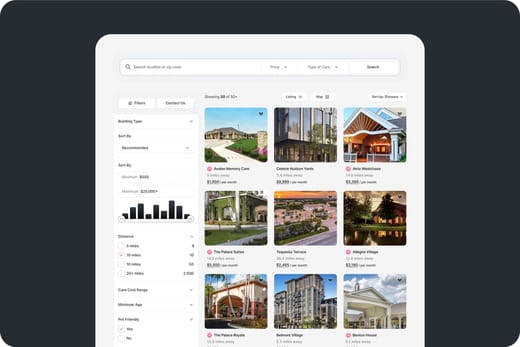
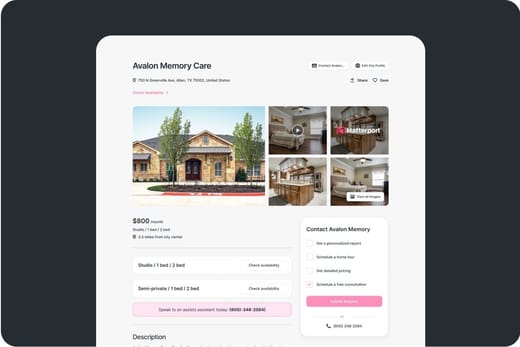
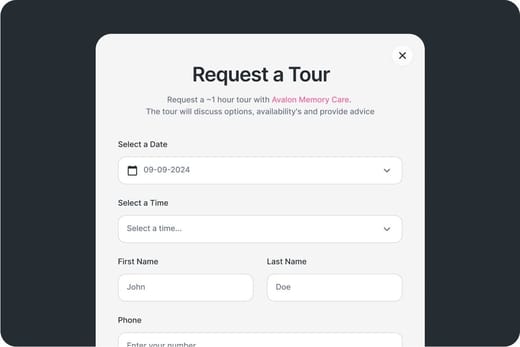
We arrange tours, appointments, and even moving support so you don’t have to
2
Ranked on Data, Not Dollars
We rank communities on objective measures like inspection records, quality scores, and care data, so you can find trusted options without the guesswork.
3
Personalized Guidance
From lifestyle matching to help with insurance and financial assistance, we make sure the community is the right fit
Explore Open Rooms
1Contact details
2What type of senior care service are you looking for?
3What budget do you have in mind for senior care?
4How soon do you need to find care?
5Additional details
Thank you for your interest!
A member of our team will be in touch by phone or email shortly to help with next steps.
Why trust this guide?
Our editorial team analyzed 144 nursing homes in SC using CMS data, inspection records, complaints, amenities, and facility-level details. How we rank nursing homes in SC
Info below is compiled from CMS reports & the SC Dept. of Public Health (DPH), senior community websites & trusted data sources such as Walk Score & BBB.
Communities are listed from highest-ranked to lowest-ranked based on our methodology.
The facility name. Click to view the full profile page on Assisted Living Magazine, including photos, services, and contact info.
CMS (Centers for Medicare & Medicaid Services, the federal agency that regulates nursing homes) Overall 5-star rating — a composite of Health Inspection, Staffing, and Quality Measures scores. 5 stars = top 10% nationally. 1 star = bottom 10%. The single most important number to start with when comparing facilities.
Care Types in This TableAL (Assisted Living):
Housing with help for daily activities like bathing, dressing, and medication, without 24-hour skilled nursing.
NH (Nursing Home):
24/7 skilled nursing care for residents with complex, ongoing medical needs.
SNF (Skilled Nursing Facility):
Round-the-clock nursing care, often for recovery after surgery, injury, or illness.
MC (Memory Care):
Secured, specialized care for people living with Alzheimer's or dementia.
RC (Respite Care):
Short-term temporary care that gives family caregivers a break.
IL (Independent Living):
Community living with dining, activities, and transportation for active seniors who need little personal care.
HC (Home Care):
Professional care delivered in the person's own home, from companionship to skilled nursing.
HOS (Hospice Care):
Comfort-focused care for those with a terminal illness, prioritizing quality of life over treatment.
CCRC (Continuing Care Retirement Community):
A campus with multiple care levels so residents can age in place without moving.
Neighborhood or city area where the facility is located. Proximity to family, hospitals, and green space matters for both quality of life and ease of visitation. Consider drive time and transit access when evaluating location.
Licensed bed capacity. Larger facilities (300+ beds) often have more specialized programs but can feel institutional. Smaller homes (under 150 beds) tend to deliver more personalized care. Compare with Avg Res/Day to understand how full the facility typically runs.
A 0–100 score of a facility's regulatory inspection record, shown as a letter and compared with other facilities of the same kind in the same state. This is a proprietary Assisted Living Magazine grade. It is not a government rating. A dash means we have no inspection data for that facility.
Percentage of licensed beds filled on an average day. Color indicates financial health: green (90%+) = operationally strong, typically profitable. Amber (80–89%) = stable but leaving revenue on the table. Orange (70–79%) = financial strain likely, may struggle with fixed costs. Red (<70%) = significant distress, closure or ownership change risk increases sharply.
This facility's occupancy rate compared to the statewide average for similar facilities. A positive number means above-average demand. Facilities running 5%+ above the state average are typically the most sought-after in their market — a strong proxy for reputation.
CMS-adjusted total nurse hours per resident per day (RN + LPN + CNA combined). The national average is approximately 3.5 hrs. Higher is better — more direct care time per resident. Below 3.0 is a red flag. CMS weights RN hours more heavily because RNs handle complex clinical decisions that CNAs cannot.
CMS Health Inspection star rating (1–5 stars), based on the 3 most recent annual state surveys plus any complaint investigations. This is the hardest rating to manipulate — it reflects real surveyor findings on-site. 5 stars = fewest deficiencies found. 1 star = most. It carries the heaviest weight in the Overall CMS rating.
CMS Staffing star rating (1–5 stars), based on daily nurse staffing hours submitted to CMS via verified payroll data. Compares RN, LPN, and CNA coverage relative to resident acuity level. 5 stars = well above expected staffing. Weekend staffing is evaluated separately, as that's where many facilities quietly reduce coverage.
CMS Quality Measures star rating (1–5 stars), based on 15 clinical outcome metrics including fall rates, pressure ulcers, antipsychotic drug use, and hospital readmissions. Captures actual resident health outcomes, not just compliance. High QM combined with low Health Inspection scores can indicate a facility with strong care but weak documentation practices.
Registered Nurse hours per resident/day compared to the statewide average. RNs are the highest-skilled nursing staff — they assess residents, manage medications, and respond to emergencies. A value of +50% means RN coverage is 50% above the state norm. Negative values are a concern for residents with complex or acute medical needs.
Total nursing staff hours (RN + LPN + CNA combined) per resident/day vs. the statewide average. A broader measure than RN vs State — it captures the entire care team. A facility can have high total staffing but low RN hours, meaning more aides and fewer nurses. Read both columns together for the full picture.
Total dollar amount of federal monetary fines (civil money penalties) issued by CMS in the past 3 years. Fines are only levied for serious violations — typically actual harm to residents, repeated uncorrected deficiencies, or systemic non-compliance. Even a single fine is noteworthy. Multiple fines strongly suggest a pattern, not isolated incidents.
Total health deficiency citations from the most recent standard inspection cycle. Minor citations (scope A–C) are common and often administrative in nature. Higher counts aren't always disqualifying, but should be read alongside Severe Citations to understand actual harm levels. Under 10 is strong for a large facility; 30+ warrants a closer look.
Average deficiency citations per CMS inspection (survey) in the reporting window — total citations divided by the number of inspections. Lower is better; compare alongside total Citations and Severe Citations for context.
Citations at CMS scope/severity level G or higher — G–I means actual harm occurred; J–L means residents were placed in immediate jeopardy. (D–F is potential for harm only). Examples include unaddressed falls, medication errors causing injury, neglect, or abuse.
Average number of residents in the building on any given day, derived from annual census data. Reflects true operating scale — a 400-bed facility running 200 residents/day operates very differently from one at 390. Higher resident counts generally mean more funded staffing hours.
Better Business Bureau rating (A+ to F). Reflects complaint history, business transparency, and how family disputes were resolved. A+ means no significant unresolved complaints. A blank (—) means the facility isn't BBB-accredited, which is common for healthcare providers and not necessarily a negative signal.
Walk Score® (0–100). Measures walkability of the surrounding area. 90–100 = Walker's Paradise. 70–89 = Very Walkable. 50–69 = Somewhat Walkable. Below 50 = Car-Dependent. Higher scores benefit family visitors, resident outings, and staff commuting.
The licensed owner or operator of record filed with CMS — the individual or organization legally accountable for the facility. Searching the operator name across other facilities can reveal chain or multi-site ownership, which matters: chain-operated homes tend to have more variable quality outcomes than independently run facilities.
What the home actually collects for resident care, after contractual allowances, bad debt and discounts — not gross billings. Taken from the latest complete annual cost report, so it is comparable across homes reporting the same period. Revenue alone doesn't indicate care quality, but it funds staffing and capital reinvestment. Pair with Payroll %. Figures are from each facility's most recent complete fiscal year — hover a value for the exact year; a * marks homes that report an older period than most facilities.
Staff salaries plus wage-related benefits from the latest complete annual cost report. Contract and agency labour is counted separately, under other operating costs, so a home leaning on agency staff can show a low figure here. Payroll is the cost most directly tied to care quality — compare with Payroll % for full context. Figures are from each facility's most recent complete fiscal year — hover a value for the exact year; a * marks homes that report an older period than most facilities.
Payroll as a share of NET PATIENT REVENUE (not gross revenue). Both figures come from the same cost-report year. A higher figure means more of each revenue dollar goes to staff pay. Read with the Staffing star rating to judge whether spend translates into coverage — and note that homes whose patient revenue covers only part of their operation can read implausibly high. The South Carolina average is: 62.8% Figures are from each facility's most recent complete fiscal year — hover a value for the exact year; a * marks homes that report an older period than most facilities.
CMS Certification Number: the unique federal identifier for this skilled nursing provider.
$15.0M*Fiscal year ending 09/2023These figures are from this home's most recent complete cost report — an older period than most facilities report. Compare with that in mind.
Facility$15.0M*Fiscal year ending 09/2023These figures are from this home's most recent complete cost report — an older period than most facilities report. Compare with that in mind.
SC AVG$12.1M
Rank#24 / 113
$10.0M*Fiscal year ending 09/2023These figures are from this home's most recent complete cost report — an older period than most facilities report. Compare with that in mind.
Facility$10.0M*Fiscal year ending 09/2023These figures are from this home's most recent complete cost report — an older period than most facilities report. Compare with that in mind.
SC AVG$7.3M
Rank#15 / 113
66.9%*Fiscal year ending 09/2023These figures are from this home's most recent complete cost report — an older period than most facilities report. Compare with that in mind.
Facility66.9%*Fiscal year ending 09/2023These figures are from this home's most recent complete cost report — an older period than most facilities report. Compare with that in mind.
Rank badges are statewide and care-type specific: each nursing home is ranked against every other SC nursing home we track that reports that metric, not just the 144 on this page. See how we rank facilities
Iva Post Acute, situated in Iva, South Carolina, focuses on skilled nursing, long-term residential care, and short-term post-surgical rehabilitation. Clinical staff manage individual care plans designed around each resident’s personal recovery needs, supporting both temporary rehabilitation and ongoing daily living assistance.
Operating as a 60-bed facility, the community is run by operator Iva Skilled Nursing and administrator Lydia M. Miller. Daily nursing time averages 2 hours and 58 minutes per resident. Payment methods accepted include Medicare, Medicaid, and private funding options.
Older adults and their loved ones can reach out to Iva Post Acute directly to discuss current room availability, tour the grounds, or explore specific care planning options.
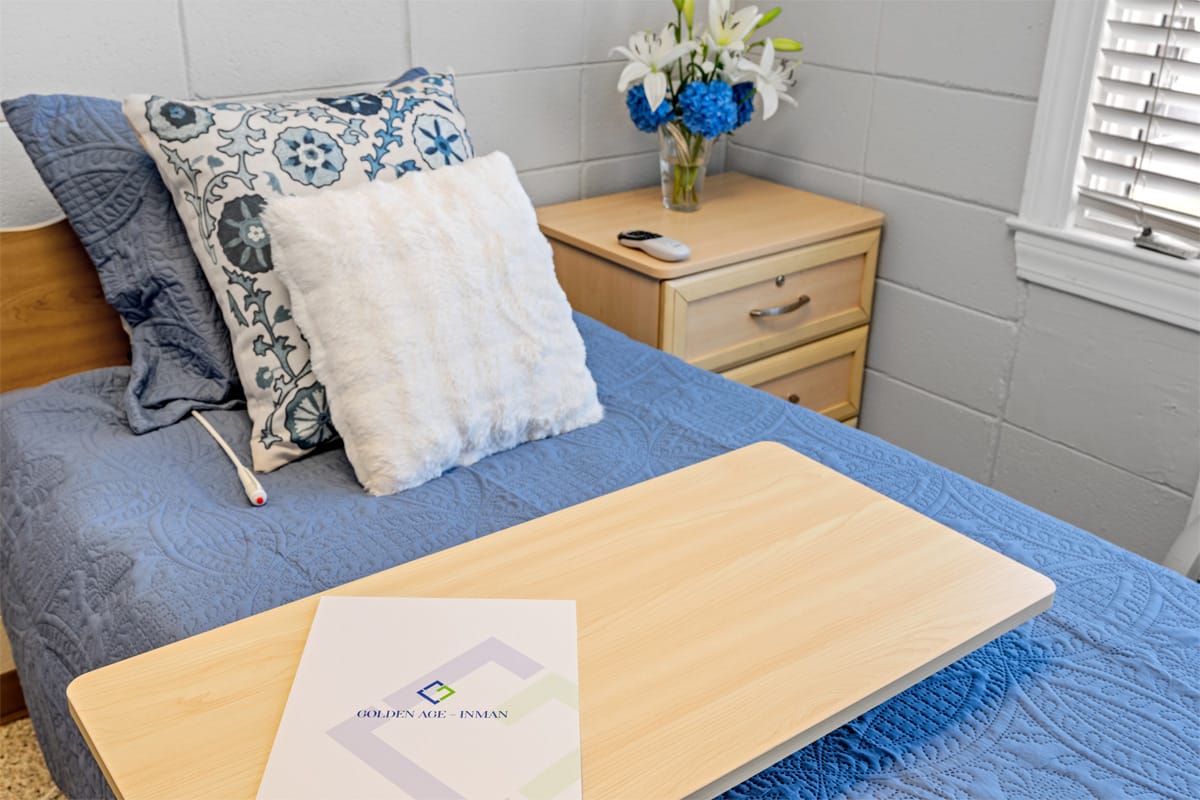
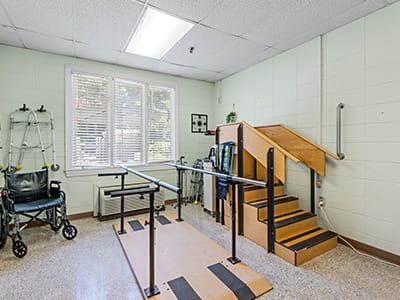
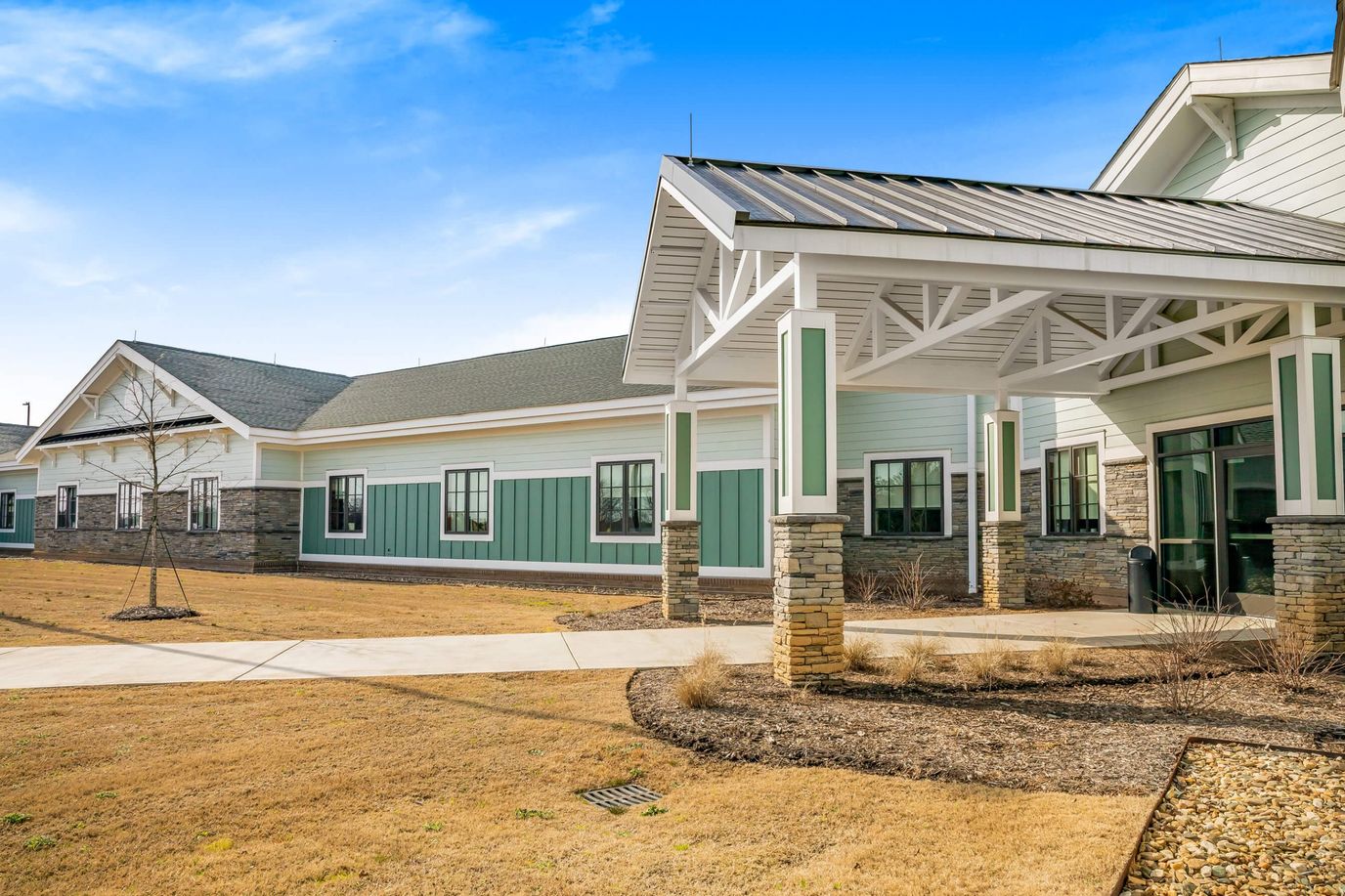
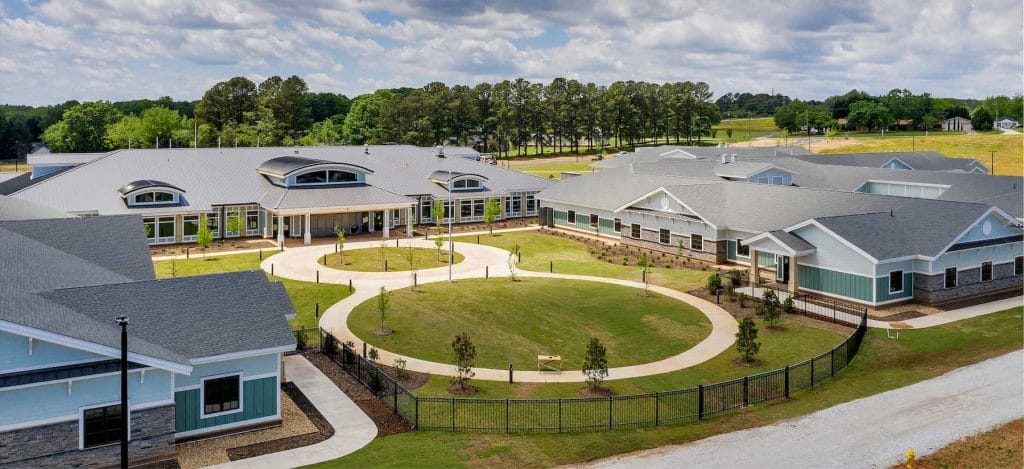
Golden Age, Inman provides skilled nursing and nursing home care in Inman, South Carolina. Skilled nursing gives residents access to licensed nursing care on site, while rehabilitation services support people receiving short-term care or recovering function. The community also serves long-term residents, so the combination may suit someone who needs nursing care for a limited stay or ongoing support in a nursing home setting.
The community has 44 beds, placing it in the smaller-community range where staff and residents can get to know one another. Total nurse staffing is 3 hours and 54 minutes per resident each day, representing the nursing time available to each resident across a day. Meals are provided by a registered dietician, making dietary guidance part of the dining service.
Medicaid, Medicare, and private pay are accepted. Medicare is used for short-term skilled care after a hospital stay, while Medicaid may help eligible residents whose savings do not cover a long stay; private pay allows families to pay directly. Dena Johnson serves as administrator, and Golden Age Operations operates the community.
Overview of Angel Oak Nursing and Rehabilitation Center
Angel Oak Nursing and Rehabilitation Center provides nursing home and skilled nursing care in Myrtle Beach, South Carolina. Skilled nursing gives residents access to licensed nursing care on site, while rehabilitation services support recovery after illness, injury, or hospitalization. The community has 88 beds. It also offers dementia and Alzheimer’s care, hospice care, and respite care for short term stays when a primary caregiver needs to travel or recover.
A Post Acute Care program supports residents moving from hospital care into continued recovery, alongside rehabilitation services for other recovery needs. Dementia and Alzheimer’s care may suit someone living with one of these conditions who needs nursing support, while hospice care serves residents receiving end of life care. Short term respite stays can provide care while a primary caregiver travels or recovers.
Total nurse staffing is 3 hours and 21 minutes per resident each day, representing the daily nurse time allocated to each resident. The facility accepts Medicaid, Medicare, and private pay. Medicare covers short term skilled care after a hospital stay rather than long term residence, while Medicaid may help when savings do not cover a long stay. Sheila Dugosh serves as the administrator.
Preston Health Center in Hilton Head Island, South Carolina, provides nursing home, skilled nursing, and memory care services. Nursing and skilled nursing care include licensed nursing support on site around the clock, while memory care provides a secure setting with supervision for a resident who may be at risk of wandering.
Short term rehabilitation supports a temporary recovery stay. Long term care supports ongoing nursing needs, so Preston Health Center may be a good fit for someone with dementia who also needs skilled nursing support.
The center has 77 beds, with total nurse staffing of 6 hours and 47 minutes per resident per day. That figure represents the daily hands on nursing time assigned to each resident, which helps families understand the amount of nursing coverage connected to each place in the home. Medicare and private pay are accepted, providing two stated ways to cover care.
Monique Mcrae serves as the administrator, and The Cypress Club operates the community. Private and semi private rooms are available, allowing a resident to live alone or share a room.
The Preston Spa provides supervised bathing, giving residents assistance during that personal care activity. Dining options are prepared by the culinary team at The Cypress, while rehabilitation services and the Short Term Rehab program support residents receiving recovery focused care. The Preston Difference is another specific program at the center.
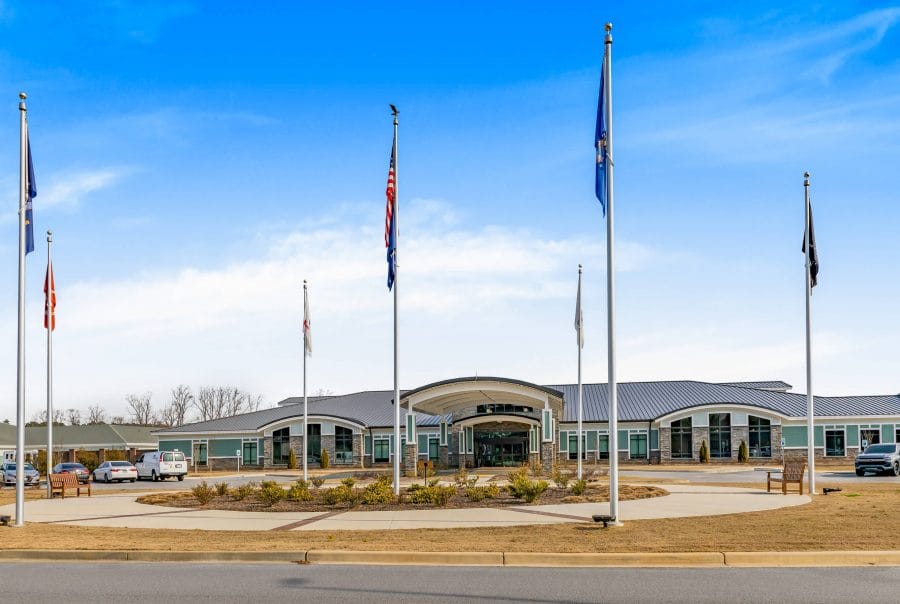
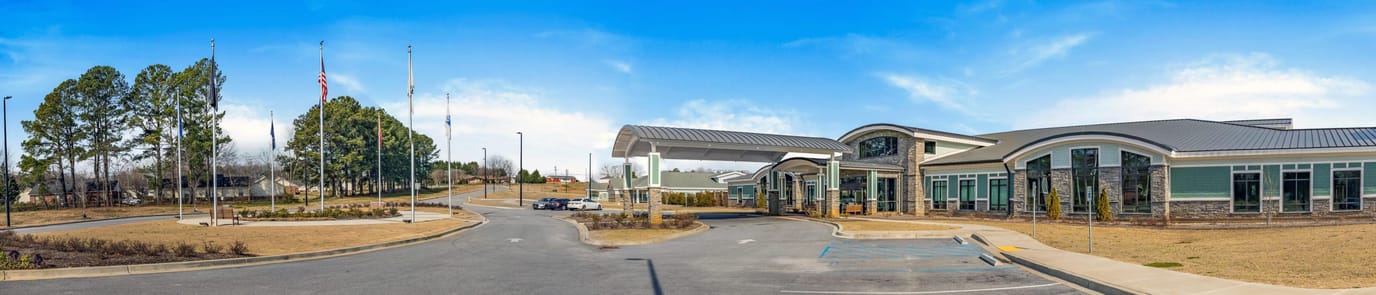
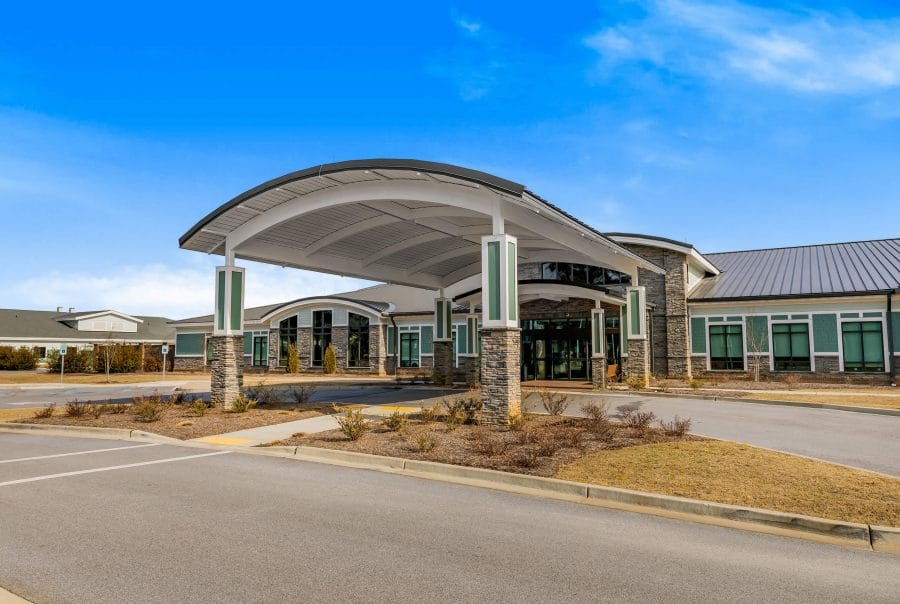
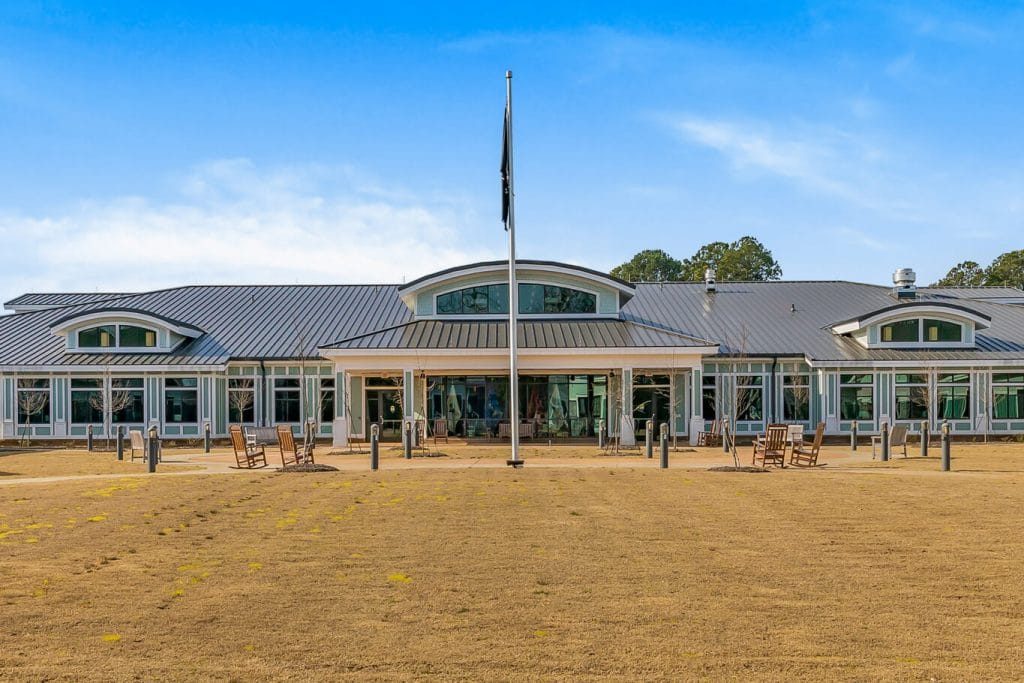
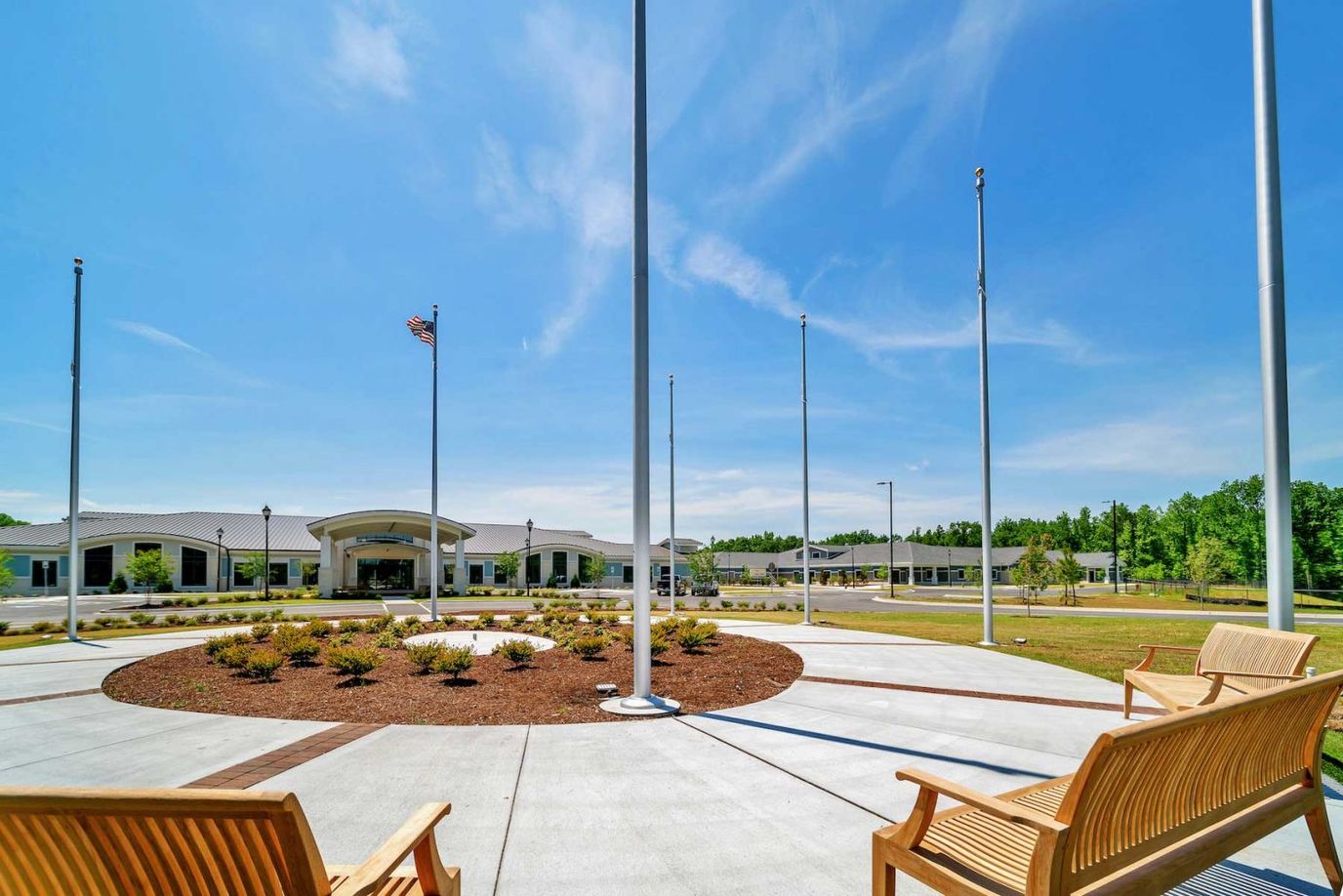
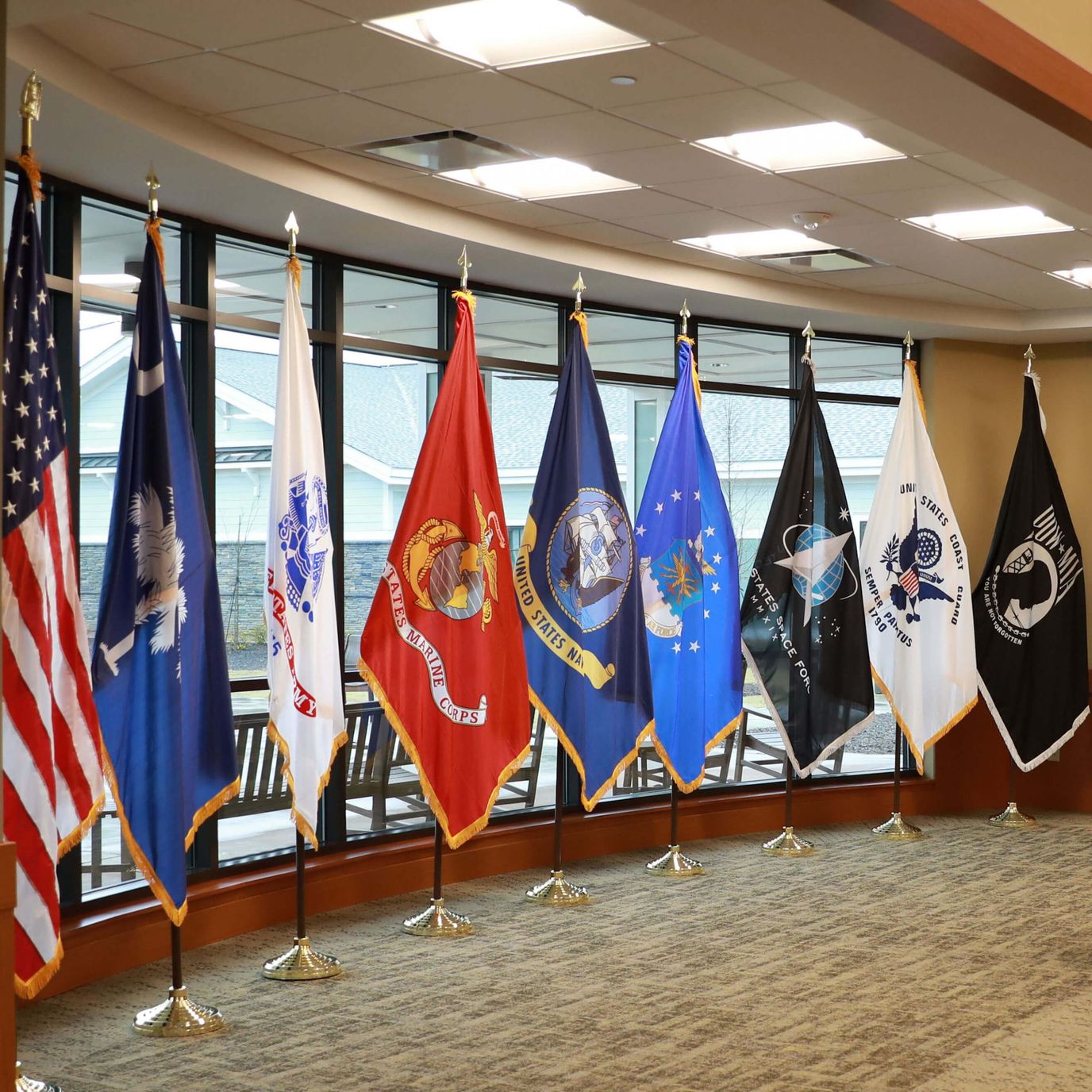
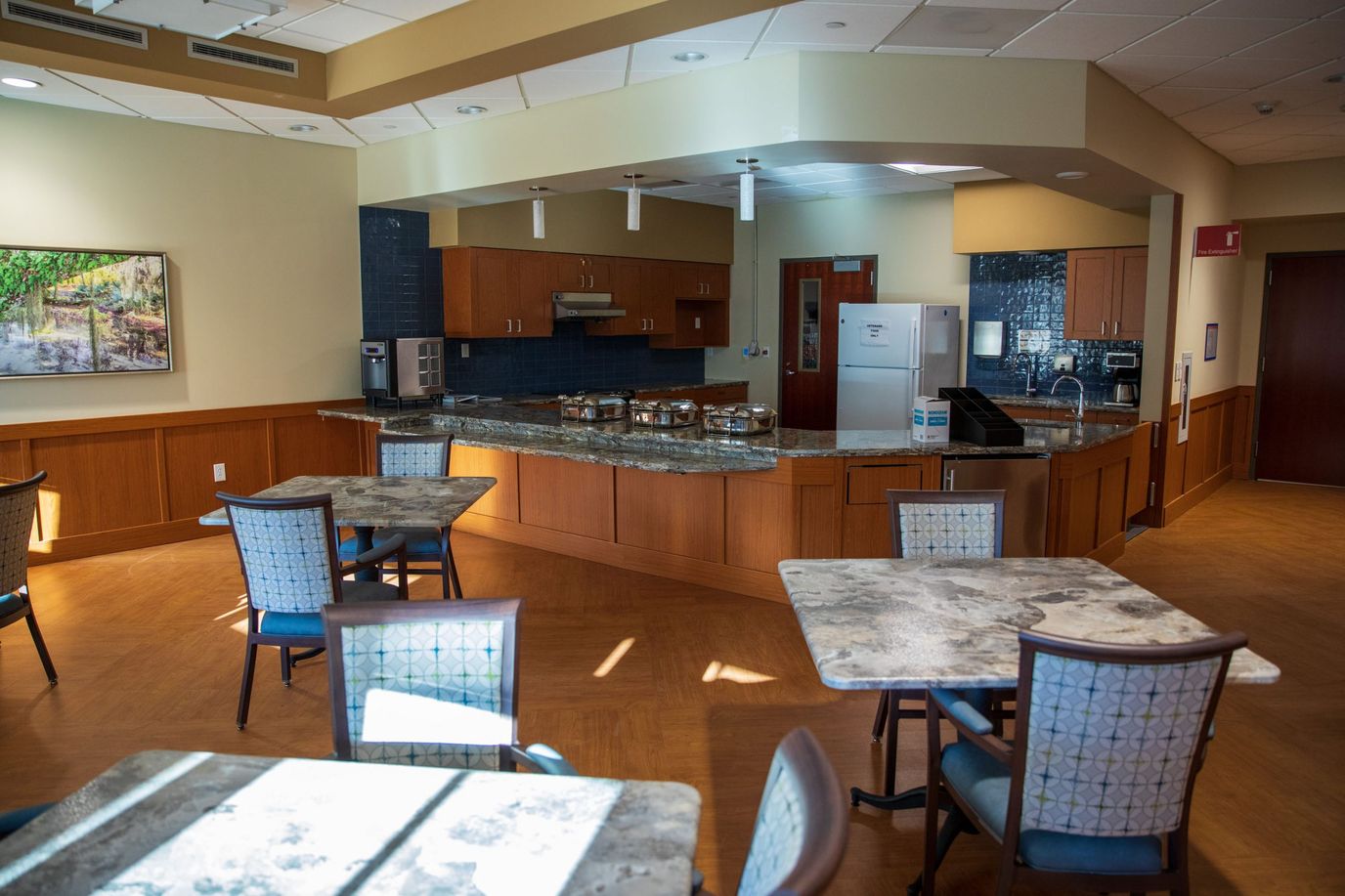
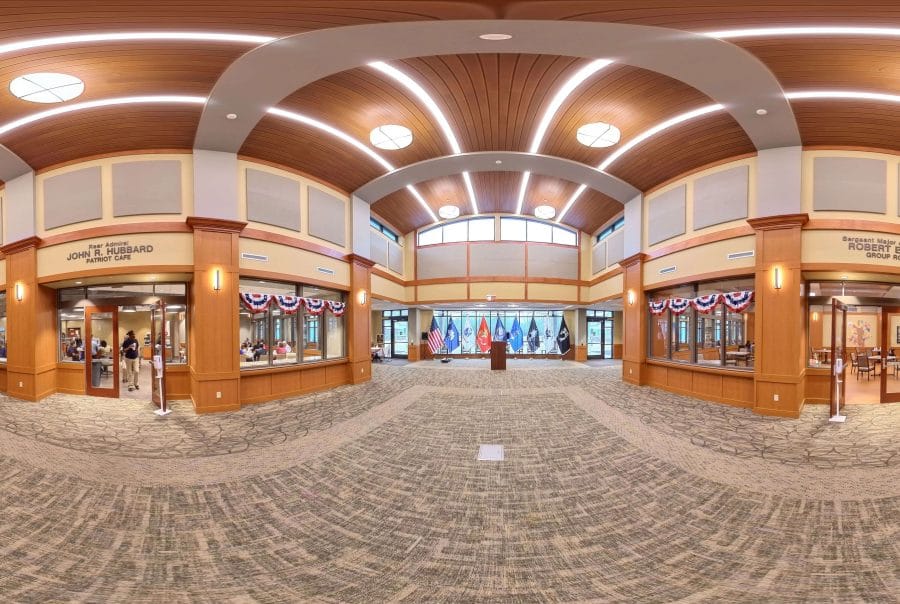
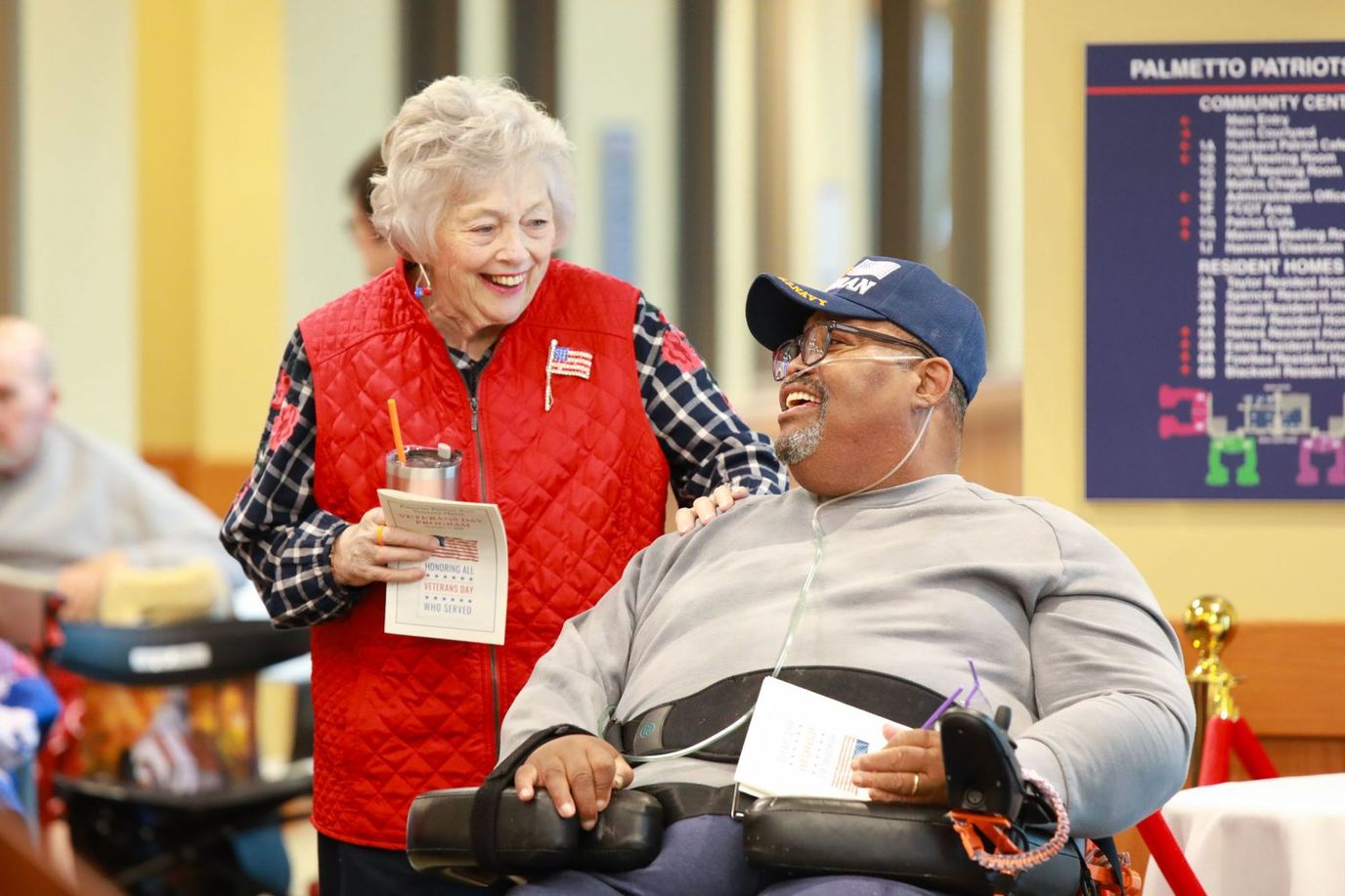
Providing skilled nursing and rehabilitation services, Palmetto Patriots Home is a nursing home in Gaffney, SC. 24-hour staffing is also available to ensure residents have access to services as needed. Moreover, residents receive a total of 7 hours and 28 minutes of nursing care daily.n
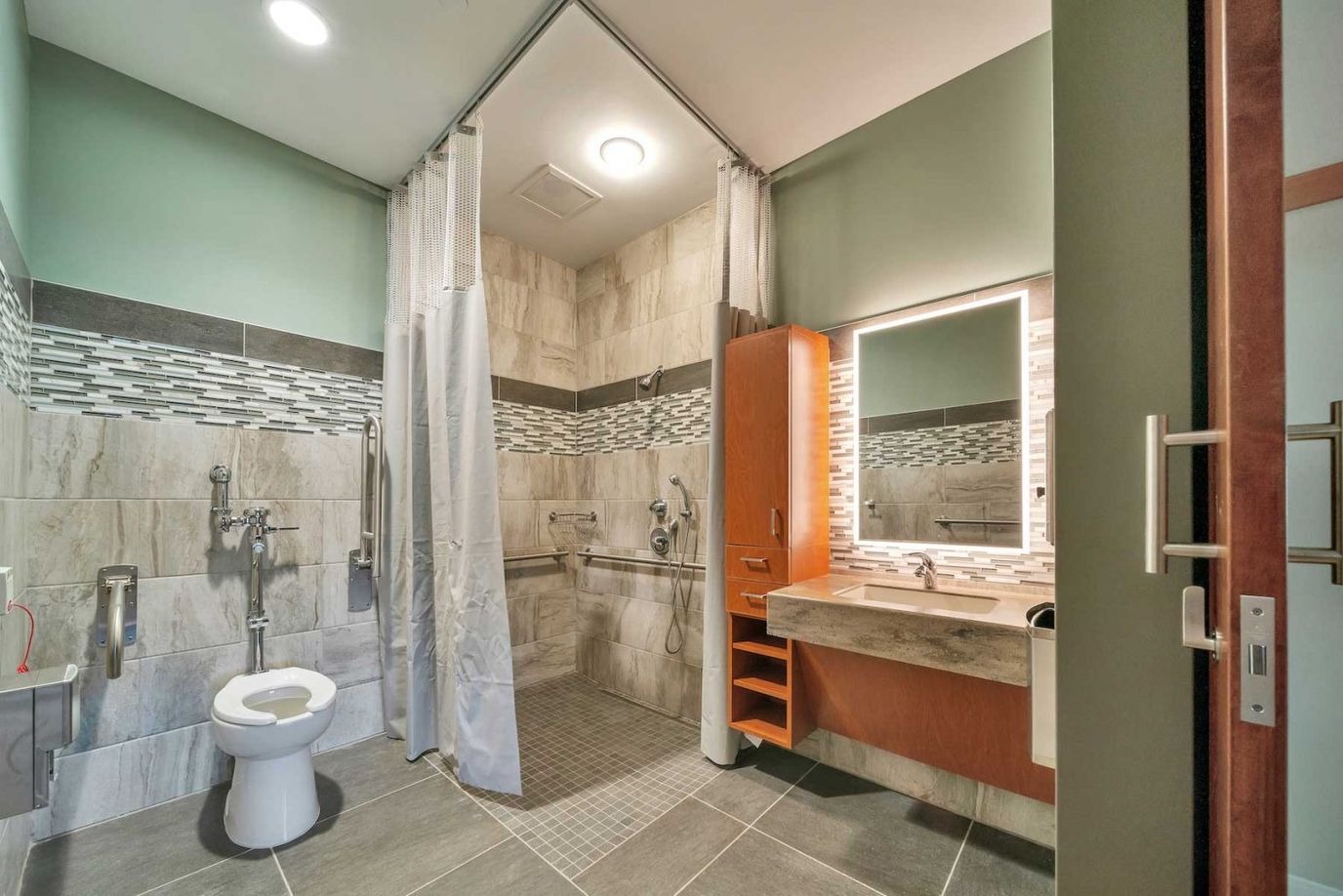
There are 104 beds in a variety of private suites. Additionally, pharmacy services are available on-site through an on-site pharmacy and a full-time licensed pharmacist. Beauty and barber services also provide grooming at the home, while transportation services offer arranged transportation without requiring residents to organize every trip independently.
Furthermore, meals are prepared on-site, and special diets can be accommodated as prescribed, allowing dietary requirements to be followed through the meal service.
The community is operated by the South Carolina Department of Veterans Affairs, with Christopher Palmer as the administrator.
Overview of Presbyterian Communities of South Carolina-Clinton
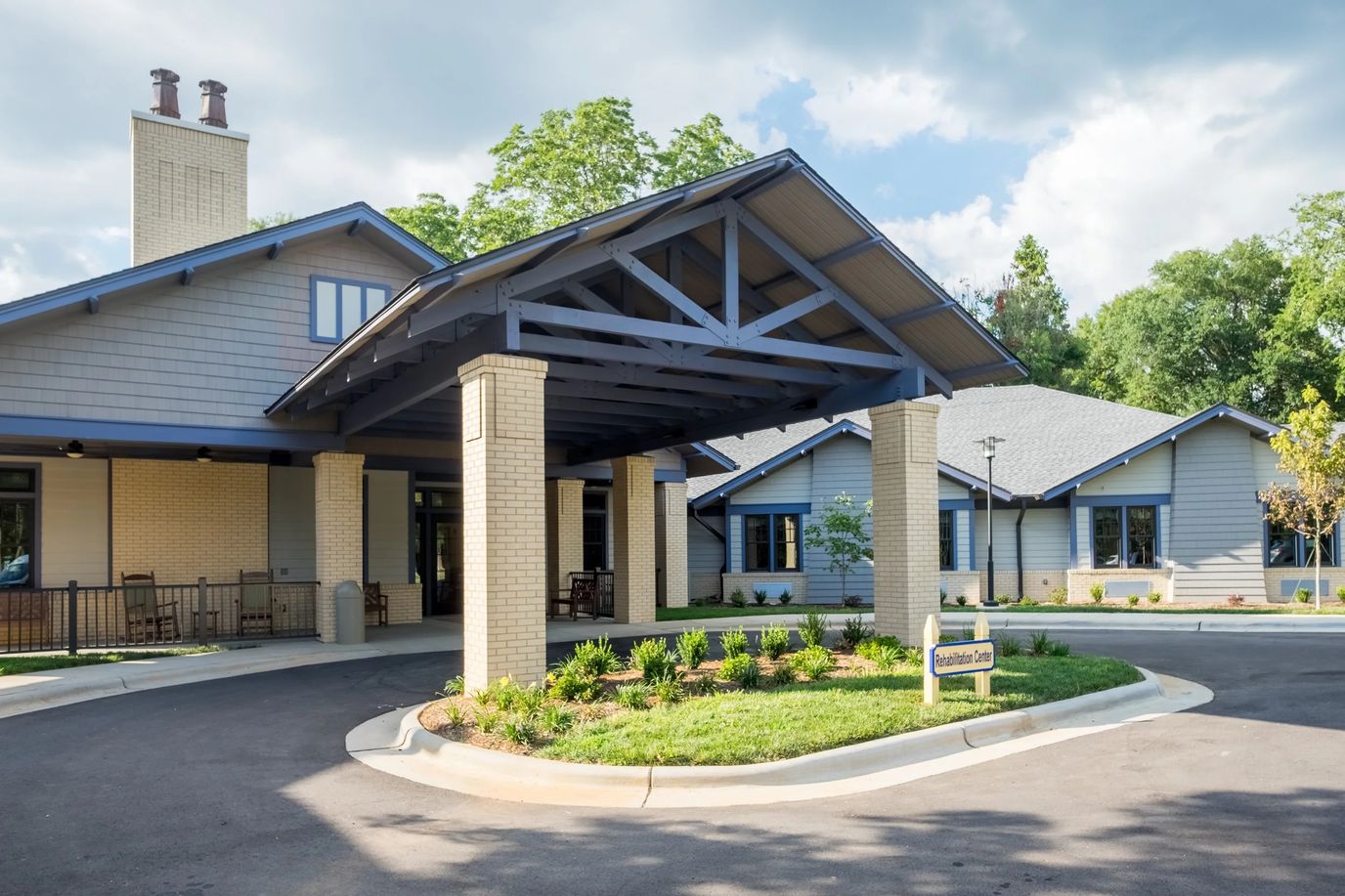
Presbyterian Communities of South Carolina-Clinton offers nursing home, skilled nursing, assisted living, independent living, memory care, and respite care in Clinton, SC. Assisted living includes help with daily tasks such as bathing, dressing, and medication while a resident keeps an apartment; Independent living provides private living with community services and no daily care.
Memory care is provided in a secured setting with supervision, while nursing home and skilled nursing include licensed nursing care on site around the clock. The community has 43 beds, creating a smaller setting where staff and residents can get to know one another.
Its range of care levels may suit a resident whose needs grow over time without leaving the community, while respite care offers a short stay for someone whose usual caregiver needs to travel or recover. Short-term rehabilitation is also available for a time-limited recovery stay.
Medicare and private pay are accepted. Medicare can cover eligible short-term skilled care after a hospital stay, while private pay lets a family cover services directly.
Pets are allowed, so residents can keep a pet with them. Tamieka Hawkins serves as the administrator, and Presbyterian Communities Of South Carolina operates the community.
White Oak Manor Rock Hill provides skilled nursing and nursing home care in Rock Hill, SC. Skilled nursing provides licensed nursing care on site around the clock, so the community may be a good fit for someone who needs ongoing nursing support. The home may be a good fit for someone who needs ongoing nursing care.
There are 141 beds, and 99% are occupied, meaning nearly all of the home’s beds are in use. Total nurse staffing is 4h 14m per resident per day, representing the daily nursing time allocated to each resident. Medicare, Medicaid, and private pay are accepted: Medicare is used for short term skilled care after a hospital stay, Medicaid can help when savings may not cover a long stay, and private pay allows direct payment for care. Jerrolyn Montgomery-Smalls serves as administrator, and Nhc Healthcare/Rock Hill operates the community.
At its location in Greenwood, SC, Nhc HealthCare Greenwood provides skilled nursing, hospice care, home care, and nursing home care. That last one is residential nursing care for people who need it on an ongoing basis. For skilled nursing, a licensed nurse is present day and night, and the services include 24-Hour Staffing, and a salon is on-site.
Home care goes to people in their own homes. Hospice care is concerned with comfort for people nearing the end of life.
The home has 152 beds, and nursing time per resident per day amounts to 3 hours and 39 minutes daily. Payment through Medicare, Medicaid, or private pay gives a family public coverage or the option to pay directly. Jacob Shearer is the administrator.
Therapy Services and Short-Term Rehab carry recovery through a temporary stay. When the person who usually gives care is away, respite care takes the resident for a short stay. Someone recovering from illness or injury, or a family wanting temporary relief from caregiving, is who this home fits.
The Village at Summerville offers independent living, assisted living, memory care, respite care, nursing home and skilled nursing care within a continuing care retirement community in Summerville, SC. Independent living means private living with community services and no daily care, while assisted living provides help with dressing, bathing and medication while a resident keeps their own apartment.
Memory care provides a secured setting with supervision for someone at risk of wandering. Respite care offers a short stay for a family caregiver who needs to travel or recover.
The nursing home and skilled nursing options provide licensed nursing care on site around the clock. With multiple care levels in one community, a resident whose needs grow can move to a different level without leaving the community or starting over socially, so the setting may be a good fit for someone who wants care options that can accommodate changing needs.
The community has 48 beds, creating a smaller setting where staff and residents get to know each other. One-bedroom, two-bedroom and three-bedroom housing options can accommodate an individual or people moving together.
Total nurse staffing is 4h 15m per resident per day, representing the daily hands-on nurse time allocated per resident. The area has a Walk Score of 45, a car-dependent setting where most errands require a car or a ride, so a resident who no longer drives would generally need transportation for errands.
Payment options are Medicare and private pay. Medicare covers short-term skilled care after a hospital stay rather than long-term residence, while private pay means the family pays directly.
Prince George Healthcare Center is a 148 bed nursing home in Georgetown, SC, offering skilled nursing with licensed nurses on site around the clock. The community may be a good fit for someone who needs ongoing nursing oversight rather than help with daily tasks alone.
Medicare, Medicaid, and private pay are accepted, giving families payment options based on eligibility or their payment arrangement. Nurse staffing totals 3 hours and 19 minutes per resident per day, which represents the daily hands on nursing time assigned to each resident. Helen L. Cribb serves as administrator, and Palmetto Prince George Operating operates the community.
Avg Overall CMS Rating:3.0/ 5The average Overall CMS Rating for all CMS-certified nursing homes in South Carolina. Ratings combine health inspections, staffing, and quality measures, with inspections weighted most. Individual facilities can vary widely from this average.
National Average:3.2/ 5
Avg Staffing Rating:3.0/ 5The average Staffing Rating across all CMS-certified nursing homes in South Carolina. Reflects nursing staff hours per resident per day (including RNs), adjusted for residents' care needs. Individual facilities can vary widely from this average.
National Average:3.4/ 5
Avg Health Insp. Rating:2.9/ 5The average Health Inspection Rating across all CMS-certified nursing homes in South Carolina. Based on each facility's recent inspections and complaint investigations, weighing the number, scope, and severity of deficiencies. Individual facilities can vary widely from this average.
If you move into a community through us, that community may pay us a referral fee. This never changes your cost or which options we recommend. Learn more
Need Help?
Let us help you or a loved one find the perfect senior home.
We've received your request
Thank you for your interest!
Our team will be in touch shortly to help with next steps.